Overview
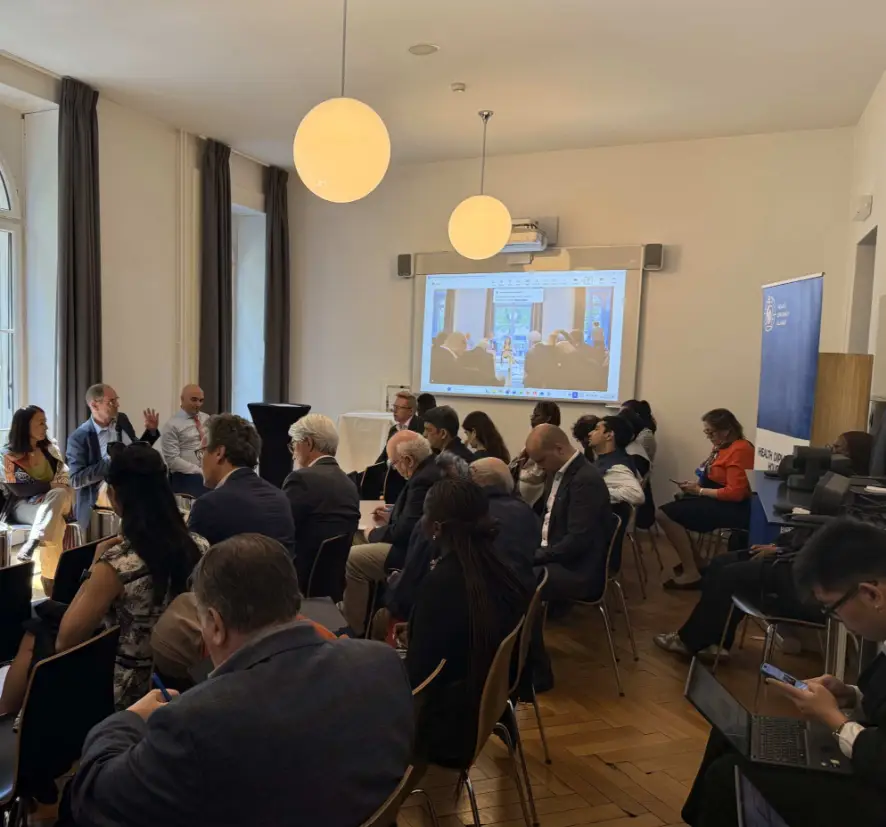
On 21 May 2026, we convened the Health Diplomacy House alongside the 79th World Health Assembly in Geneva. Designed as an informal, cross-sector platform for dialogue, the House brought together policymakers, diplomats, researchers, civil society, youth leaders, international organizations, philanthropic actors, and the private sector to address some of the most pressing challenges facing global health today.
Across 16 sessions, participants explored practical policy discussions that could bring factual solutions on global health governance, sustainable financing, climate and health, antimicrobial resistance (AMR), One Health, women’s leadership, and health system resilience. Rather than focusing solely on discussion, the House emphasized collaboration, knowledge exchange, and actionable ideas that can support future policy development.

At a time of increasing geopolitical uncertainty, financial pressures, and evolving global health priorities, the Health Diplomacy House created space for conversations that are often difficult to hold within formal diplomatic settings.
By bringing together diverse perspectives across sectors and generations, the initiative encouraged honest dialogue, strengthened partnerships, and connected policy discussions with practical implementation challenges.
The event reinforced the importance of health diplomacy as a tool for building cooperation around shared global health priorities.
Key Themes
Rather than organizing discussions around a single issue, the programme reflected the interconnected nature of today’s health challenges. Major themes included:
- Reforming global health governance and strengthening multilateral cooperation
- Innovative approaches to sustainable health financing
- Climate change and its growing impact on human health
- One Health and antimicrobial resistance
- Health system resilience in fragile and conflict-affected settings
- Women’s leadership in global health diplomacy
- Ethical health workforce mobility
- The role of journalism, accountability, and transparency in global health
Major Outcomes
Several common messages emerged throughout the day:
- Strengthening Global Health Reform Processes: Discussions reaffirmed that reform of the international system for health is no longer a question of whether but how. Many efforts are now running in parallel across different institutions and regions, rather than converging around any single process, with several expected to produce concrete proposals by late 2026 and recommendations feeding into the 80th World Health Assembly in 2027. Security and peace, and antimicrobial resistance, were repeatedly named among the most pressing issues these processes will be judged against.
- Advancing Transparency and Trust in Global Health: A deep-rooted trust deficit was named as a central obstacle to reform. Participants called for greater transparency, clearer communication of ongoing processes, and honest acknowledgment of the political economy that has undermined past reform efforts, arguing that legitimacy depends as much on how reform is communicated as on what it ultimately delivers.
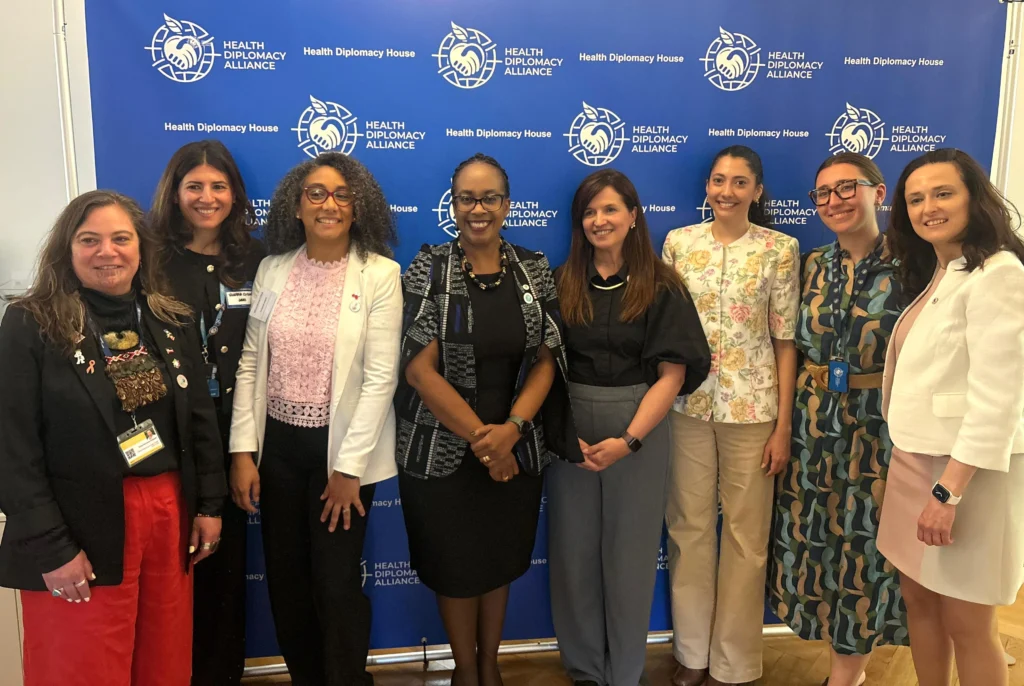
- Elevating Women’s Leadership in Health Diplomacy: The exchange produced a clear call for parity not only in numbers but also in decision-making spaces, identifying specific structural barriers and concrete pathways toward more gender-responsive health diplomacy.
- Climate Obligations and Economics in Health Governance: Discussion of the International Court of Justice’s advisory opinion on climate change examined how its binding state obligations could be integrated into ongoing global health law and governance processes, including the World Health Assembly’s own engagement with climate and health. This was paired with health-economics work quantifying the cost side of that argument, including published analysis of the social cost of carbon, value of a statistical life, and macroeconomic modeling of climate action and inaction in health terms, treating the economic case and the legal case as two halves of the same argument for embedding climate squarely within health governance.
- Debt and Health Financing: A deep dive examination on how sovereign debt restructuring can be linked directly to domestic health investment, positioning debt relief as a health financing tool in its own right rather than a separate fiscal question, is particularly relevant for states facing both debt distress and financing gaps in their health systems.
- The Gap Between Commitment and Implementation on AMR: Consultation underscored that political commitments only matter once they shape procurement, surveillance, workforce planning, and prescribing practice. Participants pointed to persistent gaps in financing, multisectoral coordination, and evidence systems as the real test of whether the current AMR agenda produces change rather than further declarations.
- Traditional Medicine, Biodiversity, and Environmental Health: Debate on traditional medicine and biodiversity, and on the health impacts of plastics extended the reform conversation beyond financing and governance to the underlying environmental and cultural systems health depends on, reinforcing the argument that reform needs to be judged against a wider set of pressing issues than institutional architecture alone.