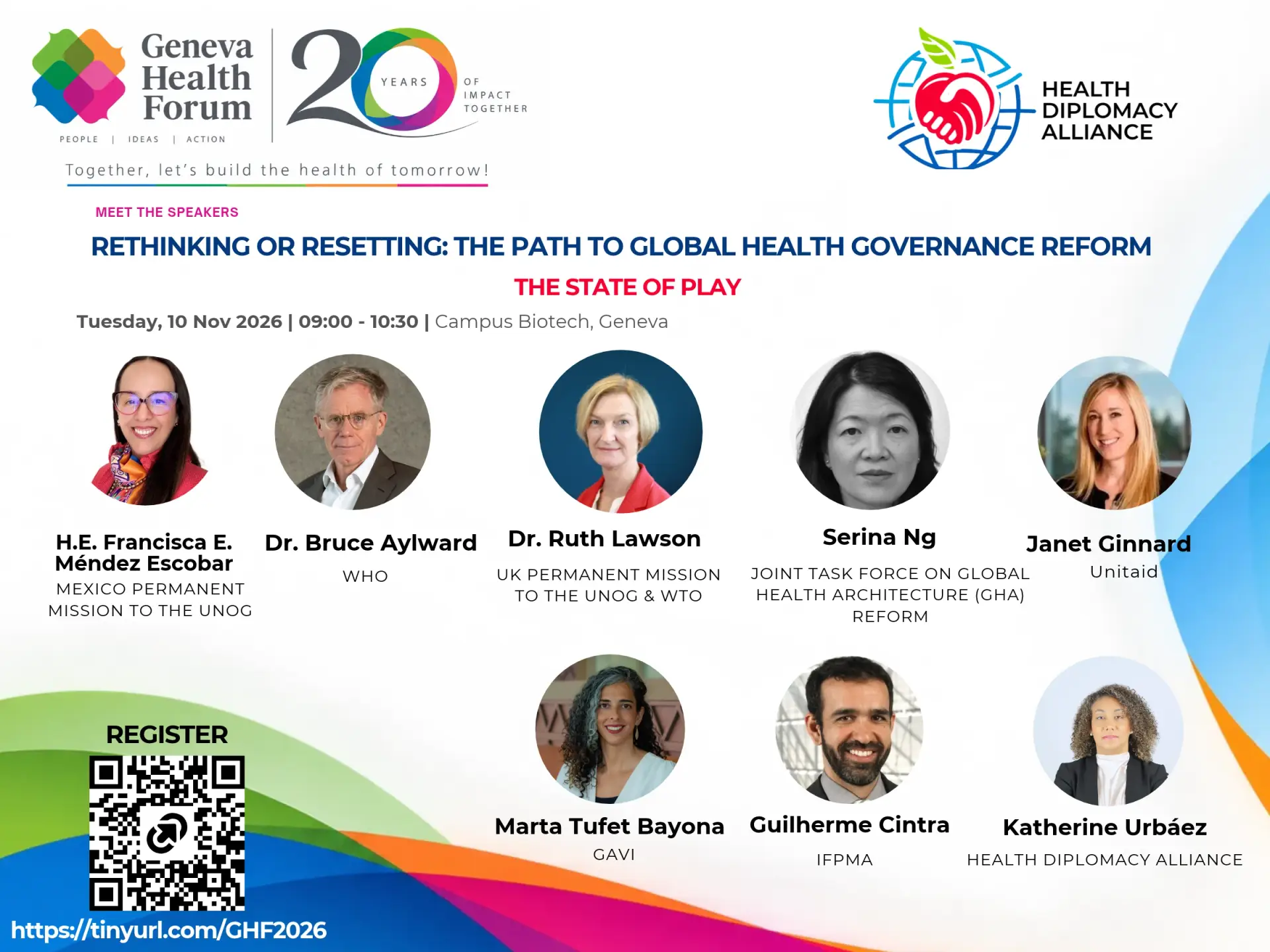
Who governs global health today, and who will govern it in the years ahead? Which institution decides, which one pays, and which one answers when delivery fails?
These questions are being settled now, in parallel. The Joint process to support reforms of the global health architecture, UN80 and several financing processes are each redrawing mandates, budgets and lines of responsibility. Each runs on its own timeline, in its own forum, with its own constituency. Together, they will define the next architecture. The value now lies in reading them side by side.
None of this happens in isolation. These processes are unfolding as development assistance contracts and institutions restructure, while the UN and WHO prepare for new leadership and the reform mandate moves toward the World Health Assembly in May 2027. The coming months will therefore shape the system for years to come.
What matters is what this period will produce. It could deliver mandates and capacities aligned with global health functions; coherent decision-making and accountability across global, regional and national levels; and financing that advances national self-reliance while sustaining regional functions and global public goods. Or it could deliver a leaner version of the current architecture that carries forward its overlaps and its gaps.
This dialogue brings these processes into one conversation. Member States, institutional leaders and practitioners engaged in them will share where each one stands, which decisions lie ahead, and how roles across functions, coordination and financing are likely to be distributed as the path unfolds.
Institutional change, however, is not the same as reform. The discussion will therefore also consider what evidence would show that change is reaching the way functions are delivered, decisions are coordinated and financing is aligned, and what would signal that it has remained at the level of mandates and organigrams.
Rethinking or resetting: what will this moment bring?