Category: Health & Peace

  • Likes, Shares, and Side Effects: Misinformation’s Effects on Health

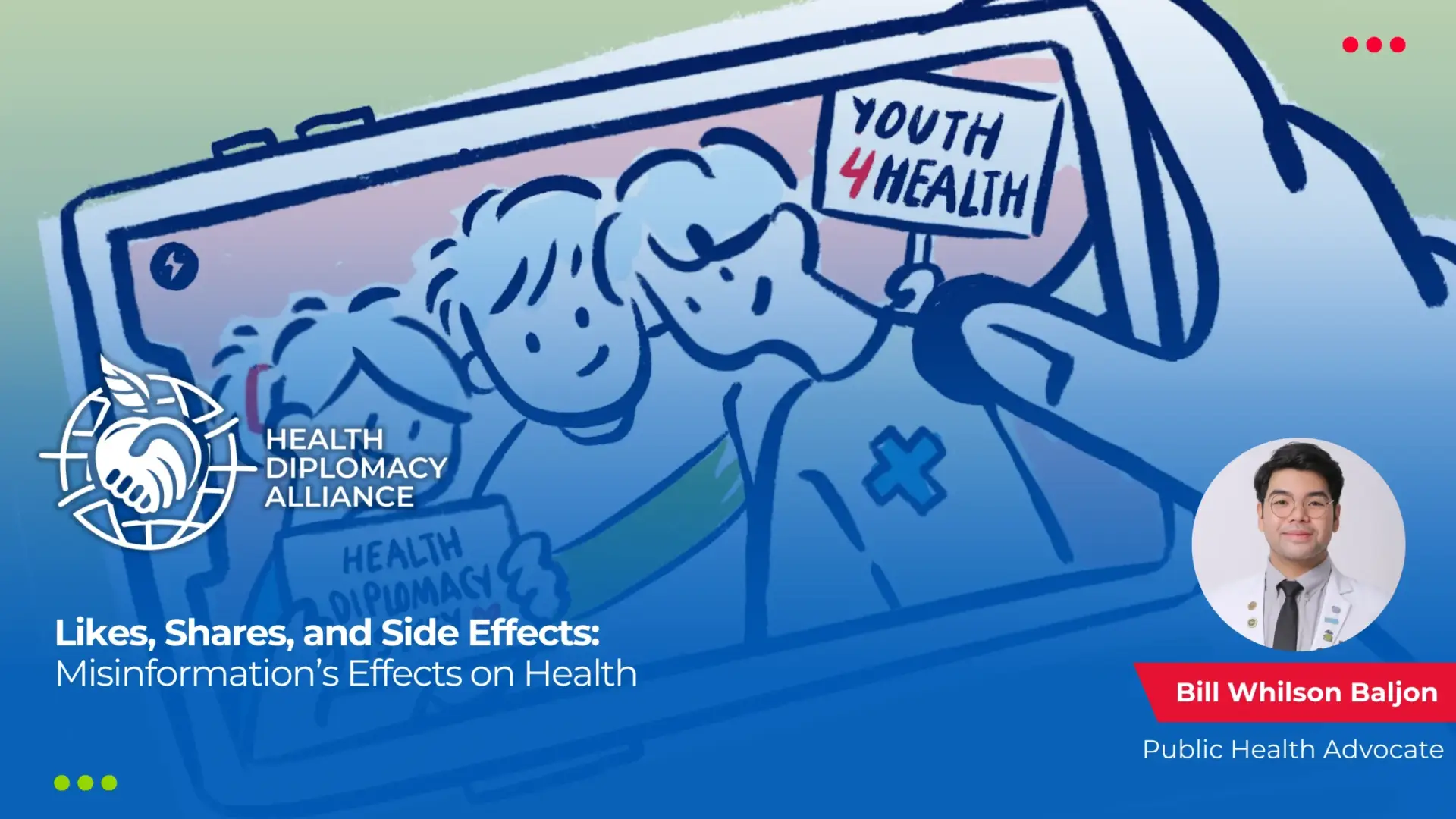
    Likes, Shares, and Side Effects: Misinformation’s Effects on Health

    Source – Authors

    In today’s era of information access and AI, it is becoming increasingly difficult to separate truth from well-made AI-generated content. Identifying AI becomes especially challenging because people aren’t usually in a discerning mindset when scrolling through the internet. Most of the time, they’re simply looking to relax and be distracted.

    That might be (debatably) fine when it comes to funny videos or memes, but it’s a very different story when health information is involved.

    It is now common for people to look up what help they need before they go to a doctor. This information helps them identify the type of care they receive, its costs, and how to exercise home remedies before they need to go to a medical professional. It follows that they must be informed with information that’s accurate, relevant, timely, up to date, and transparent. However, because of limited skills to access good quality health information, people tend to rely on information derived from social media, friends, and, increasingly, AI tools like ChatGPT.

    Online platforms such as Twitter, Facebook, YouTube, and Instagram are common sources of fast and easy information; however, this space also propagates harmful practices as they may provide people with misleading or biased, inaccurate, and poor-quality health information. This practice of misinformation (false or inaccurate information deliberately intended to deceive) and disinformation (deliberately misleading or biased information; manipulated narrative or facts; and propaganda) is one of the most rampant problems in healthcare that affects our generation.

    The situation has escalated to the point that healthcare systems’ efforts to eliminate life-threatening diseases have been severely impacted. In the Philippines, a state of panic broke out in 2019 following the re-emergence of polio, a disease previously declared eradicated in the country. This resurgence was closely linked to the widespread misinformation stemming from the dengue vaccine “Dengvaxia” controversy in 2017, where exaggerated claims about vaccines causing severe side effects or even death led to a sharp decline in public trust in immunization programs. As a result, misinformation became a key barrier to polio eradication efforts, with fear and vaccine hesitancy hampering the country’s disease prevention campaigns.

    To this day, low public trust in vaccination continues to affect routine immunization efforts, shown by a childhood immunization rate of 61%, far below the 95% target, leaving many children vulnerable to otherwise preventable deadly diseases.

    At the same time, while AI-powered tools offer unprecedented access to knowledge, their downsides must not be overlooked. AI models generate content based on vast datasets, but they do not inherently distinguish fact from fiction. Without proper verification, public information may be based on AI hallucinations. This complicates people’s ability to find genuinely evidence-based health information, which in turn may affect their health-seeking behavior. If individuals begin to mistrust physicians or delay consultations because of inaccurate online advice, the doctor–patient relationship may weaken, leading to poorer adherence to medical advice and potentially worse health outcomes.

    On the bright side, these infodemics and misinformation can be effectively addressed through multisectoral initiatives implemented at both macro and micro levels. While government interventions of developing legal measures and policies in the scene are essential, corresponding support must be provided in youth and community settings. Campaigns should aim to create awareness, improve health-related content, build trust in credible health organizations and experts, and generally enhance people’s literacy in both digital and health aspects for them to better assess and identify misinformation.

    Young people play a pivotal role in this dynamic landscape. With their strong online presence, young people are often the first to encounter, share, or challenge health-related content. Their digital fluency enables them to quickly amplify both accurate and inaccurate information. Harnessing this potential requires targeted interventions that empower youth to become responsible digital citizens. Training programs, peer-led campaigns, and collaborations with student and youth organizations can help shape a culture of critical thinking and fact-checking.

    Several global and local initiatives provide examples of how to effectively combat misinformation. For instance, the S.U.R.E. campaign in Singapore effectively combined government messaging, media partnerships, and youth ambassadors to promote fact-checking habits. Similarly, in the Philippines, UNICEF worked with Meta to analyze vaccine hesitancy trends and organize campaigns to increase confidence in routine vaccination. These examples highlight that coordinated strategies combining digital literacy, community engagement, and credible messengers can mitigate the harms of misinformation and restore confidence in healthcare.

    As the world grapples with the double-edged sword of digital and AI-driven information, safeguarding public health depends on more than just regulation. It requires a culture of discernment, responsibility, and trust. AI and social media will remain central in how people access health knowledge, but the key lies in empowering individuals, especially the youth, to navigate this landscape wisely. Let’s utilize the strategies offered by successful case studies and foster collaboration across sectors and societies to ensure health communication’ purpose: to inform, protect, and improve lives.

    About the Authors


    Bill Whilson Baljon is a pharmacist and public health advocate from the Philippines. He is dedicated to promoting health equity and empowering communities through his work in health promotion, policy advocacy, and community engagement. 


     Abigail Salen is a multimedia artist from the Philippines. She aims to utilize visual communication in health promotion and sustainable development, all dedicated to design for good.

    They are the co-founders of Yay! I’m Sober, a health awareness initiative in the Philippines that engages youth, businesses, and civil society organizations to encourage tobacco and alcohol cessation using youth-driven, inclusive, and supportive messaging.
  • World Humanitarian Day 2025 Blog

    World Humanitarian Day 2025 Blog

    Image source – Tim L. Productions on Unsplash

    Shielding the Frontline: Diplomacy for Protection of Humanitarian Health Workers

    Introduction  

    The year 2024 witnessed a grim record for attacks on humanitarian health workers globally, with 377 aid worker fatalities across 20 countries, a staggering 137% increase from 2022. The trend continues in 2025 with 545 attacks impacting facilities and 412 attacks affecting personnel between 1 January and 19 August 2025. Amidst total fatalities in conflict-affected situations, the local and national humanitarian and health workers bear the greatest burden of violence, accounting for 90 per cent of victims. The protection of humanitarian health workers has become a critical concern in the international humanitarian law and policy discourse. 

    As the world observes World Humanitarian Day 2025 under the theme “Strengthening Global Solidarity and Empowering Local Communities,” the protection of humanitarian health workers has emerged as a critical nexus where international cooperation and local empowerment must converge.  

    There is an urgent need for enhanced protection mechanisms through health diplomacy for those in vulnerable situations and exposed to increased risk of attacks, while providing medical care in conflict zones and humanitarian emergencies. 

    Evolving Nature of Attacks 

    Modern conflicts have witnessed a distressing evolution in the targeting of healthcare infrastructure. Unlike traditional warfare, where International Humanitarian Law was respected and protecting medical facilities was prioritized, contemporary conflicts increasingly employ healthcare destruction as a means for disrupting the health ecosystem. The attacks manifest in various forms, from direct bombing of hospitals and ambulances to more subtle tactics such as deliberately targeting energy and water infrastructure vital to the functioning of the healthcare system. For instance, it has been witnessed that the attack on health have seen a notable increase in the use of explosive weapons from 36% in 2023 to 48% in 2024. Armed drone attacks on healthcare facilities have similarly increased from 9% to 20% over the same period. This systematic targeting of healthcare providers requires international attention and action to prevent such incidents and uphold International Humanitarian Law (IHL). 

    International Frameworks in Place 

    Global solidarity for health worker protection encompasses diplomatic coordination, shared intelligence, and collective advocacy that can shield health workers from attack. While the Geneva Conventions of 1949 and International Humanitarian Law provide robust legal foundations for humanitarian and healthcare personnel protection, active measures have been taken since 2012, with the World Health Organization (WHO) creating a surveillance database on Attacks on Health Care 

    Following this, in 2014, the UN Security Council passed Resolution 2175, and in 2016, Resolution 2286  to protect humanitarian workers, health personnel, and medical facilities in conflict zones, respectively. In 2020, the WHO launched the Health Worker Safety Charter, which called key stakeholders to be involved in ensuring protection from violence, physical and biohazards, improving mental health, developing national programs, and emphasizing the synergy of health worker and patient safety.  

    The role of physicians and other health workers in the preservation and promotion of peace is established in WHOs Resolution WHA 34.38, that establishes the role of WHO in facilitating the implementation of UN Resolutions towards peace and conflict prevention. The Global Health and Peace Initiative furthers the Humanitarian-Development-Peace nexus underlines the role of health as a key driver of peace and sustainable development, including all parts of the UN and the World Bank in conflict prevention, mediation, and resolution.  

    However, despite these measures, the attacks on humanitarian and health workers continue, highlighting the need for more effective collective action. To address this concern, diplomatic mechanisms that can translate international solidarity into tangible protection for health and humanitarian workers, and protection of health facilities are needed. This was reiterated by the UN Secretary-General, António Guterres, in his message on the Call for Action to protect humanitarian workers, by stating the need for political will and the need to invest in their safety.  

    Challenges to address 

    Significant resource disparities persist between international and local health worker protection initiatives. Humanitarian and health workers representing international humanitarian organizations have access to security training, evacuation procedures, insurance coverage, and protection that are unavailable to local health workers. Additionally, the paucity of humanitarian health education and training programs in conflict-affected countries restricts local health workers’ access to specialized protection training that could enhance their safety.  

    Many global solidarity initiatives inadvertently impose external priorities, timelines, or methodologies that conflict with community preferences or cultural norms. Local healthcare communities’ voices are underrepresented in the global discourse around their protection; that leads to a narrative and solutions facing glaring implementation challenges. 

    Integrating global solidarity with local empowerment requires inclusive coordination mechanisms that can balance an international response with local context-specific solutions. To address this, it requires diplomatic frameworks that can maintain global solidarity while ensuring meaningful local participation in health worker protection decision-making. 

    Diplomacy: Bridging Global Solidarity and Local Empowerment 

    Effective diplomacy can integrate global solidarity and local empowerment for humanitarian and health worker protection. Multi-track diplomacy between nations, multistakeholder engagement involving various actors, and informal field-level negotiations are needed to bring about this balance and address this urgent objective. However, in conflict settings, prominent diplomatic channels often harness negotiation, mediation, and advocacy to ensure access to affected populations, raise protection issues, and influence domestic actors impeding humanitarian relief.  

    Current diplomatic efforts must go a step further to bring local health worker community perspectives into mainstream policy and negotiation efforts to ensure securing the space for health interventions while engaging politically and socially to empower local capacity. For instance, humanitarian organization like the International Committee of the Red Cross (ICRC) regularly bring local humanitarian health workers into the process of negotiating policies that ensure access and protection for healthcare communities in highly insecure environments. 

    Successful protection strategies require trust-building, multi-level engagement, evidence-based advocacy, and innovative protection mechanisms.  For instance, the synergy of global solidarity and local empowerment was witnessed when UNICEF, as an international organization, negotiated for corridors of peace and days of tranquillity in Syria and Yemen, specifically designed to allow immunization campaigns, human resource training, ensuring the continuous supply of vaccines, and supporting community engagement and outreach programs.  

    Similarly, in Yemen, during COVID-19, global partners provided technical expertise, equipment, and diplomatic protection, while local communities took responsibility for facility security, staff safety, and service delivery and expanded its testing capacity from one laboratory to 18 facilities between 2020 and 2022. The success of this initiative stemmed from its dual approach of international support and local ownership.  

    In Ukraine, where the healthcare system continues to grapple with attacks, the systematic surveillance and verification process set by WHO not only provides crucial data for international diplomatic engagement but also builds local capacity for monitoring and reporting attacks against health workers. This empowerment through evidence-based documentation has created sustainable local capacity for health worker protection advocacy that has the potential to persist beyond the conflict situation.  

    Health workers in Gaza have called upon international stakeholders to work together to uphold global solidarity to fortify health workers’ resilience and ensure universal access to healthcare in conflict-affected situations. 

    Way Forward 

    While it is imperative to strengthen the enforcement of existing international frameworks, diplomacy must focus on embedding community voices directly into global protection frameworks. Additionally, the development of regional health worker protection networks that can advocate collectively while maintaining local representation and empowerment could provide platforms for local health workers to engage directly with diplomatic processes.  

    Use of digital, satellite, and communication tools for real-time monitoring and response can connect local health workers directly to international protection networks and provide independent verification of attacks on healthcare facilities, supporting both international advocacy and local documentation efforts. Additionally, context-driven health education and training modules should be designed with sensitivity to local cultural, political, and security realities, equipping health workers with practical skills for negotiation, risk assessment, and community engagement to enhance their safety on the frontline. 

    Further, developing innovative financing mechanisms that can provide resources for local health worker protection while building community capacity for resource management and sustainability promise a sustainable solution to health system strengthening in conflict-affected situations.  Successful implementation of these can only happen with global solidarity and collective action, with diplomacy as a tool that bridges global and local action.  

    Conclusion 

    The urgency of protecting health workers under unprecedented attack worldwide demands immediate action to strengthen both global solidarity mechanisms and local empowerment initiatives. Most critically, it requires a fundamental shift in the approach to the protection of health and humanitarian workers from a technical challenge requiring external solutions to a political and social challenge requiring authentic partnerships. The World Humanitarian Day 2025 offers an opportunity to reflect and create a diplomacy roadmap for transforming health worker protection, whose success would be measured in terms of communities empowered to protect the health workforce who dedicate their lives to protecting others. 

    About the Authors


    Aniruddha Inamdar is an Assistant Professor at NIMS Institute of Public Health and Governance at NIMS University, Rajasthan, Jaipur, India, He has a keen interest in EU-India cooperation, international relations, and health diplomacy. 


    Dr Abhishek Bhatia is a Policy and Advocacy Consultant at the Health Diplomacy Alliance. He has a pertinent interest in health diplomacy, access to healthcare, Intellectual Property, Trade and Public Health.