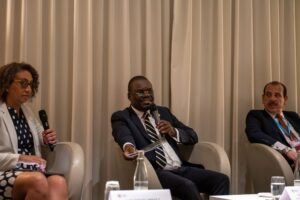
Experts gathered to tackle the pressing issue of sustainable health financing in the Health Diplomacy Alliance side event “Investing in Health Financing: Building a Resilient and Sustainable Healthcare System,” on the sidelines of the 78th World Health Assembly.
Ms. Katherine Urbaez, Executive Director of the Alliance, as part of the Pillars of work of the organisation, opened and moderated the event by highlighting the urgency of sustainable health financing amid global disruptions impacting health and development. She noted that Official Development Assistance has largely stalled over the past decade while rising security and emergency costs strain health budgets.
To address this, health diplomacy plays a key role in balancing global solidarity with national ownership and securing predictable support for institutions like the WHO. Many initiatives are being undertaken by countries, such as tax reforms, reprioritising health in national budgets, and fostering Public-Private Partnerships with transparent governance.
The discussion focused on two streams: national and regional pathways, and innovative approaches to health financing, but all within today’s complex geopolitical context and the need for resilient health systems.
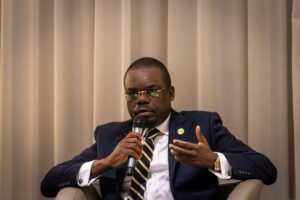
Dr. Jean Kaseya, Director General of Africa CDC, emphasised a bold paradigm shift: “The plan is not to fill gaps, it’s to rethink the system of health financing.”
He stressed the urgent need for sovereign control over health strategies and budgets, calling for “strong governance, data-driven systems, and public-private partnerships to measure and deliver results.” Dr. Kaseya also pointed out that only 16 African countries currently have concrete plans to achieve SDG3, pressing the question: “How much money is actually needed and what is the return on investment?”
The role of domestic resources and innovative financing mechanisms, such as health taxes, was another focal point. “We need to rethink multilateralism,” Dr. Kaseya said, recognising the steep decline in ODA and the growing demand for countries to “do more with less.”
This call for realignment and efficiency was echoed throughout the discussions and highlighted regional cooperation efforts that focused on better governance and increased impact. Dr. Kaseya also presented Africa’s Health Financing in a New Era, a comprehensive strategy that radically transforms how health systems are financed in Africa.
Hon. Dr. Amr Kandeel, Assistant Minister of Health of Egypt, highlighted the pressure of global inflation and supply chain disruptions on health systems. He emphasised Egypt’s commitment to Universal Health Coverage through the Universal Health Insurance system, which has already quadrupled the health budget in its second phase.
Hon. Dr. Kandeel stressed the importance of investing in digital infrastructure, workforce development, and prevention, while promoting inclusive governance and public-private partnerships to build an equitable and sustainable health system.
During the discussion on the new innovative approaches to health financing, Dr. Mary-Ann Etiebet, CEO of Vital Strategies, outlined the “triple shocks” battering health systems: stagnant development aid, tightening government budgets, and increasing pressures from non-communicable diseases, climate shocks, and demographic shifts.
She spotlighted health taxes – particularly on sugar and tobacco – as powerful tools to sustain health system funding while promoting accountability, transparency, and good governance. Dr. Etiebet drew attention to a 2024 report by the Task Force on Fiscal Policy for Health and noted that a 50% excise tax increase on tobacco, alcohol, and sugary drinks could generate an estimated $3.7 trillion globally over five years.
She called for better governance and management, as well as smarter data infrastructure to help governments prioritize spending effectively.
Dr. Karlee Silver, CEO of Grand Challenges Canada, brought a grassroots innovation perspective, illustrating how catalytic capital – blended grants, loans, and equity – can overcome market failures and scale promising health innovations.
She shared that local solutions supported by the Grand Challenges platform in Ghana are addressing real maternal and child health problems.
Dr. Silver stressed the importance of rethinking the system and pulling the full weight of innovative approaches, pointing to development impact funds and results-based financing as mechanisms that can accelerate change.
Leslie Rae Ferat, President of the NCD Alliance and Executive Director of the Global Alliance for Tobacco Control, underscored the importance of WHO’s “best buys,” particularly taxes on tobacco, sugary drinks, and alcohol, which generate significant government revenue while reducing consumption of these harmful products.
She cautioned that non-communicable diseases (NCDs), responsible for 80% of preventable deaths, amplify vulnerability to health crises like COVID-19. This dual effect lowers the risk of non-communicable diseases, leading to better public health and long-term savings for health systems.
Finally, Dr. Ballkis Abdelmoulla, member of the WHO Youth Council, highlighted the often-overlooked human resource crisis in health: brain drain, poor infrastructure, and harsh working conditions in rural areas. Criticising siloed donor funding and disparities between private and public care quality, she called for “bottom-up interventions” and better coordination among donors to support national NCD goals such as cervical cancer screening and HPV vaccination.
This dialogue made clear that building resilient and sustainable health systems requires a blend of national ownership, innovative financing, strong governance, and coordinated multilateral efforts. The path forward is complex but critical, demanding both visionary policies and practical tools to transform health financing amid a rapidly evolving global context.