Tag: mental health

  • Invisible Emergencies: Climate Change, Mental Health, and Health Diplomacy

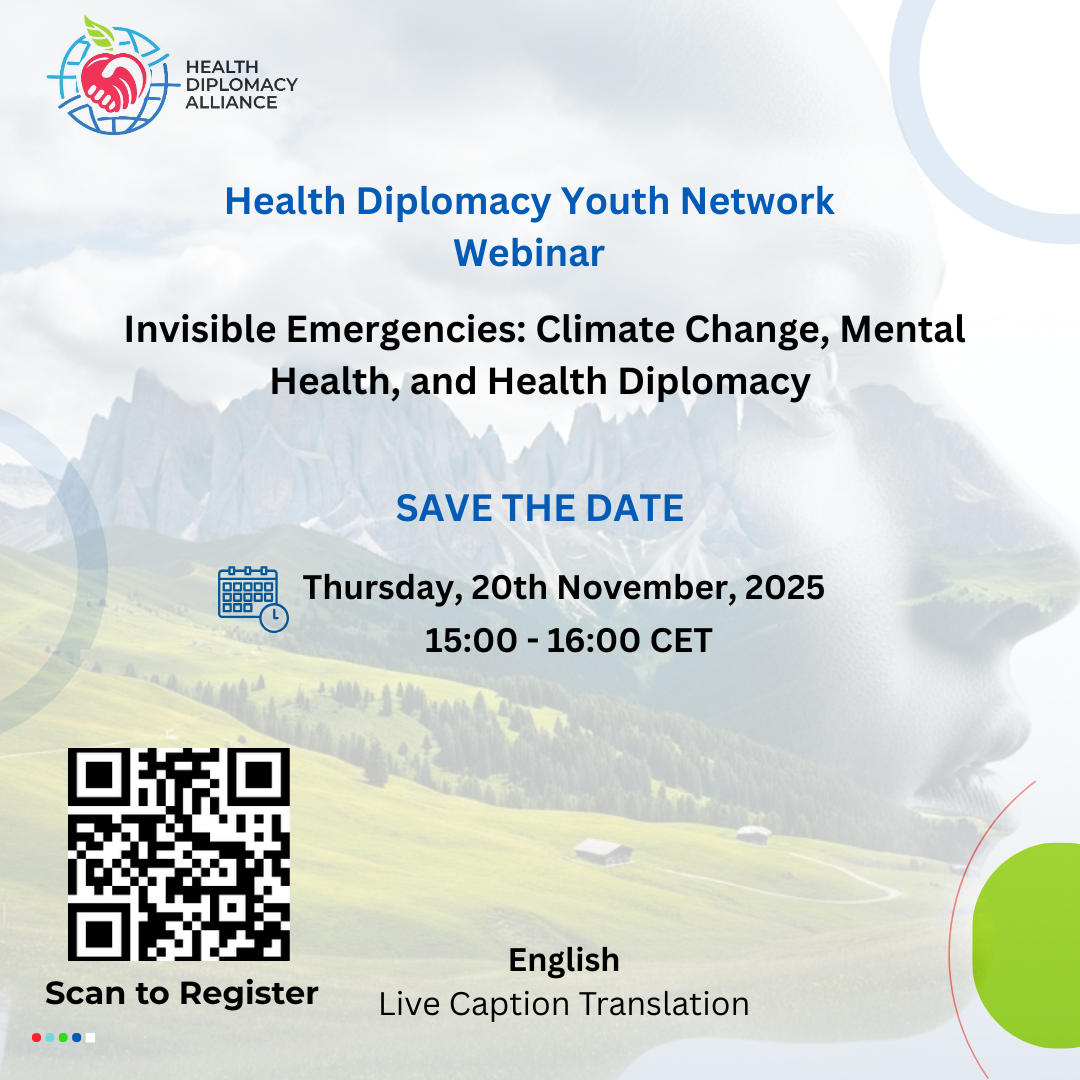
    Invisible Emergencies: Climate Change, Mental Health, and Health Diplomacy

    As climate impacts intensify, exacerbating trauma, food insecurity, displacement, and health inequities, mental health continues to be overlooked in climate strategies, underscoring the need for integrated action. Held in the wake of the Health Day deliberations at COP30, the webinar organized by the Health Diplomacy Youth Network responded to growing recognition of the psychological toll of climate change on vulnerable and climate-affected communities. With participation from youth leaders, environmental psychology experts, and community mental health practitioners, the session brought mental health to the forefront of climate diplomacy.

    Ayesha Ali, Coordinator of the Commonwealth Youth Health Network, opened the session by highlighting the gap between policy commitments and real-world access to mental health services in climate-vulnerable regions, especially for women, rural populations, and young people.

    Matteo Consiglio, Lead, Food and Water Systems, Swiss Youth for Climate, underscored how climate-driven food insecurity contributes to anxiety, stress, and psychosocial instability, calling for stronger links between food systems, environment, and public health.

    Dr. Jakub S. Bil, Universal Health Coverage Working Group Co-Chair, Global Mental Health Action Network, emphasized community-based and rights-based mental health approaches, noting that climate impacts frequently compound pre-existing trauma and inequities, and stressed co-design of solutions with affected communities as central to sustainable implementation.

    Dr. Harshita Umesh, Focal Point, Health Working Group, YOUNGO, highlighted the limited integration of mental health within UNFCCC processes and called for mental health to be embedded across adaptation and disaster response mechanisms, while Dion Ras, Executive Committee Member, International Association for Youth Mental Health, brought a grassroots lens, emphasizing peer support, lived experience, and the need for accessible, youth-informed systems of care in the face of climate stressors.

    During the panel discussion, Ebunoluwa Ayinmode steered a conversation that underscored the gap between policy ambition and implementation, the invisibility of cumulative climate-related trauma in formal frameworks, and the need for health diplomacy to align institutions, communities, and youth constituencies around shared priorities

    This event marks an important step in elevating the climate–mental health objectives enshrined in the Belem Health Action Plan by mobilizing diverse expertise, amplifying youth and community voices, and identifying practical pathways for integrated, equity-focused action. The Health Diplomacy Youth Network remains committed to advancing diplomatic engagement, intergenerational collaboration, and evidence-based advocacy to ensure that mental health becomes a central pillar of climate resilience.
  • Likes, Shares, and Side Effects: Misinformation’s Effects on Health

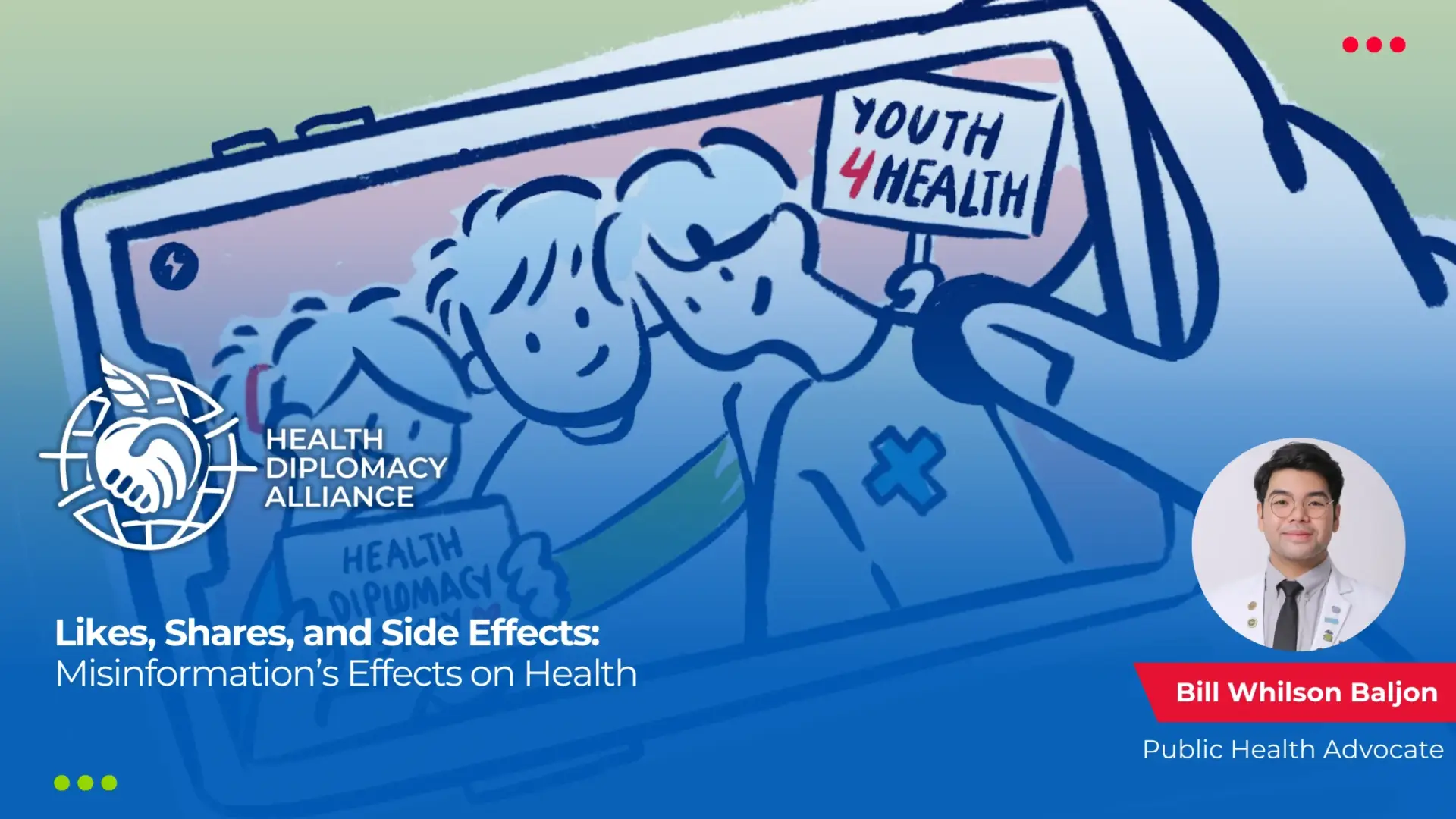
    Likes, Shares, and Side Effects: Misinformation’s Effects on Health

    Source – Authors

    In today’s era of information access and AI, it is becoming increasingly difficult to separate truth from well-made AI-generated content. Identifying AI becomes especially challenging because people aren’t usually in a discerning mindset when scrolling through the internet. Most of the time, they’re simply looking to relax and be distracted.

    That might be (debatably) fine when it comes to funny videos or memes, but it’s a very different story when health information is involved.

    It is now common for people to look up what help they need before they go to a doctor. This information helps them identify the type of care they receive, its costs, and how to exercise home remedies before they need to go to a medical professional. It follows that they must be informed with information that’s accurate, relevant, timely, up to date, and transparent. However, because of limited skills to access good quality health information, people tend to rely on information derived from social media, friends, and, increasingly, AI tools like ChatGPT.

    Online platforms such as Twitter, Facebook, YouTube, and Instagram are common sources of fast and easy information; however, this space also propagates harmful practices as they may provide people with misleading or biased, inaccurate, and poor-quality health information. This practice of misinformation (false or inaccurate information deliberately intended to deceive) and disinformation (deliberately misleading or biased information; manipulated narrative or facts; and propaganda) is one of the most rampant problems in healthcare that affects our generation.

    The situation has escalated to the point that healthcare systems’ efforts to eliminate life-threatening diseases have been severely impacted. In the Philippines, a state of panic broke out in 2019 following the re-emergence of polio, a disease previously declared eradicated in the country. This resurgence was closely linked to the widespread misinformation stemming from the dengue vaccine “Dengvaxia” controversy in 2017, where exaggerated claims about vaccines causing severe side effects or even death led to a sharp decline in public trust in immunization programs. As a result, misinformation became a key barrier to polio eradication efforts, with fear and vaccine hesitancy hampering the country’s disease prevention campaigns.

    To this day, low public trust in vaccination continues to affect routine immunization efforts, shown by a childhood immunization rate of 61%, far below the 95% target, leaving many children vulnerable to otherwise preventable deadly diseases.

    At the same time, while AI-powered tools offer unprecedented access to knowledge, their downsides must not be overlooked. AI models generate content based on vast datasets, but they do not inherently distinguish fact from fiction. Without proper verification, public information may be based on AI hallucinations. This complicates people’s ability to find genuinely evidence-based health information, which in turn may affect their health-seeking behavior. If individuals begin to mistrust physicians or delay consultations because of inaccurate online advice, the doctor–patient relationship may weaken, leading to poorer adherence to medical advice and potentially worse health outcomes.

    On the bright side, these infodemics and misinformation can be effectively addressed through multisectoral initiatives implemented at both macro and micro levels. While government interventions of developing legal measures and policies in the scene are essential, corresponding support must be provided in youth and community settings. Campaigns should aim to create awareness, improve health-related content, build trust in credible health organizations and experts, and generally enhance people’s literacy in both digital and health aspects for them to better assess and identify misinformation.

    Young people play a pivotal role in this dynamic landscape. With their strong online presence, young people are often the first to encounter, share, or challenge health-related content. Their digital fluency enables them to quickly amplify both accurate and inaccurate information. Harnessing this potential requires targeted interventions that empower youth to become responsible digital citizens. Training programs, peer-led campaigns, and collaborations with student and youth organizations can help shape a culture of critical thinking and fact-checking.

    Several global and local initiatives provide examples of how to effectively combat misinformation. For instance, the S.U.R.E. campaign in Singapore effectively combined government messaging, media partnerships, and youth ambassadors to promote fact-checking habits. Similarly, in the Philippines, UNICEF worked with Meta to analyze vaccine hesitancy trends and organize campaigns to increase confidence in routine vaccination. These examples highlight that coordinated strategies combining digital literacy, community engagement, and credible messengers can mitigate the harms of misinformation and restore confidence in healthcare.

    As the world grapples with the double-edged sword of digital and AI-driven information, safeguarding public health depends on more than just regulation. It requires a culture of discernment, responsibility, and trust. AI and social media will remain central in how people access health knowledge, but the key lies in empowering individuals, especially the youth, to navigate this landscape wisely. Let’s utilize the strategies offered by successful case studies and foster collaboration across sectors and societies to ensure health communication’ purpose: to inform, protect, and improve lives.

    About the Authors


    Bill Whilson Baljon is a pharmacist and public health advocate from the Philippines. He is dedicated to promoting health equity and empowering communities through his work in health promotion, policy advocacy, and community engagement. 


     Abigail Salen is a multimedia artist from the Philippines. She aims to utilize visual communication in health promotion and sustainable development, all dedicated to design for good.

    They are the co-founders of Yay! I’m Sober, a health awareness initiative in the Philippines that engages youth, businesses, and civil society organizations to encourage tobacco and alcohol cessation using youth-driven, inclusive, and supportive messaging.

  • Mental Health Cyberdiplomacy in the Age of Algorithmic Trauma

    Mental Health Cyberdiplomacy in the Age of Algorithmic Trauma

    What if the most potent threats to mental health no longer emerge from violence—but from the screens we hold in our hands? As digital weapons evolve to target not just systems but minds, mental health diplomacy must either transform—or become obsolete. The global mental health community can no longer afford to treat cyberspace as outside its remit. Psychological warfare is no longer metaphorical. It is algorithmic, ambient, and deliberate—disabling not the body, but the will. 

    In my article Advancing global mental health diplomacy through a rights-based approach”, published in The Lancet Psychiatry (Volume 12, Issue 4, pp. 247–249, April 2025), I proposed a redefinition of global mental health diplomacy—shifting it from ad hoc technical cooperation toward a strategic, rights-based pillar of international relations. I argued that diplomacy for mental health must not only promote service access, but protect psychological integrity, uphold dignity, and reinforce system-wide resilience. That article laid the foundation. But it is in the digital terrain that this diplomacy now finds its most urgent frontier. 

    Mental health cyberdiplomacy is the next step. It responds to a new class of threat—where trauma is no longer transmitted only through direct violence, but through information flows engineered to destabilise, disorient, and divide. This is no longer about technology alone. It is about how trauma travels, how trust dissolves, and how fear is weaponised—not just across borders, but across timelines, across generations. 

    Traditionally, cyberdiplomacy has focused on infrastructure, sovereignty, and the governance of data flows. It was never built to address psychological safety. Yet in today’s digital theatre, emotional disruption has become an instrument of statecraft. Disinformation campaigns, synthetic media, and algorithmic manipulation are now deployed to fracture perception, destabilise identity, and erode public sanity. Minds are no longer merely influenced—they are targeted. Emotions are triggered at scale. And the consequences for mental health are no longer speculative. 

    We are witnessing the rise of a new psychological condition: geopolitical anxiety—a state of digitally mediated distress induced not by direct exposure to violence, but by ambient proximity to crisis. Endless feeds of war, collapse, and catastrophe create a recursive sense of helplessness. People are not merely observing the world unravel—they are experiencing it internally. Clinical symptoms—emotional numbing, sleep disruption, suicidal ideation—are surfacing among those never physically near the trauma. This is a new category of harm: cumulative, distributed, and algorithmically delivered. 

    Some institutions have begun to recognise this mental toll. There are cautious moves toward regulating harmful content, improving digital literacy, or embedding psychosocial elements into public discourse. But these efforts remain fragmented. They are reactive rather than strategic. They respond to symptoms, not systems. They signal awareness, but lack cohesion, scope, and diplomatic reach. What emerges is not a framework—but a vacuum. Mental health cyberdiplomacy does not describe what already exists. It proposes what must. 

    We need a new diplomatic architecture—one that embeds psychological protection into the governance of cyberspace. This architecture must be multidimensional and anticipatory. It must operate across four strategic axes: 

    • Representation – Mental health must be positioned at every cybernorm table: from the UN Open-Ended Working Group to the Global Digital Compact. Psychological safety must be recognised as a pillar of digital governance, no less than infrastructure integrity or data protection. 
    • Accountability – Platforms and algorithms must be held to standards that prevent the amplification of trauma and the normalisation of emotional harm. Independent auditing, algorithmic transparency, and trauma-informed digital design must become standard, not exceptional. 
    • Law – Psychological operations that intentionally destabilise populations must be named and framed as violations of international law. This is not merely cybercrime. It is psychological targeting. And its costs are collective. 
    • Resilience – Cognitive preparedness, emotional immunity, and digital mental health literacy must be embedded into education, civic infrastructure, and crisis response. These are not soft skills. They are core elements of democratic durability. 


    Mental health cyberdiplomacy must operate across the full arc of crisis: preparing systems before conflict, defending psychological integrity during it, and supporting trauma-informed recovery afterward. It must be present where systems are stressed, where fragmentation is accelerating, and where minds become theatres of geopolitical contestation. 

    The foundations are already in place. The WHO QualityRights framework, the Convention on the Rights of Persons with Disabilities (CRPD), and the WHO Mental Health Action Plan articulate a vision of rights-based, person-centred mental health systems. My Lancet Psychiatry article called for these tools to be interpreted not only as health policy instruments, but as diplomatic assets—capable of shaping global norms and enabling systemic protection against psychological harms. But without an extension into the cyber domain, that protection remains incomplete. 

    Unprocessed trauma is not neutral. It compounds over time. It corrodes public trust, destabilises institutions, and accelerates radicalisation. In an era defined by ambient fear and engineered outrage, defending the mind is no longer a clinical concern. It is a geopolitical imperative. 

    This is not about sanitising the internet or regulating emotion. It is about preserving the conditions that make peace and democracy viable. In a hyperconnected world, the battlefield is cognitive. And in that battlefield, mental health is no longer a background issue. It is a strategic domain. 

    Diplomacy must evolve to meet that reality—not incrementally, but systemically. If we fail to embed psychological protection into the infrastructure of our digital societies, we risk raising a generation fluent in fear, numbed to violence, and uncertain of what is real. We have built firewalls to defend our systems. Now we must build firewalls to protect our minds—from manipulation, from fragmentation, and from algorithmic despair. 

    This strategic evolution also informs the development of MHPSS-C—Mental Health and Psychosocial Support integrated with Cyberresilience—a new operational model I have proposed to address the intersection of psychological vulnerability and digital threat. The framework, detailed in a forthcoming policy brief, aims to operationalise protection where trauma, code, and cognition now converge. 

    Mental health cyberdiplomacy begins here—not as a reaction, but as a new logic. Not as a commentary, but as a call to reimagine how we safeguard the human condition in the digital age. 

    About The Author

    Dr Jakub S. Bil is a global health systems advisor specialising in mental health, resilience, and strategic governance. He co-chairs the Universal Health Coverage Working Group within the Global Mental Health Action Network and represents Frombork Psychiatric Hospital in national and multilateral reform efforts. His work explores the intersection of psychological integrity, institutional design, and cybergovernance in times of systemic disruption.