Author: Aliya Jayed

  • 777 Campaign: World AMR Awareness Week 2025

    777 Campaign: World AMR Awareness Week 2025

    The 7-7-7 Campaign, was our flagship initiative for our World Antimicrobial Resistance Awareness Week (18–24 November 2025), engaging during 7 days, 7 actions and 7 group of stakeholders. Key events included flag displays on Pont du Mont-Blanc from 17 to 19 November, an awareness booth at Geneva Cornavin Main Train Station on 18 November, and the blue illumination of Geneva’s Jet d’Eau on 23 November. 

    Throughout the week, an online social media campaign ran with partners from various sectors and participants who amplified the campaign’s reach and highlighted their work related to AMR. 

    As a conclusion to WAAW 2025, the 2025 Global Intergenerational Dialogue on AMR took place on 24 November in collaboration with the Geneva Environment Network, underscoring the critical need for cross-sectoral collaboration to sustainably address AMR. 

    Pont -Du-Mont Blanc
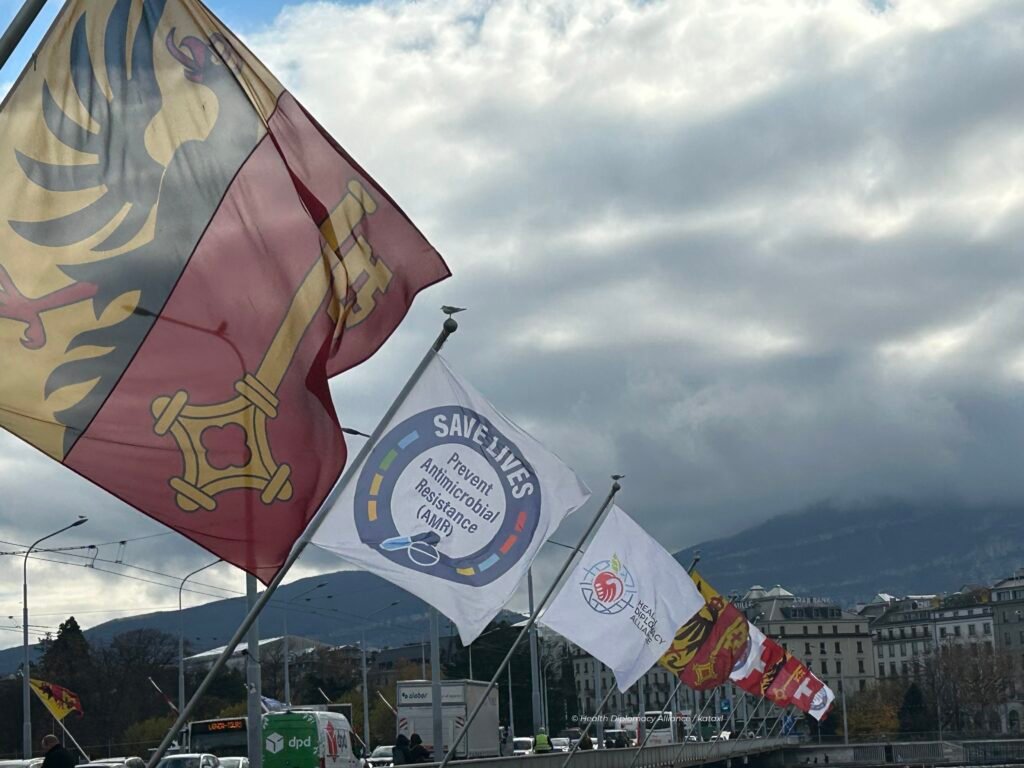
    One of the most noticeable aspects of our 777 campaign was the deployment of the Alliance’s and the AMR campaign’s flags during November 17–19, 2025.

    On average, 55,000 cars, 14,500 pedestrians, and 6,500 cyclists pass through the Pont du Mont Blanc each day.

    This exceptionally high circulation, which included pedestrian traffic, private automobiles, public transportation, and active mobility users, made it the perfect setting for educating the Canton of Geneva’s citizens and passersby about AMR.

    Thousands of extremely diverse and energetic travelers saw the flags throughout the course of the three days, raising awareness of AMR and highlighting the importance of health diplomacy in public spaces.

    Train Station Booth

    A full-day AMR awareness stand at Gare Cornavin, the largest and busiest train station in Geneva, with more than 170,000 passengers passing through daily. Our objective was to engage directly with the people and raise awareness about antimicrobial resistance in an accessible way.  

    The stand featured: 

    • A large projection screen showing educational and informative content produced by us and the organizations that joined our 777 campaign
    • Distribution of educational and informative materials, including flyers, infographics, and factsheets.
    • An interview corner for short recordings with passersby and partners. 


     Throughout the day: 

    • We interacted with individuals of all ages in multiple languages to make our outreach inclusive (English, French, Spanish, Portuguese)
    • Many visitors learned about AMR for the first time 

    Social Media Campaign
    Over 7 days, we convened a social media campaign across our platforms to highlight 7 key actions from 7 stakeholder groups to reduce the global AMR burden.

    The actions included Infection Prevention and Control, Water Sanitation and Hygiene, stewardship, surveillance, innovation, R&D, manufacture, equitable access, One Health approach, evidence-based policy, financing, and health diplomacy.  

    The 7 stakeholder groups represented a whole-of-society approach to curbing the global health threat and included AMR Survivors, Health workers, Governments and Policy Makers, Civil society, philanthropy, academia, International Organizations, Private Sector, Media.

    The content spanned languages such as Maltese, English, Spanish, French, Hindi, Portuguese, Italian, and Malayalam

    The social media outreach from over 20 global organizations who participated in the campaign totalled 15,231 impressions, likes, reactions, and reposts.

    Jet d’Eau Ilumination
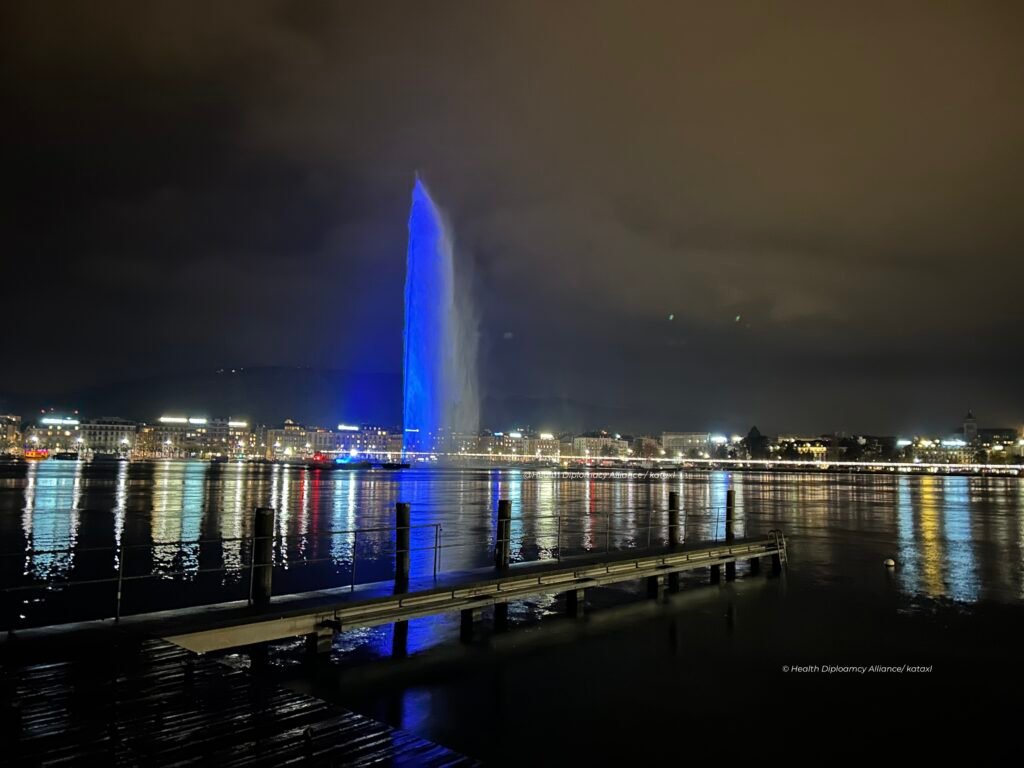
     

    The illumination of the Jet d’Eau in blue on 23 November was one of the key activities carried out as part of our 777 campaign.

    Lighting of the Jet d’Eau supports awareness of key issues, humanitarian emergencies, or highlights events organized in international Geneva. For WAAW2025, the Jet adorned itself in brilliant blue to illuminate the AMR challenge at the heart of the harbor.  

    This symbolic icon of the city of Geneva, lighting it in blue, raised visibility, strengthened public awareness, and encouraged collective action in support of the campaign’s goals to reduce the global burden on AMR. 


    2025 Intergenerational Dialogue on AMR
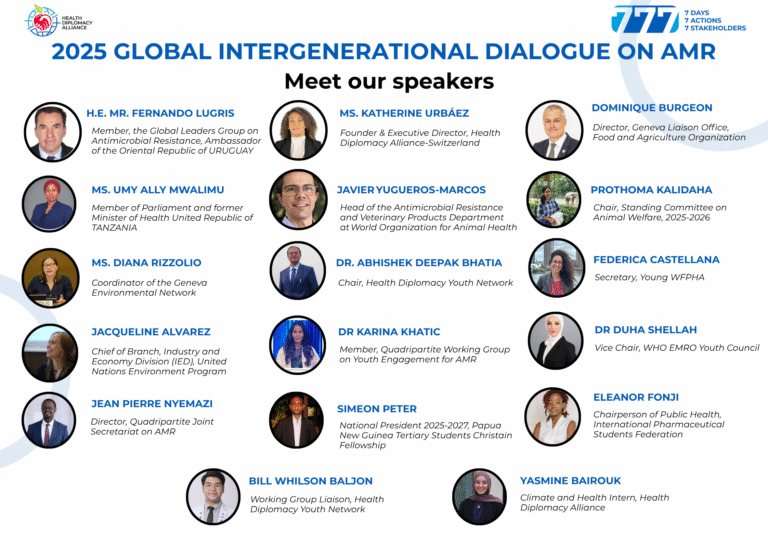
     

    Co-hosted by the Health Diplomacy Alliance and Geneva Environment Network, the 2025 Global Intergenerational Dialogue on AMR brought together speakers from Quadripartite and Youth led organizations and built on global momentum, amplified youth perspectives through dedicated surveys, fostered inter-generational exchanges of cross sectoral and cross regional success stories and highlighted actionable recommendations to embed inclusive One Health approach in global AMR governance. 
  • 156th Executive Board – World Health Organization

    156th Executive Board – World Health Organization

    The 156th session of the World Health Organization’s (WHO) Executive Board convened in Geneva from February 4 to 11, 2025, gathering representatives from Member States, senior WHO officials, and key stakeholders to address pressing global health matters, with discussions marked by a strong focus on health governance, financial sustainability, and the prioritization of key health challenges facing the global community.

    The meeting opened with significant attention to leadership and governance matters within the WHO. A central element of the governance discussions circled the Member State-led governance reform, with particular emphasis on enhancing transparency and strengthening decision-making processes. The review of the Standing Committee on Health Emergency Prevention, Preparedness, and Response was highlighted as a critical step in improving WHO’s ability to respond to global health emergencies effectively. Dr. Chikwe Ihekweazu was appointed as Acting WHO Regional Director for Africa, following the passing of Dr. Faustine Ndugulile, while Dr. Hans Henri P. Kluge was reappointed as the Regional Director for Europe, reflecting the confidence of Member States in his leadership. Dr. Ihekweazu’s interim appointment will remain in place until the formal election of a new Regional Director at the WHA78.

    A key theme was WHO’s financial health and sustainability. The EB debated the need for a flexible funding model that enables prompt responses to emerging health threats and geopolitical challenges, such as the decision of two Member States of the Americas, the United States of America and Argentina, to withdraw of the WHO. Dr. Cathrine Lofthus of Norway, Chair of the 41st Programme, Budget, and Administration Committee (PBAC), presented a decision paper that will align resolutions with the Programme Budget 2026–2027. The Board recommended that implementing requests to the Director-General—including those for WHA78—be contingent on finalizing this budget.

    This approach ensures that new initiatives are supported by clear funding strategies, where WHO will be required to assess the budgetary and operational implications of all resolutions and integrate these into the Programme Budget 2026–2027. Member States expect active consultation during prioritization, and progress will be reported to WHA78 through the PBAC.

    The Executive Board discussed and recommended several resolutions for adoption at WHA78, reflecting WHO’s commitment to addressing a wide range of global health issues. Among the most notable was the Global Action Plan on Climate Change and Health, which aims to bolster health system resilience to climate-related risks and mitigate the environmental determinants of health and acknowledges the growing impact of climate change on public health and calls for coordinated international efforts to protect vulnerable populations and strengthen emergency preparedness.

    Another important draft resolution, led by Côte d’ Ivoire, focused on skin diseases, seeking to address all skin disease conditions, particularly in low- and middle-income countries, calling on the improvement of access to treatment, preventive measures, and tackling stigma and discrimination of patients, as well as improving research to combat these conditions.

    Vital discussion on the health implications of nuclear weapons and nuclear war, the proposal led by Samoa, emphasized the catastrophic humanitarian and health consequences of nuclear conflict and urged Member States to strengthen their emergency preparedness and response capacities, further reinforcing WHO’s role in raising awareness about the long-term health effects of nuclear exposure and advocating for global disarmament efforts.

    Strengthening health financing globally was another major discussed resolution, led by Nigeria, the draft calls for sustainable and equitable health financing mechanisms to support universal health coverage and primary healthcare systems; due to the pressing need to close funding gaps and mobilize domestic and international resources to achieve health-related Sustainable Development Goals (SDGs). The Board emphasized that robust health financing is essential to building resilient health systems capable of withstanding future health emergencies.

    The Executive Board concluded the session by reaffirming its commitment to strengthening WHO’s leadership, transparency, and financial stability; where Member States expressed a shared determination to work collaboratively at WHA78 to adopt resolutions that promote global health security, advance health equity, and bolster WHO’s capacity to serve the most vulnerable populations.

    With a clear roadmap laid out by the EB, the upcoming78th World Health Assembly scheduled to take place in Geneva from May 19 to 27,  promises to be a decisive moment in health diplomacy as Member States and many come together to tackle pressing health issues, the result of the negotiation of the Intergovernmental Negotiation Body to draft and negotiate a WHO Convention, Agreement, or other international instruments on pandemic, preparedness, and response, and the reinforcement of the role of WHO as the leading authority in international health.


  • Geneva Environment Network’s 25th Anniversary Celebration – Advancing the One Health Approach

    Geneva Environment Network’s 25th Anniversary Celebration – Advancing the One Health Approach


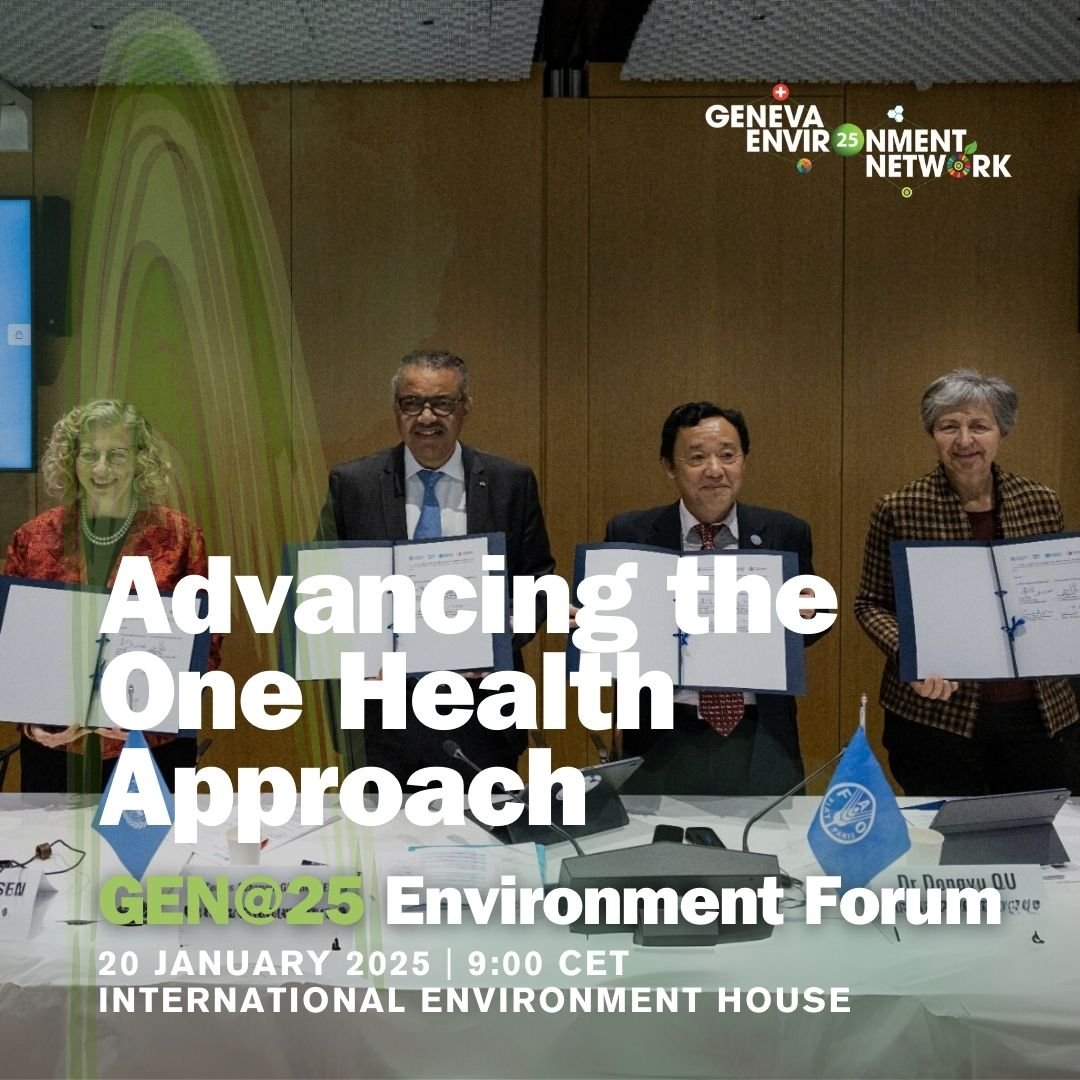
    We join the Geneva Environment Network’s High-Level 25th  Anniversary celebration on January 20, 2025, at the International Environment House in Geneva, coordinating the cluster on “Advancing the One Health Approach” to highlight the impact of multilateralism and international Geneva.

    The One Health approach recognizes the interconnection between human, animal, and environmental health, making it indispensable for addressing global challenges. From zoonotic diseases and food security to antimicrobial resistance (AMR), pollution, and climate change, One Health is a unifying framework for tackling our world’s most pressing issues.

    The Role of the Geneva Environment Network

    The Geneva Environment Network plays a vital role in addressing the environmental drivers of health crises and advancing One Health principles. Its work highlights how climate change, pollution mitigation, and biodiversity loss influence global health and demonstrates innovative strategies for addressing these challenges.

    These efforts align with the work of Quadripartite collaboration between WHO, WOAH, FAO, and UNEP, demonstrating the importance of collective action across health, agriculture, and environmental sectors.

    Strengthening Multilateralism and Health Diplomacy

    In International Geneva, multilateralism is key to the success of the One Health approach. Platforms like GEN have fostered collaboration among diverse stakeholders, bridging sectors and regions to find global solutions. Health diplomacy plays a critical role in:

    • Coordinating international efforts to address AMR, zoonotic diseases, and other One Health challenges.
    • Promoting integrative policies that link health and environmental sustainability.
    • Advancing sustainable development through evidence-based approaches.

    Our booth at the event will feature case studies and interactive exhibits to demonstrate the power of multilateral collaboration in achieving One Health goals.

    Join us at the Geneva Environment Network’s 25th Anniversary Celebration

    For more information, visit the GEN 25th Anniversary.

  • Geneva Health Forum

    Geneva Health Forum

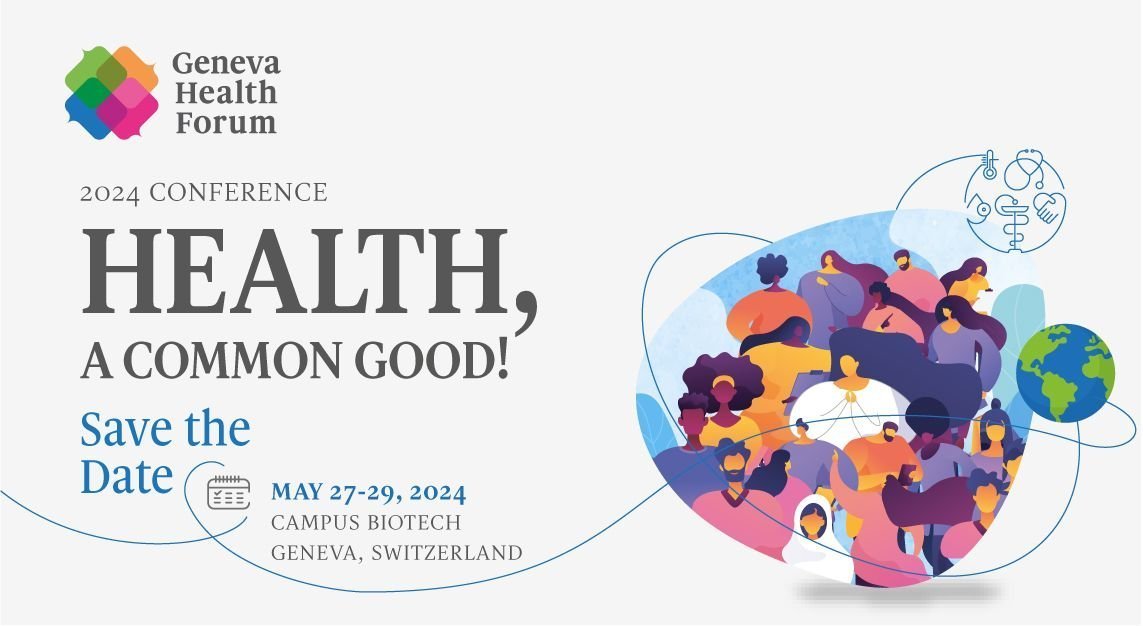
    🌍 The Geneva Health Forum 2024 Conference: Health, a Common Good!
    🗓 May 27-29, 2024
    📍 Campus Biotech, Chemin des Mines 9, 1202 Geneva

    The Geneva Health Forum 2024 to be celebrated from May 27-29 is prepared to convene global health leaders, researchers, medical practitioners, field actors, and policymakers for a transformative conversation on challenges and solutions toward health equity and access.

    The ever-growing disparities in health outcomes worldwide underscore the limitations of relying solely on market mechanisms to ensure equitable access to healthcare. The Conference theme “Health, a common good!” reaffirms the importance of viewing health as a collective asset, requiring collaborative efforts, community engagement, and a broader focus on the social and environmental determinants of health.

    The 2024 GHF Conference will delve into the vision of health as a common good across three pivotal domains:

    1.      Health and the Environment: Time for Solutions
    2.      Migration, Health, and Equity
    3.      Towards the Elimination of Malaria

    The Geneva Health Forum will serve as a platform for experts, researchers, and practitioners to collaborate, share insights, and advance solutions in these key areas.

  • From Jeddah to Geneva | Multilateralism Addressing Antimicrobial Resistance

    From Jeddah to Geneva | Multilateralism Addressing Antimicrobial Resistance

    This event is organized within the framework of the 2024 World Antimicrobial Resistance Awareness Week (WAAW) – a global campaign to raise awareness and understanding of Antimicrobial Resistance (AMR) and promote best practices among One Health stakeholders to reduce the emergence and spread of drug-resistant infections.

    About this Session

    Antimicrobial resistance is a critical and growing threat to human, and animal health, food security, environment, and development. AMR has been directly linked to 1.27 million global deaths and has contributed to 4.95 million deaths.

    During the last 79th United Nations General Assembly, 26 September, as part of the high-level week it was adopted a High-Level Political Declaration on AMR where the urgent need for global action against AMR, including the global target to reduce the misuse of antimicrobial and sustainable financial and innovation to combat AMR globally.

    As part of the ongoing efforts the Fourth Ministerial Conference on Antimicrobial Resistance will be hosted by the Kingdom of Saudi Arabia on 15-16 November in Jeddah, under the theme “From Declaration to Implementation – Accelerating Actions Through Multisectoral Partnerships for the Containment of AMR”. The conference, bringing together leaders to address urgent issues in preventing and managing AMR on a global scale, will be preceded by a side event day for non-state actors on 14 November.

    This event, organized as part of the World Antimicrobial Resistance Awareness Week (WAAW) from 18 to 24 November, will serve as a strategic gathering to advance commitments and build on the 4th Ministerial Conference and the work on AMR from international organizations and partners in Geneva International to accelerate the commitments on AMR, foster collaboration between the Quadripartite AMR organizations, UNEP, WHO, FAO, WOAH, the private sector, academia, and civil society to promote the integrated One Heath approach and evaluate the next steps and commitments that result from the meeting in Jeddah.


    Speakers

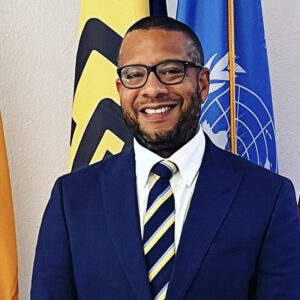
    H.E. Amb. Matthew WILSON

    Permanent Representative of Barbados to the United Nations Office and other international organizations in Geneva

    Jacqueline ALVAREZ

    Chief, Chemicals and Health Branch, UN Environment Programme

    Jean Pierre NYEMAZI

    Director a.i., Global Coordination and Partnership Department, AMR Division, World Health Organization

    Dominique BURGEON

    Director, Geneva Liaison Office, Food and Agriculture Organization

    Javier YUGUEROS-MARCOS

    Head of the Antimicrobial Resistance and Veterinary Products Department, World Organisation for Animal Health

    Judith MOORE

    Head, Access & Outcomes, Centre for Health and Healthcare, World Economic Forum

    Luka ŠROT

    Associate Director, Health Security, International Federation of Pharmaceutical Manufacturers and Associations

    Katherine URBAÉZ

    Founder and Executive Director, Health Diplomacy Alliance

    Wondwosen ASNAKE KIBRET

    Policy and Partnerships Coordinator, Europe Office, UN Environment Programme | Moderator

    Read more: Jeddah to Geneva

    Watch the recording: VIDEO

  • Skin Diseases as a Global Public Health Priority

    Skin Diseases as a Global Public Health Priority

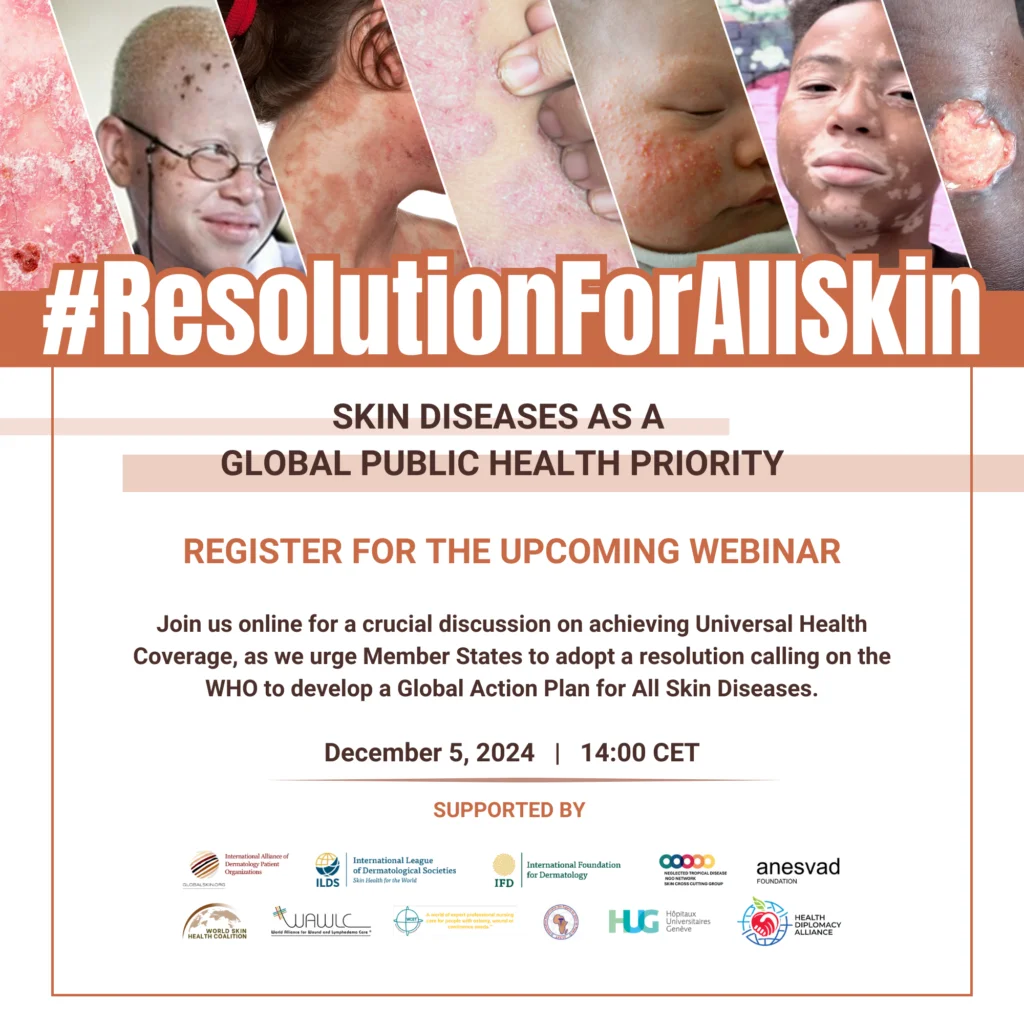
    Thursday, 5 December 2024 14:00-15:00 CET | Virtual Webinar
    Language: English | Live Transcription in more than 58 languages
    This Webinar will bring together Member States, healthcare professionals, patient advocates, and policy experts to explore the profound impact of skin diseases on global public health and the practical actions that are needed.
    An agenda item on All Skin Diseases, presented by Côte d’Ivoire and Nigeria with support from Togo and Micronesia, will be considered during the 156th WHO Executive Board from February 3–11, 2025, in Geneva.
    We will explore ways to support this initiative and advocate for a Global Action Plan to address the growing burden of skin diseases, worsened by social and economic factors, emerging infections, climate change, and mental health impacts.

  • Geneva Public Health Week 2024

    Geneva Public Health Week 2024

    Theme: Enhancing and Democratizing Governance in Global Health

    Date and Time: 9th April 2024 |15:00-17:00 (CET)

    Event Description: This event aims to explore the intersection of foreign affairs and health governance, focusing on the growing importance of health diplomacy. It will delve into the intricate dynamics between foreign affairs and health governance and the emergent significance of health diplomacy as a catalyst for health resolutions and policy implementation. Rather than merely seeking to enhance existing frameworks, it aims to critically evaluate current affairs and explore avenues for improvement and innovation.

    Event Type: Article

    Event Format: Online

    Language(s): English

    Organiser(s): Health Diplomacy Alliance

    How to Attend Virtually: Online

    Registration: N/A