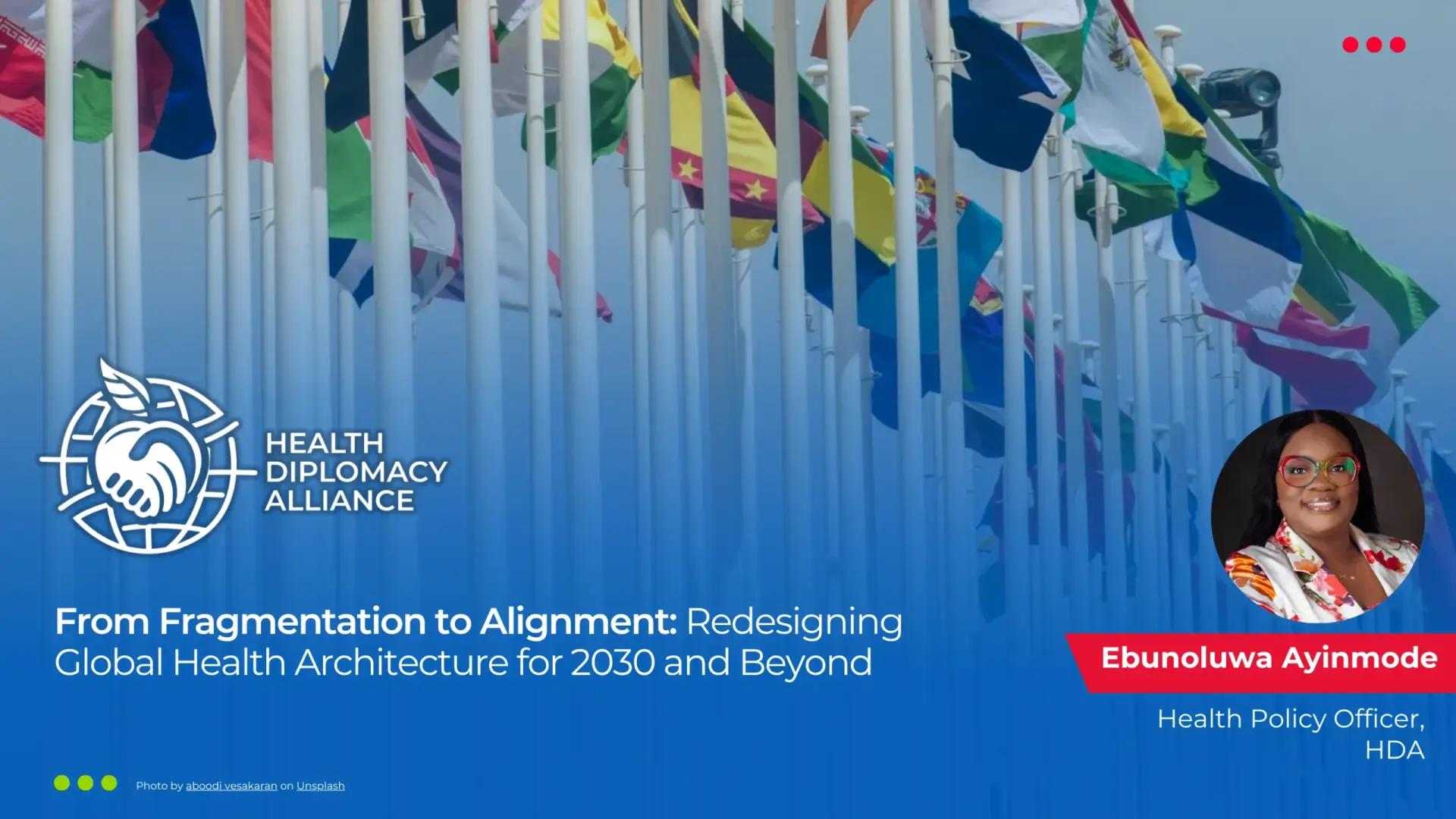
Image source – A. Vesakaran on Upsplash
The COVID-19 pandemic triggered the largest surge in global health financing in recent history, prompting pledges of reform and solidarity across nations, donors, and institutions. Five years later and just five years before the end of the Sustainable Development Goals timeline in 2030, critical questions remain: Has global health architecture truly evolved? Are countries more prepared and in control of their health systems?
Evidence from the Global Health Expenditure Database (April 2025) reveals that low-income countries still rely heavily on foreign aid, which accounts for more than 25% of their total health expenditure. In contrast, government expenditure on health remains low, with most countries allocating less than 10% of their national budgets to the sector. Despite repeated commitments, including the Abuja Declaration’s 15% target, domestic financing remains inadequate, and health systems continue to underperform.
Systemic Challenges
• Donor Overreach and Parallel Systems: Donor funding often flows through fragmented vertical programs (e.g., HIV, malaria, immunization), bypassing national health strategies and creating duplication. This undermines long-term sustainability and weakens institutional capacity.
• Lack of Coherent Governance: There is no binding global framework to hold donors accountable to national priorities. Despite efforts such as the Lusaka Agenda and updates to the International Health Regulations (IHR), donor coordination remains voluntary and inconsistent.
• Neglect of Primary Health Care: According to GHED data, less than 30% of government health spending in many low- and middle-income countries is allocated to primary health care. Instead, spending is concentrated on curative services and disease-specific interventions, leaving frontline systems underfunded.
• Weak Integration of Evidence into Decision-Making
Despite growing access to global guidance and data, many countries still face challenges in translating evidence into policy and practice. Capacity gaps in data analysis, health economics, and implementation science often due to underinvestment in local institutions, limit the ability to make strategic choices, assess trade-offs, or negotiate effectively with external partners.
What Reform Should Look Like
• Legally Binding Frameworks for Donor Coordination:
Integrate donor alignment and transparency requirements into global governance instruments such as the International Health Regulations. Donors should be obligated to report funding through national health accounts and align with country-led strategies.
• Country-Led Health Investment Compacts:
Shift from fragmented projects to co-financed national health compacts, where governments and development partners co-develop health system investment plans. These compacts should be reviewed publicly and embedded in national budget and monitoring frameworks.
• Strengthen Regional Leadership and Sovereignty:
Empower regional organizations such as Africa CDC, WAHO, and the Southern African Development Community (SADC) Health Desk to lead pooled procurement, local pharmaceutical regulation, and cross-border surveillance. Establish continental public dashboards for health security financing.
• Rebalance Spending Toward System Foundations:
Redirect funding toward primary care, community health workers, health infrastructure, and public health surveillance. Governments should recommit to the Abuja target of allocating at least 15% of their total budgets to health.
• Fund Southern Institutions and Knowledge Platforms:
Increase investment in Africa-based research institutions, policy think tanks, and civil society groups to ensure global policy and guideline development reflects the realities and leadership of the Global South.
Conclusion
The architecture of global health remains tilted toward external control, vertical programs, and fragmented governance. Reform must go beyond temporary initiatives or rhetorical solidarity. It must be rooted in enforceable rules, long-term financing, regional agency, and country-driven accountability. With just five years left to achieve the Sustainable Development Goals, the time to shift power, rebuild trust, and design a resilient, equitable, and accountable global health system is now.
References
- World Health Organization. (2025) Global Health Expenditure Database (GHED): April 2025 Release. https://apps.who.int/nha/database
- The Future of Global Health Initiatives (FGHI) Report. (2023) A vision for evolution: Aligning GHIs with country systems. https://www.futureofghis.org
- Kickbusch, I., & Aginam, O. (2021). Reforming the Global Health Architecture: The Road to Equity and Effectiveness. Geneva Global Health Hub. https://www.g2h2.org/posts/reforming-global-health-architecture
- Center for Global Development. (2023). It’s Time to Change: Reforming the Global Health Architecture. https://www.cgdev.org/blog/time-change-reforming-global-health-architecture
- World Health Organization. (2024). Strengthening the Global Architecture for Health Emergency Preparedness, Response and Resilience (HEPR). https://www.who.int/publications/i/item/9789240060616
- United Nations. (2023). Progress towards the Sustainable Development Goals: Report of the Secretary-General. https://unstats.un.org/sdgs/report/2023
- Africa Centres for Disease Control and Prevention (Africa CDC). (2022). New Public Health Order for Africa. https://africacdc.org/download/the-new-public-health-order-for-africa
- Marten, R., & Smith, R. D. (2023). Power shifts in global health: Are we there yet? BMJ Global Health, 8(1), e010248. https://gh.bmj.com/content/8/1/e010248
About the Author
Ebunoluwa Ayinmode is a global health professional and Program Manager at WAFERs. Her niche is health systems, guidelines, and policy. She champions locally driven strategies and amplifies African voices in global health, bridging diplomacy, data, and grassroots action.