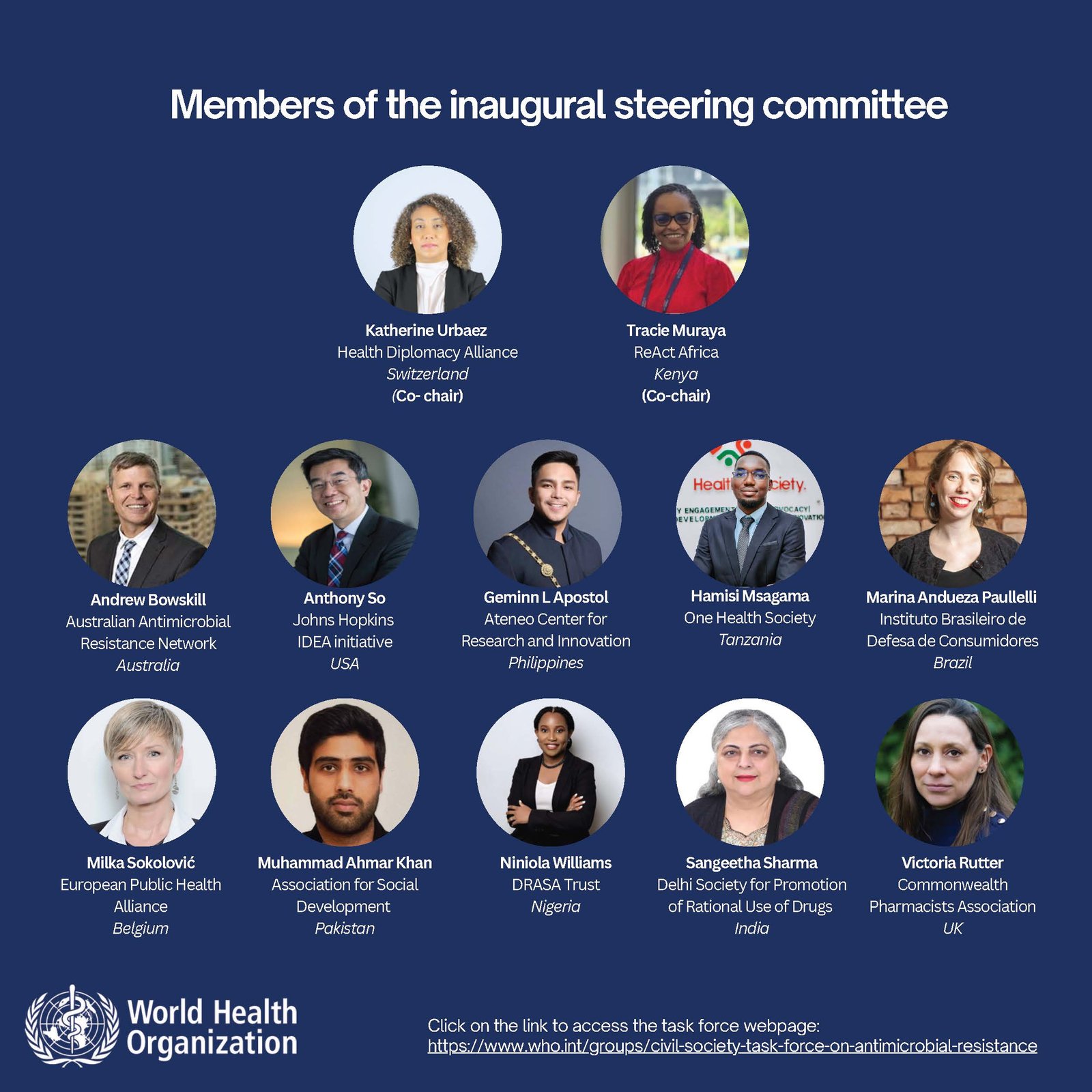
In a significant step to strengthen global action against antimicrobial resistance (AMR), the World Health Organization (WHO) launched the Civil Society Task Force on AMR during World Antimicrobial Awareness Week (WAAW) 2025. The initiative brings together nongovernmental organizations and civil society groups from around the world to coordinate efforts, provide evidence, identify gaps, and promote engagement between governments, communities, and stakeholders.
The Task Force aims to amplify the voices of affected communities and ensure that civil society organizations can contribute meaningfully to global strategies to combat AMR. Its objectives include fostering collaboration across sectors, supporting capacity building, promoting advocacy, and advancing WHO’s GPW14.
The Health Diplomacy Alliance (HDA) will be co-sharing the Steering Committee of the Task Force, bringing expertise in health diplomacy and cooperation. HDA’s involvement strengthens efforts to highlight the impact of AMR at global, regional, and national levels, while supporting civil society to engage in advocacy, strengthen regulatory systems, increase access to quality-assured antimicrobials, and integrate the One Health Approach into planning.
AMR continues to pose a severe global health threat. In 2019, drug-resistant infections were associated with approximately 4.95 million deaths, and by 2021, an estimated 1.14 million deaths were directly attributable to AMR. Without effective measures, healthcare costs could rise by $1 trillion by 2050.
By including civil society voices alongside technical expertise, the Task Force ensures that AMR responses are locally grounded, equitable, and evidence-based, helping governments and communities implement effective, sustainable solutions.
HDA’s participation in the Task Force underscores its commitment to promoting long-term, political system-level solutions to address the growing challenge of antimicrobial resistance.