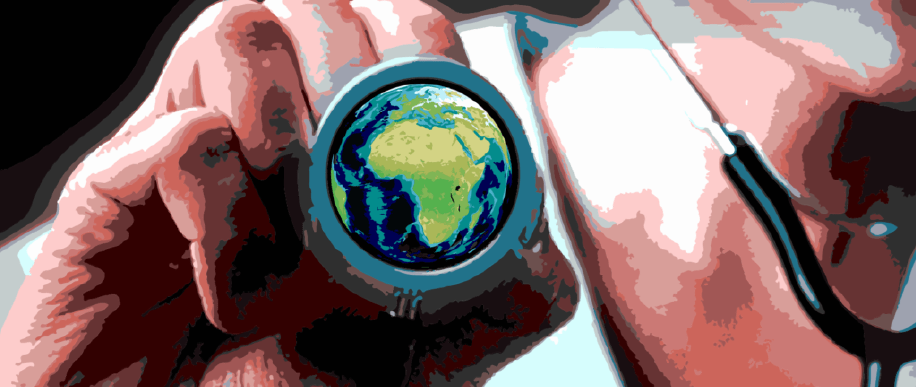
Tunisia’s health system is at a pivotal moment. With the World Bank’s recent approval of the US$125.16 million Tunisia Health System Strengthening Project, the country has the opportunity to modernize its infrastructure, equip its workforce, and redesign the delivery of essential services. Yet the initiative overlooks a critical dimension of sustainable health reform: the people it is meant to serve. Without meaningful investment in health education, community engagement, and population-level behaviour change, Tunisia risks building a more advanced system that still struggles to deliver better health outcomes for its citizens.
Since 2011, Tunisia has undergone profound political, social, and institutional transformations,
many of which have directly shaped its health sector. The 2014 Constitution put health as a universal, equitable, and non-discriminatory right. Health expenditure has steadily grown, reaching nearly 7% of GDP in 2021, and the country has made notable progress in life expectancy and vaccination coverage. Infant mortality has fallen by more than half since the early 2000s, and Tunisia often outperforms regional peers such as Morocco, and Egypt on key health indicators.
Yet this progress hides deep and persistent inequalities. Despite constitutional commitments, 17% of the population remains without health coverage, and out-of-pocket expenditures still account for 38% of total health spending, pushing vulnerable families into poverty or forcing them to renounce to basic healthcare services. The public sector employs only half of the country’s physicians and controls less than one-third of advanced diagnostic equipment, leaving rural and remote regions chronically underserved.
Noncommunicable diseases (NCDs) now account for 82% of mortality and two-thirds of total health expenditures. Obesity affects more than a quarter of the population, smoking rates remain high (48% among men) and the prevalence of hypertension, diabetes, and cardiovascular diseases continues to rise. These patterns reflect not only clinical gaps but widespread low health literacy, limited awareness of lifestyle risks, and an environment where poverty, pollution, and food insecurity shape daily life. Air and water pollution, unsafe waste disposal, and resource scarcity further strain both the health system and the communities it aims to protect.
It is against this situation that the World Bank’s Tunisia Health System Strengthening Project must be evaluated. The project is structured around four pillars: strengthening system resilience; reorganizing preventive and primary care; upgrading emergency medical services; and supporting implementation, training, and project management.
This is an ambitious, necessary, and forward-looking plan. Yet even a technically robust health system cannot achieve its goals if it operates in an environment where citizens lack the knowledge, resources, and incentives to pursue healthy lives. The project’s risk assessment and design fail to account for a fundamental truth: health systems and populations must evolve together. A system can only be as effective as the behaviours, awareness, and trust of the people who use it.
There are five reasons why the initiative risks falling short without a people-centred complementary strategy:
1. Low health literacy undermines preventive care
Tunisians are not sufficiently informed about the risks of NCDs, the importance of nutrition,
or the long-term impact of unhealthy lifestyles. Without public education campaigns and
community-level outreach, the burden of disease will continue to rise regardless of system
upgrades.
2. Poverty limits healthy choices
Access to fresh food, physical activity, and preventive services is still limited for most of the
population. A modernized health system cannot compensate for the environmental and
economic conditions that make unhealthy habits the default option.
3. Absence of community engagement weakens trust
Health diplomacy at national and international levels requires that citizens see themselves
as partners, not passive recipients. Tunisia’s success stories in health prevention worked
precisely because they integrated culture, sports, and local values.
4. Lack of coordination among actors dilutes impact
The Tunisian government, the World Bank, the WHO, neighbouring countries, and civic
organizations all have a role to play. Yet without coordinated clusters and a multi-annual
health-focused development plan, efforts will remain fragmented.
5. Education and health are inseparable
Tunisia’s challenges in both sectors reinforce one another. Without improving health literacy
and school-based health education, the country’s human capital and its economic future
remains at risk.
If Tunisia and the World Bank aim to build a resilient, equitable, and accessible health system, they must look beyond infrastructure and technology. Strengthening hospitals and upgrading emergency fleets are vital, but so is building a population that understands, values, and actively participates in its own health.
True health diplomacy begins with people. The World Bank’s investment can be transformative, but only if Tunisia seizes this moment to embed community engagement, education, and inclusion at the heart of its health strategy.
Resources:
WHO contribution in Tunisia (2019-2023): evaluation report. Geneva: World Health Organization; 2025. https://iris.who.int/server/api/core/bitstreams/14f91528-588c-4a71-9951-35c7f530978d/content
From burden to action: Tunisia steps up the fight against noncommunicable diseases. World Health Organization; 2025. https://www.emro.who.int/media/news/from-burden-to-action-tunisia-steps-up-the-fight-against-noncommunicable-diseases.html
Giusc, M., Persiani, N. The experience of Tunisian public healthcare system toward decentralizacon to the reduccon of health inequalices in low-, middle- income countries. Int J Equity Health 23, 271 (2024). heps://doi.org/10.1186/s12939-024-02355-5
New Project to Boost Tunisia’s Health System and Pandemic Response. World Bank; Press Release; May 28 2025. https://www.worldbank.org/en/news/press-release/2025/05/28/new-project-to-boost-tunisia-shealth-system-and-pandemic-response
Tunisia Health System Strengthening Project (P507209). Appraisal Environmental and Social Review Summary; Appraisal Stage; Report No: ESRSA04001; February 2 2025.
https://documents1.worldbank.org/curated/en/099030325044539035/pdf/P507209-495f5d10-1991-493b-b711-9417aa11f18e.pdf
Abdel Ben Y. Educacon and health in Tunisia: is human capital at risk?. Economic Research Forum, December 31 2024. https://theforum.erf.org.eg/2024/12/23/education-and-health-in-tunisia-is-human-capital-at-risk/