Health Diplomacy is the art and science by which governments, the private sector, civil society, and individuals navigate political processes to improve health outcomes. Global health diplomacy is far more than health negotiations between countries. It is the political and diplomatic process through which governments, international organisations, researchers, civil society, and the private sector build consensus, manage competing interests, and forge partnerships to tackle shared health challenges. At its core, global health diplomacy recognises that improving health in the twenty-first century requires not only scientific evidence but also political will, international cooperation, and skilled negotiation across sectors and borders.
Global health is entering a new political era. The assumptions that have shaped international health cooperation over the past three decades are increasingly being challenged by geopolitical competition, shrinking development assistance, pandemics, climate change, armed conflict, migration, artificial intelligence, and declining trust in multilateral institutions. These forces are not simply changing the context within which global health operates; they are fundamentally reshaping how health priorities are negotiated, financed, implemented, and governed.
An uncomfortable question deserves greater attention: is the health diplomacy paradigm we have inherited still fit for purpose? What are we – should be done about this?
Over the past two decades, health diplomacy has become firmly embedded within global health governance. It has strengthened international cooperation, facilitated global agreements, mobilised resources, and elevated health within foreign policy. These achievements cannot be underestimated.
Yet many of today’s greatest health challenges are proving resistant to diplomacy alone.
Pandemic preparedness, domestic health financing, local manufacturing, health workforce migration, antimicrobial resistance, climate resilience, and equitable access to innovation are as much political challenges as they are technical or diplomatic ones.
Perhaps the time has come to move beyond thinking exclusively about health diplomacy and begin embracing a broader and more integrated discipline of health politics and diplomacy.
The distinction is more than academic.
Health diplomacy provides the mechanisms through which countries negotiate, build partnerships, broker consensus, and pursue collective action. Health politics determines whose priorities prevail, how power is exercised, where resources are allocated, and whether agreements ultimately translate into implementation. Diplomacy therefore operates within political realities rather than above them.
Much like law and ethics occupy distinct but complementary roles in governance, health politics and health diplomacy should similarly be understood as mutually reinforcing rather than interchangeable disciplines. Ethical approval may not itself be legally binding, yet it remains indispensable for legal legitimacy and accountability. Likewise, diplomacy creates opportunities for cooperation, while politics determines whether those opportunities can be realised.
The political determinants of health are now widely recognised. Yet political capability remains remarkably underdeveloped across the global health workforce. Public health professionals are extensively trained in epidemiology, biostatistics, health systems, implementation research, and programme management. Comparatively little attention is devoted to political economy, negotiation, stakeholder influence, coalition building, governance, institutional incentives, or strategic communication—despite these often determining whether evidence is translated into policy.
As Dr. John Nkengasong has argued, meaningful health impact requires both good science and good politics. Similarly, Professor Peter Piot (We need more good people in active politics) recently challenged global health professionals to engage more actively with political leadership because sustainable change ultimately depends on political decisions rather than scientific evidence alone.
The debate, however, should not simply centre on whether scientists ought to enter politics. That is neither feasible nor necessary for everyone. A more important question is whether the global health workforce should systematically develop political literacy and political intelligence as core professional competencies.
The assumption that evidence naturally informs policy has never accurately reflected reality. Policy decisions emerge from competing interests, institutional constraints, electoral considerations, financial incentives, historical relationships, and negotiations among multiple actors. Scientific evidence is essential, but it rarely speaks for itself.
Equally important, influence rarely follows formal organisational hierarchies. Some of the most influential individuals in health policy occupy positions outside government ministries. Political advisers, parliamentary committees, professional associations, civil society organisations, philanthropic foundations, private sector leaders, journalists, and informal networks frequently shape policy decisions as much as — and sometimes more than — official decision makers.
Effective health diplomacy therefore begins long before negotiations start. It begins with political intelligence: understanding who influences decisions, mapping relationships, recognising competing incentives, anticipating political windows of opportunity, and appreciating institutional realities. Stakeholder analysis should not be viewed as an administrative exercise but as an essential diplomatic competency.
Political scientists remain surprisingly peripheral to a field whose greatest implementation challenges are fundamentally political. Economists, behavioural scientists, governance experts, historians, communication specialists, and diplomacy practitioners similarly remain underrepresented in many health policy discussions. Yet successful health reform increasingly depends upon understanding institutions, incentives, governance, public trust, negotiation, and political behaviour alongside biomedical science. Global health must therefore become genuinely multidisciplinary—not only in rhetoric but also in practice.
Another important transition is equally overdue.
For more than two decades, the global health community has become exceptionally good at diagnosing problems. Reports continue to document financing gaps, workforce shortages, implementation failures, inequitable partnerships, and governance weaknesses. These analyses have been invaluable.
However, the next generation of global health leadership should spend less time describing familiar problems and more time systematically testing solutions.
The critical question is no longer simply “What is wrong?”
It is “How do we implement change under complex political conditions?”
This requires closer integration between health politics, health diplomacy, implementation science, strategic foresight, and adaptive governance. Countries need evidence not only on what works, but on how reforms are financed, how institutions sustain change, how partnerships evolve, and how political commitment can survive electoral transitions and economic shocks.
Health diplomacy itself must evolve accordingly.
Rather than being understood solely as the art of negotiation, it should increasingly become the practice of creating political, institutional, and financial conditions that enable implementation, experimentation, learning, and continuous adaptation. Diplomacy should help countries collaborate not simply around agreements but around implementation. It should facilitate collective learning, strengthen trust, encourage innovation, and create the political space for responsible experimentation.
Global health does not simply need better diplomacy.
It needs a fit-for-purpose Health Politics and Diplomacy Agenda—one that recognises that science, politics, governance, diplomacy, and implementation are not competing domains but mutually reinforcing pillars of better health.
The question is no longer whether health diplomacy has been relevant. The evidence suggests that it has. Although no universally accepted definition exists, health diplomacy has become an influential field that has strengthened international cooperation, brokered partnerships, mobilised resources, and helped negotiate collective action on some of the world’s most pressing health challenges. Its achievements are substantial and should not be understated. Yet past success does not necessarily guarantee future relevance. The more pressing question is whether our current understanding and practice of health diplomacy—and our relatively limited investment in health politics—remain fit for purpose in a global health landscape that has changed more rapidly than the competencies we teach, the institutions we have built, and the conceptual paradigms that continue to guide the field.
If the twenty-first century has taught us anything, it is that good science alone is not enough. Lasting health gains require institutions capable of navigating politics with integrity, diplomacy with purpose, and leadership with courage.
“A paradigm does not become obsolete because it failed. It becomes obsolete because the world changed while it stood still. A fit-for-purpose paradigm is one that continually evolves alongside the realities it seeks to influence. The challenge before global health is therefore not simply to improve health diplomacy, but to rethink how science, politics, diplomacy, and implementation interact in an increasingly complex and contested global landscape”
About the Author
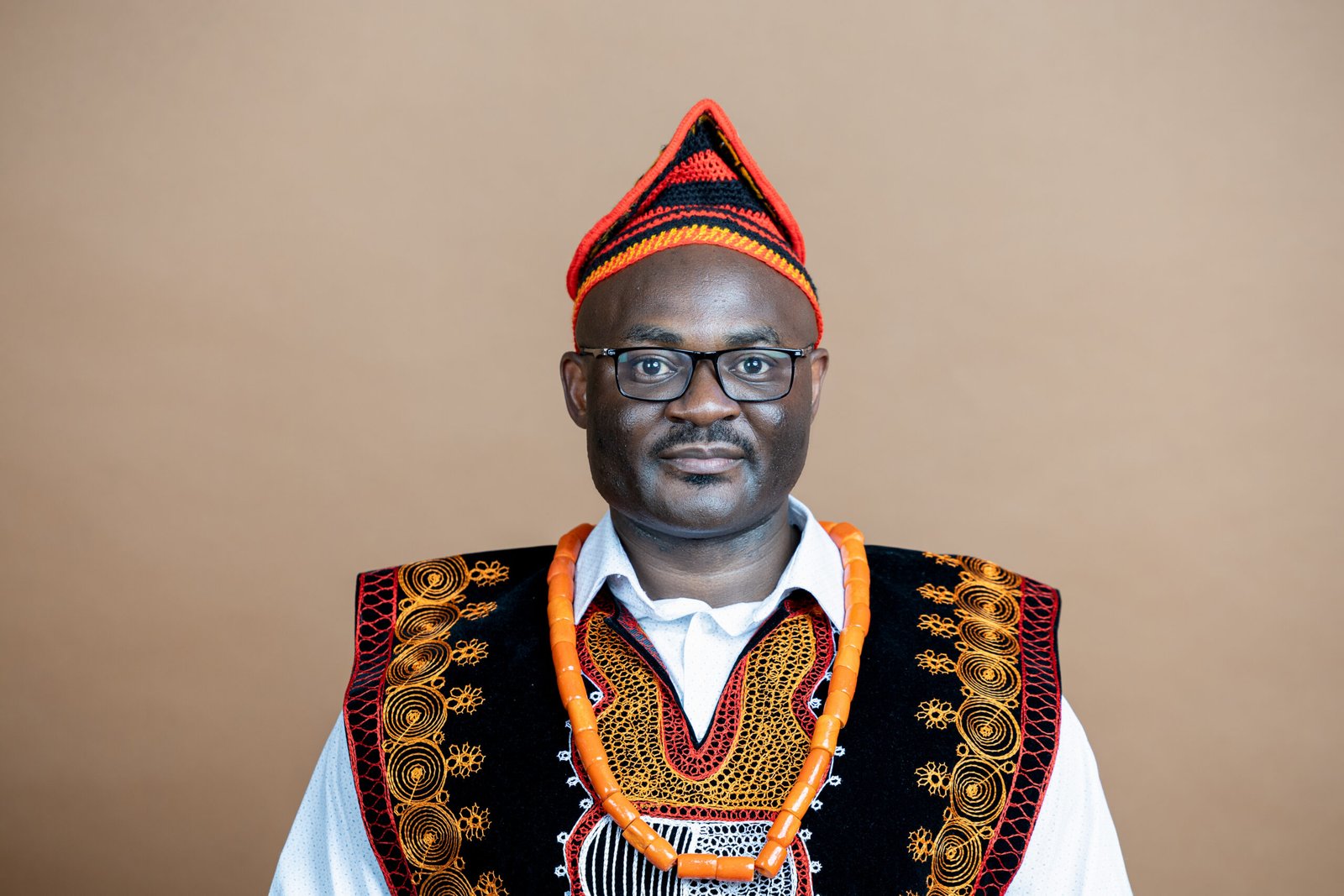
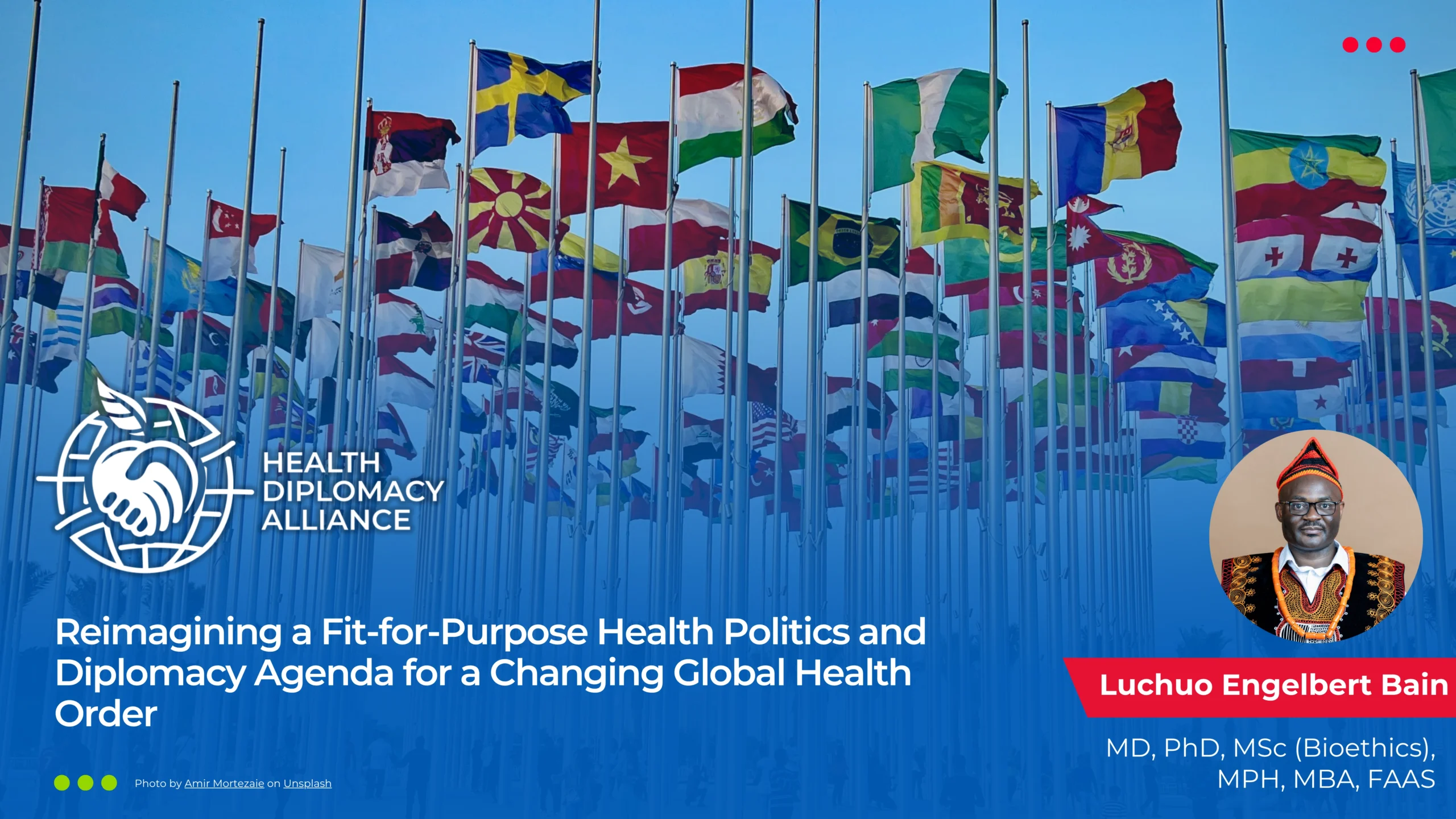
He is an implementation research scientist, empirical bioethicist, and global health strategist. His work sits at the intersection of health politics and diplomacy, implementation research, science communication, meaningful decolonization of global health, health equity, and strategic partnerships. He is committed to strengthening the translation of evidence into policy and practice while advancing more equitable, locally led, and sustainable approaches to global health.
Resources
Kelly L. Characteristics of global health diplomacy. K4D Helpdesk Report. Brighton: Institute of Development Studies; 2021. Available from: https://www.gov.uk/research-for-development-outputs/characteristics-of-global-health-diplomacy
Global Health Diplomacy Programme, Stockholm: Global Health Diplomacy Programme; [cited 2026 Jul 19]. Available from: https://globalhealthdiplomacy.se/programs
Maidah, Alkhaldi M, AlKhaldi M, et al. Global health diplomacy in chronic humanitarian contexts like Palestine: a persistent blind spot and an underused approach. BMJ Glob Health. 2025;10(4):e018308. Available from: https://gh.bmj.com/content/10/4/e018308
Ruckert A, Labonté R, Lencucha R, Runnels V, Gagnon M. Global health diplomacy: A critical review of the literature. Soc Sci Med. 2016;155:61–72. doi:10.1016/j.socscimed.2016.03.004. Available from: https://www.sciencedirect.com/science/article/abs/pii/S0277953616301046