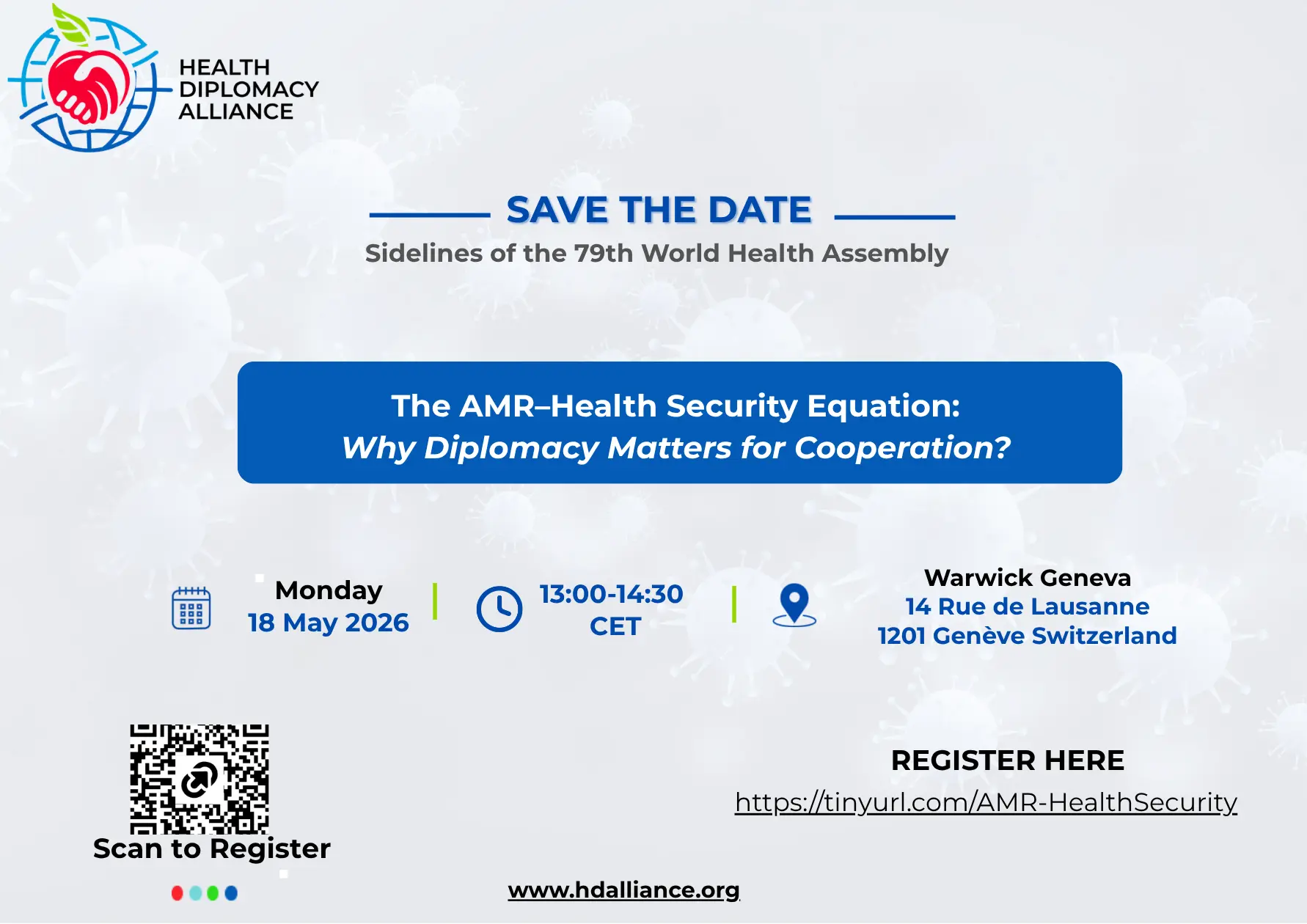
Event Overview
Antimicrobial resistance (AMR) represents one of the most urgent and complex health challenges of our time. As life-saving drugs lose effectiveness, previously treatable infections risk becoming untreatable, crossing state borders, and threatening global health security. AMR can reverse the gains of modern medicine, including surgeries, cancer therapies, and intensive care. Without decisive action, AMR could result in millions of deaths annually and impose severe economic losses that strain health systems and national economies.
Excessive antibiotic use in agriculture also raises resistance to zoonotic diseases, indirectly impacting human health. These connections make AMR a cross-cutting issue hindering progress towards the Sustainable Development Goals (SDGs). Because resistant pathogens move between humans, animals, and ecosystems, and with globalized trade in livestock and agriculture, AMR’s inherently transboundary nature necessitates a One Health approach-driven international cooperation.
This event will explore why addressing AMR demands robust health diplomacy and a globally coordinated response grounded in the One Health approach. Strengthening hygiene and infection prevention, ensuring responsible antimicrobial use, improving surveillance systems, integrating into health emergency preparedness response and resilience, and accelerating investment in new diagnostics, treatments, and vaccines are essential pillars of an effective strategy. Bringing together diverse stakeholders, including policymakers, scientists, health practitioners, international organization and civil society this discussion aims to chart actionable pathways that mitigate AMR as a global health and security objective.
Key Questions for Discussion
- How do global frameworks—such as the Global Action Plan on AMR, the Independent Panel on Evidence for Action against AMR, and the High-Level Political Declaration on AMR—interact with the Pandemic Agreement, PABS negotiations, and the WHO Global Health and Peace Initiative?
- How can cooperation be strengthened among key ministries, including Finance, Foreign Affairs, Health, Environment, Agriculture, Animal Husbandry, Commerce, Trade, and Industry?
- What role does coordination between security, humanitarian, and health sectors play in reducing AMR in fragile and conflict-affected settings?
- How does AMR cross state borders and impact national security and foreign policy? What are the implications for integrated policies, financing, governance, and strategic planning?
Objectives
- Explore how AMR undermines global health security, including its impact on infectious diseases and pandemic preparedness, prevention, and response efforts.
- Contribute to discussions on how geopolitical tensions, conflicts, and increased military spending influence global health action and AMR response.
- Examine the role of health diplomacy in sustaining political momentum and accountability for AMR commitments.
- Analyze the impact of shifting global health financing on AMR prevention and mitigation efforts.
- Explore effective advocacy strategies to position AMR as a global health security issue, including engagement with youth.
Key themes and discussion topics
- Health Security nexus and AMR
- Health Diplomacy in AMR
- Policy integration
- Financing AMR
- Collaborative AMR Governance