Category: Women in Diplomacy

  • International Day of Women in Diplomacy

    International Day of Women in Diplomacy

    The Health Diplomacy Alliance is proud to commemorate the International Day of Women in Diplomacy

    Established by UN General Assembly Resolution A/RES/76/269* on 20 June 2022, this day reaffirms the vital contributions of women to diplomacy and multilateral decision‑making. Despite steady progress, significant disparities in representation persist across global and regional institutions:

    • Between 1992 and 2019, women made up only 13% of peace negotiators, 6% of mediators, and 6% of agreement signatories in major peace processes.

    • Since 1947, only 7% of all UN permanent representatives have been women, and as of 2024, women account for just 21% of current UN ambassadors.

    • In Latin America and the Caribbean, the proportion of women serving as ambassadors remains uneven, averaging 25% across the Americas, but as low as 18.8% in South America.

    These figures underscore the enduring challenges women face in breaking into the highest levels of diplomacy, especially within multilateral systems.

    To mark this occasion, we are pleased to feature reflections and quotes from distinguished women in diplomacy, amplifying their voices and perspectives. Their words offer insight into the realities, achievements, and aspirations of women shaping international policy and peacebuilding efforts.

    H.E. Tufigno
    S.E. Fca Mendez
    H.E. Hend Al Muftah
    Dr. Bustreo
    Tlalane Augustina Sebeko
    Dr. Pizarro Ibañez
    Ms.Maria_Juliana_Tenorio_Quintero


    For further information, please explore our featured resources :

    *Supported by: Algeria, Angola, Antigua and Barbuda, Argentina, Armenia, Australia, Azerbaijan, Bahamas, Bahrain, Bangladesh, Barbados, Belize, Benin, Bhutan, Bolivia (Plurinational State of), Bosnia and Herzegovina, Botswana, Brazil, Bulgaria, Burkina Faso, Burundi, Cabo Verde, Canada, Chile, China, Colombia, Costa Rica, Côte d’Ivoire, Dominican Republic, Ecuador, Egypt, El Salvador, Equatorial Guinea, Eritrea, Ethiopia, Fiji, Gabon, Gambia, Georgia, Ghana, Greece, Grenada, Guatemala, Guyana, Haiti, Honduras, India, Indonesia, Iraq, Ireland, Israel, Jamaica, Japan, Jordan, Kazakhstan, Kenya, Kiribati, Kuwait, Kyrgyzstan, Lao People’s Democratic Republic, Latvia, Lebanon, Lesotho, Libya, Luxembourg, Madagascar, Malawi, Malaysia, Maldives, Mali, Malta, Marshall Islands, Mauritania, Micronesia (Federated States of), Monaco, Mongolia, Morocco, Mozambique, Namibia, Nepal, New Zealand, Nigeria, North Macedonia, Oman, Pakistan, Palau, Panama, Papua New Guinea, Paraguay, Peru, Philippines, Qatar, Russian Federation, Rwanda, Saint Kitts and Nevis, Saint Lucia, Saint Vincent and the Grenadines, Samoa, Sao Tome and Principe, Saudi Arabia, Senegal, Seychelles, Sierra Leone, Singapore, Slovenia, Solomon Islands, South Africa, Sri Lanka, Suriname, Tajikistan, Thailand, Timor-Leste, Togo, Trinidad and Tobago, Tunisia, Türkiye, Turkmenistan, Tuvalu, Uganda, Ukraine, United Arab Emirates, United Republic of Tanzania, Uruguay, Uzbekistan, Vanuatu, Venezuela (Bolivarian Republic of), Viet Nam, Yemen and Zimbabwe.
  • GWL Voices Spotlight on Women in Global Health Leadership 2025

    GWL Voices Spotlight on Women in Global Health Leadership 2025

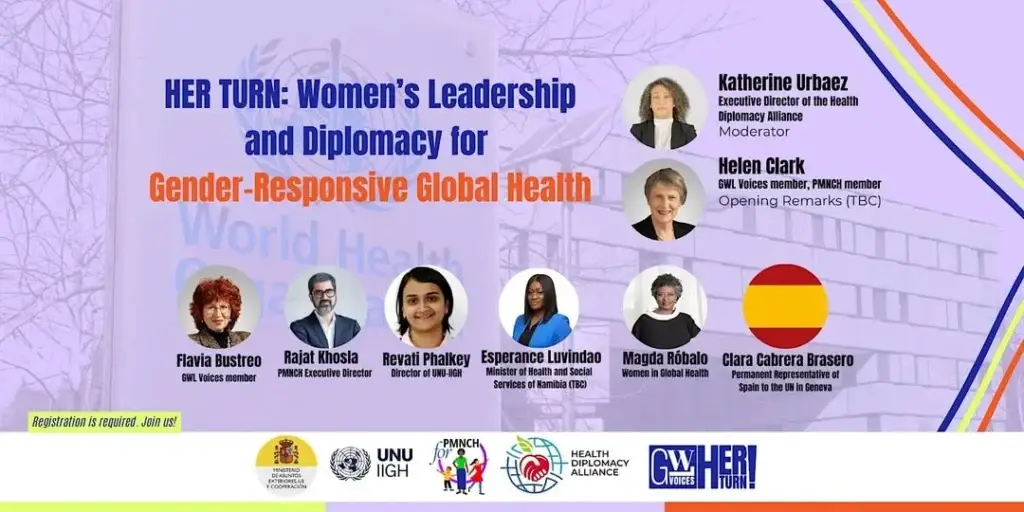
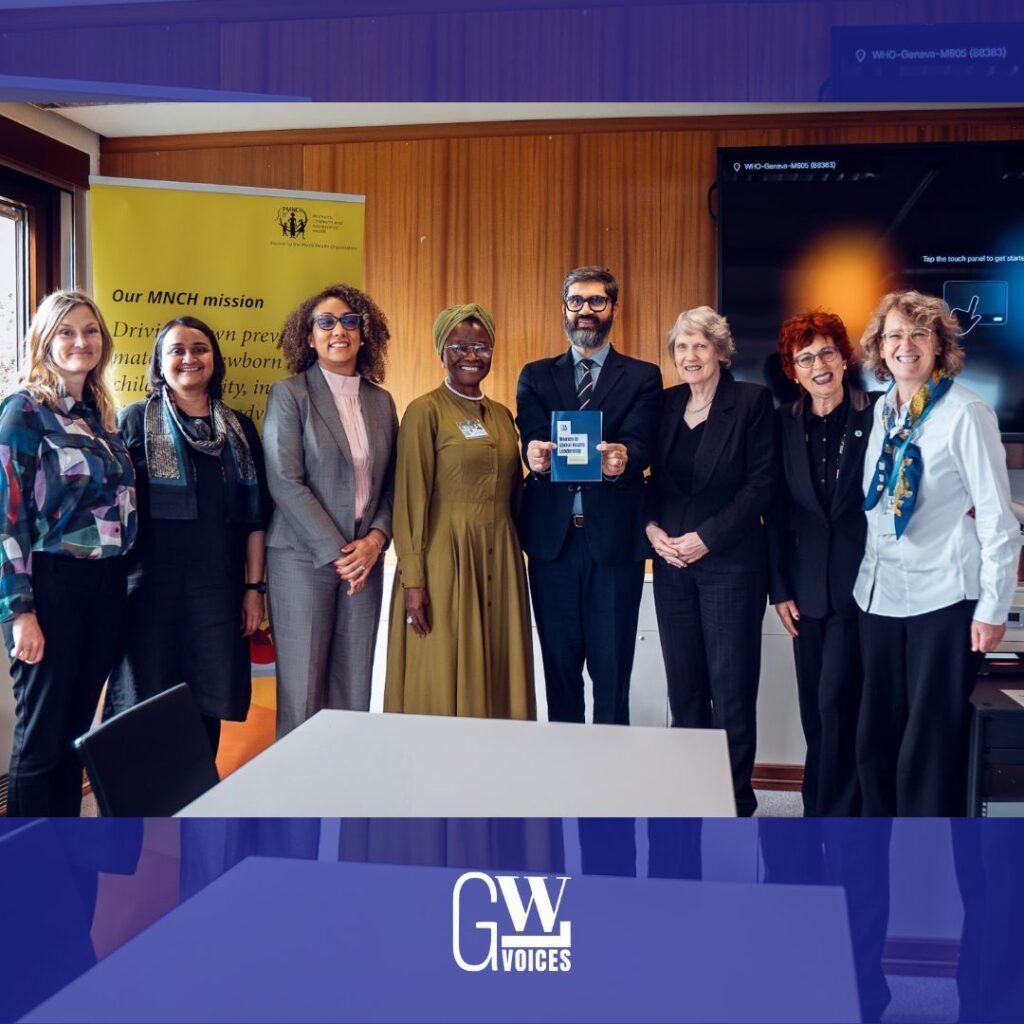
    GWL Voices hosted a WHA 78 Side Event highlighting the findings of their Spotlight on Women in Global Health Leadership report and focusing on the continued barriers to advancing women’s leadership in global health. It was a productive conversation where leaders from GWL Voices, government, multilateral organisations, and NGOs discussed potential solutions and the way forward for increasing women’s access to leadership roles at the subnational, federal, and international levels.

    Over the past few decades, the number of women in global health leadership positions has increased, but the progress being made is still too slow and fragile. The four organisations assessed in the GWL Voices report – the WHO, World Bank, Global Fund, and Gavi – were found to have long-term commitments to gender parity in recruitment and staffing at all levels. However, gender representation in many parts of these organisations remains unequal. Additionally, at both the global and national scales, organisations and governments are facing budget gaps, which have historically been addressed by backtracking on hard-won women’s rights. Within women’s leadership, there is an even more dire need for advancing diversity in women’s leadership; for instance, the report found that women of colour, particularly from the Global South, face the compounded barriers of racism, tokenism, and limited access to informal networks.

    The panel, hosted by GWL Voices, opened with introductory remarks from Katherine Urbáez, Executive Director of the Health Diplomacy Alliance. Urbáez spoke of the operational roadblocks still present when trying to elevate women leaders. She also shared the benefits that stem from advancing women’s leadership, which include the development of more inclusive policies, resilient health systems and solutions-oriented approaches. Urbáez also stated that, “representation in leadership roles matters. When women are seen in leadership, it opens the door for others and helps dismantle long-standing barriers.

    Following this overview was a panel discussion moderated by Ms. Joy Phumaphi, Executive Secretary of the African Leaders Malaria Alliance (ALMA), who spoke of the hiring and promotion issues faced by women trying to advance into global health leadership positions. She also highlighted Botswana as a country struggling with women’s representation in its National Assembly, where women make up only 8.7% of the members. To address these issues, she emphasised the need to continue the push to have women on long and short lists during hiring processes for leadership positions, as well as to include women on interviewing panels.

    Moving on to the panel participants, The Honourable Helen Clark, GWL Voices co-founder and member, as well as former Prime Minister of New Zealand, shared harrowing statistics – for example, only 7% of all permanent representatives to the United Nations have been women. She also emphasised the necessity of more senior women using their positions to push the United Nations to continue its critical work in advancing women’s rights and leadership.

    Dr. Flavia Bustreo, GWL Voices member, presented the findings of the spotlight, including the multifaceted societal benefits that occur with increased women’s leadership, such as improved financial performance, innovation, organisational culture and climate, and health. She also explored organisation-specific shortcomings, such as the WHO having a female Director-General only twice in its 77 years of existence, although women are overrepresented in the lower, general service category. At the World Bank, the share of women in senior management is 40%. None of the boards studied has reached 50% female composition, as women account for 30% of the WHO Executive Board members, 46% of Gavi, and 32% of the Global Fund Board.

    Continuing the panel, Dr. Rajat Khosla, Executive Director of the Partnership for Maternal, Newborn and Child Health (PMNCH), spoke of the detrimental interplay between misogyny, sexism, and the patriarchy that persists across many global health organisations. There is power and privilege in these leadership roles, as he explained, and the global health community is lacking the diversity of women in leadership roles. Dr. Khosla also emphasised the importance of promoting women in STEM to help achieve women’s leadership.

    The panel concluded with Dr. Revati Phalkey, U.N. University Institute for Global Health Director, calling for a transition away from tokenistic and symbolic women’s leadership, especially of women of colour, who face compounded barriers. She also explained the benefit of leveraging male allies for advocacy efforts, emphasising the need for greater transparency within organisations. Dr. Phalkey also stressed the need for bottom-up solutions to internalise and institutionalise women’s leadership.

    Overall, by clarifying the roadblocks and proposing tangible solutions for increased women’s leadership in global health, the conversation combined data with lived experiences to foster an environment for discussing potential solutions, including the importance of mentorship, networking, and policy changes. Our Alliance is committed to advancing women’s leadership in global health through advocating for systematic policy change, as well as increased mentorship and networking opportunities. This event, by outlining the struggles still facing women pursuing leadership roles and proposing potential solutions, aligns with our approach to support policy advocacy for change and our priority to empower the next generation of leaders.

    Key Takeaways:
    • Ensuring representation of women in leadership leads to improved outcomes in areas such as health, organisational culture, innovation, financial performance, and other women’s careers and aspirations
    • Current national and international policies need to be designed to ensure gender parity in all aspects of the governance of health institutions and political representation
    • We must transform the organisational, societal, and individual mindsets to ensure gender equity in health leadership
    • Partnerships and collaboration are key to elevating women in global health leadership