Tag: youth

  • Health Diplomacy Must Start with People: Why Tunisia’s New World Bank Investment Risks Falling Short

    Health Diplomacy Must Start with People: Why Tunisia’s New World Bank Investment Risks Falling Short

    Tunisia’s health system is at a pivotal moment. With the World Bank’s recent approval of the US$125.16 million Tunisia Health System Strengthening Project, the country has the opportunity to modernize its infrastructure, equip its workforce, and redesign the delivery of essential services. Yet the initiative overlooks a critical dimension of sustainable health reform: the people it is meant to serve. Without meaningful investment in health education, community engagement, and population-level behaviour change, Tunisia risks building a more advanced system that still struggles to deliver better health outcomes for its citizens.

    Since 2011, Tunisia has undergone profound political, social, and institutional transformations,
    many of which have directly shaped its health sector. The 2014 Constitution put health as a universal, equitable, and non-discriminatory right. Health expenditure has steadily grown, reaching nearly 7% of GDP in 2021, and the country has made notable progress in life expectancy and vaccination coverage. Infant mortality has fallen by more than half since the early 2000s, and Tunisia often outperforms regional peers such as Morocco, and Egypt on key health indicators.

    Yet this progress hides deep and persistent inequalities. Despite constitutional commitments, 17% of the population remains without health coverage, and out-of-pocket expenditures still account for 38% of total health spending, pushing vulnerable families into poverty or forcing them to renounce to basic healthcare services. The public sector employs only half of the country’s physicians and controls less than one-third of advanced diagnostic equipment, leaving rural and remote regions chronically underserved.

    Noncommunicable diseases (NCDs) now account for 82% of mortality and two-thirds of total health expenditures. Obesity affects more than a quarter of the population, smoking rates remain high (48% among men) and the prevalence of hypertension, diabetes, and cardiovascular diseases continues to rise. These patterns reflect not only clinical gaps but widespread low health literacy, limited awareness of lifestyle risks, and an environment where poverty, pollution, and food insecurity shape daily life. Air and water pollution, unsafe waste disposal, and resource scarcity further strain both the health system and the communities it aims to protect.

    It is against this situation that the World Bank’s Tunisia Health System Strengthening Project must be evaluated. The project is structured around four pillars: strengthening system resilience; reorganizing preventive and primary care; upgrading emergency medical services; and supporting implementation, training, and project management.

    This is an ambitious, necessary, and forward-looking plan. Yet even a technically robust health system cannot achieve its goals if it operates in an environment where citizens lack the knowledge, resources, and incentives to pursue healthy lives. The project’s risk assessment and design fail to account for a fundamental truth: health systems and populations must evolve together. A system can only be as effective as the behaviours, awareness, and trust of the people who use it.

    There are five reasons why the initiative risks falling short without a people-centred complementary strategy:

    1. Low health literacy undermines preventive care
    Tunisians are not sufficiently informed about the risks of NCDs, the importance of nutrition,
    or the long-term impact of unhealthy lifestyles. Without public education campaigns and
    community-level outreach, the burden of disease will continue to rise regardless of system
    upgrades.

    2. Poverty limits healthy choices
    Access to fresh food, physical activity, and preventive services is still limited for most of the
    population. A modernized health system cannot compensate for the environmental and
    economic conditions that make unhealthy habits the default option.

    3. Absence of community engagement weakens trust
    Health diplomacy at national and international levels requires that citizens see themselves
    as partners, not passive recipients. Tunisia’s success stories in health prevention worked
    precisely because they integrated culture, sports, and local values.

    4. Lack of coordination among actors dilutes impact
    The Tunisian government, the World Bank, the WHO, neighbouring countries, and civic
    organizations all have a role to play. Yet without coordinated clusters and a multi-annual
    health-focused development plan, efforts will remain fragmented.

    5. Education and health are inseparable
    Tunisia’s challenges in both sectors reinforce one another. Without improving health literacy
    and school-based health education, the country’s human capital and its economic future
    remains at risk.

    If Tunisia and the World Bank aim to build a resilient, equitable, and accessible health system, they must look beyond infrastructure and technology. Strengthening hospitals and upgrading emergency fleets are vital, but so is building a population that understands, values, and actively participates in its own health.

    True health diplomacy begins with people. The World Bank’s investment can be transformative, but only if Tunisia seizes this moment to embed community engagement, education, and inclusion at the heart of its health strategy.

    Resources:

    WHO contribution in Tunisia (2019-2023): evaluation report. Geneva: World Health Organization; 2025. https://iris.who.int/server/api/core/bitstreams/14f91528-588c-4a71-9951-35c7f530978d/content

    From burden to action: Tunisia steps up the fight against noncommunicable diseases. World Health Organization; 2025. https://www.emro.who.int/media/news/from-burden-to-action-tunisia-steps-up-the-fight-against-noncommunicable-diseases.html

    Giusc, M., Persiani, N. The experience of Tunisian public healthcare system toward decentralizacon to the reduccon of health inequalices in low-, middle- income countries. Int J Equity Health 23, 271 (2024). heps://doi.org/10.1186/s12939-024-02355-5

    New Project to Boost Tunisia’s Health System and Pandemic Response. World Bank; Press Release; May 28 2025. https://www.worldbank.org/en/news/press-release/2025/05/28/new-project-to-boost-tunisia-shealth-system-and-pandemic-response

    Tunisia Health System Strengthening Project (P507209). Appraisal Environmental and Social Review Summary; Appraisal Stage; Report No: ESRSA04001; February 2 2025.
    https://documents1.worldbank.org/curated/en/099030325044539035/pdf/P507209-495f5d10-1991-493b-b711-9417aa11f18e.pdf

    Abdel Ben Y. Educacon and health in Tunisia: is human capital at risk?. Economic Research Forum, December 31 2024. https://theforum.erf.org.eg/2024/12/23/education-and-health-in-tunisia-is-human-capital-at-risk/
  • Likes, Shares, and Side Effects: Misinformation’s Effects on Health

    Likes, Shares, and Side Effects: Misinformation’s Effects on Health

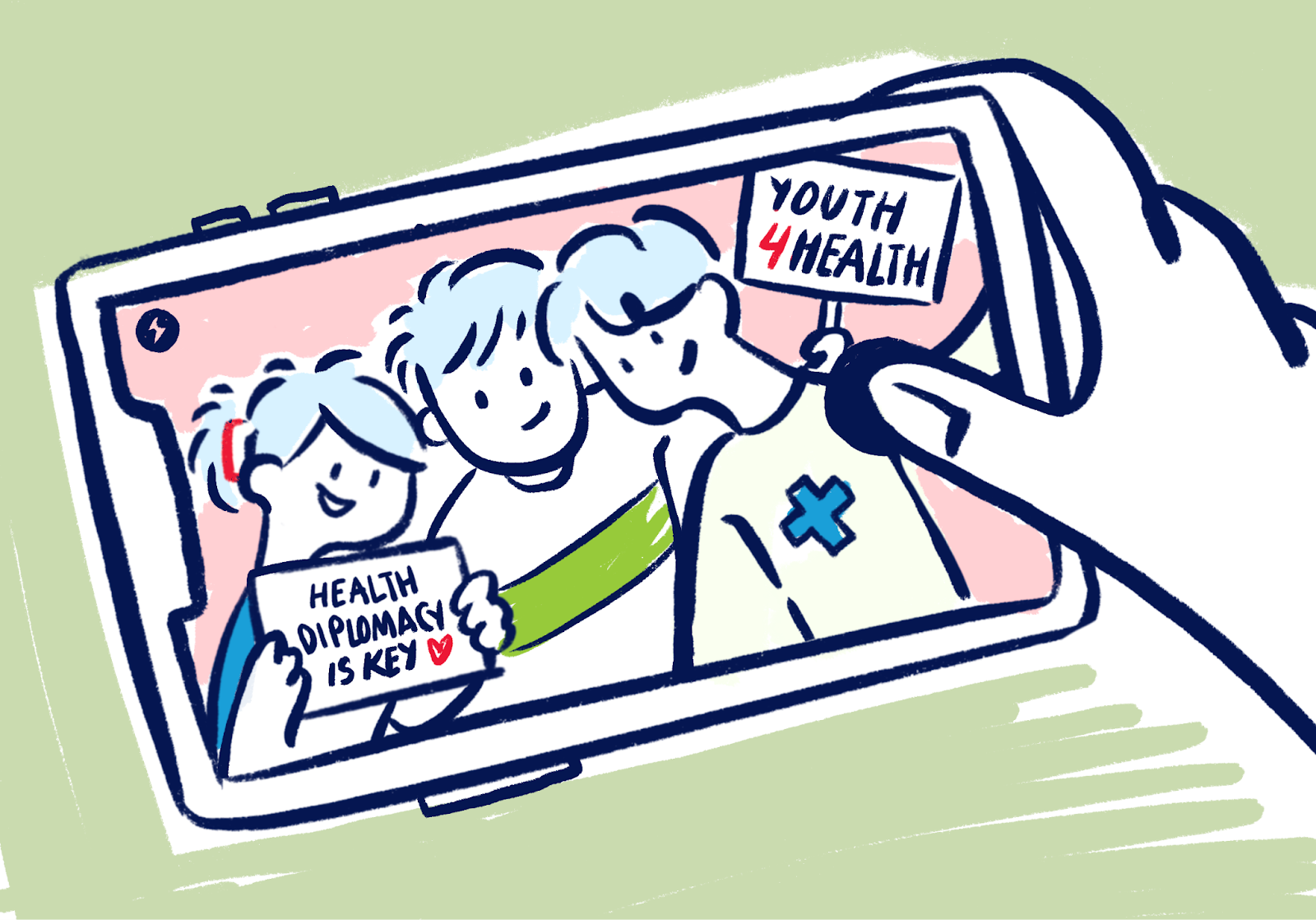
    Source – Authors

    In today’s era of information access and AI, it is becoming increasingly difficult to separate truth from well-made AI-generated content. Identifying AI becomes especially challenging because people aren’t usually in a discerning mindset when scrolling through the internet. Most of the time, they’re simply looking to relax and be distracted.

    That might be (debatably) fine when it comes to funny videos or memes, but it’s a very different story when health information is involved.

    It is now common for people to look up what help they need before they go to a doctor. This information helps them identify the type of care they receive, its costs, and how to exercise home remedies before they need to go to a medical professional. It follows that they must be informed with information that’s accurate, relevant, timely, up to date, and transparent. However, because of limited skills to access good quality health information, people tend to rely on information derived from social media, friends, and, increasingly, AI tools like ChatGPT.

    Online platforms such as Twitter, Facebook, YouTube, and Instagram are common sources of fast and easy information; however, this space also propagates harmful practices as they may provide people with misleading or biased, inaccurate, and poor-quality health information. This practice of misinformation (false or inaccurate information deliberately intended to deceive) and disinformation (deliberately misleading or biased information; manipulated narrative or facts; and propaganda) is one of the most rampant problems in healthcare that affects our generation.

    The situation has escalated to the point that healthcare systems’ efforts to eliminate life-threatening diseases have been severely impacted. In the Philippines, a state of panic broke out in 2019 following the re-emergence of polio, a disease previously declared eradicated in the country. This resurgence was closely linked to the widespread misinformation stemming from the dengue vaccine “Dengvaxia” controversy in 2017, where exaggerated claims about vaccines causing severe side effects or even death led to a sharp decline in public trust in immunization programs. As a result, misinformation became a key barrier to polio eradication efforts, with fear and vaccine hesitancy hampering the country’s disease prevention campaigns.

    To this day, low public trust in vaccination continues to affect routine immunization efforts, shown by a childhood immunization rate of 61%, far below the 95% target, leaving many children vulnerable to otherwise preventable deadly diseases.

    At the same time, while AI-powered tools offer unprecedented access to knowledge, their downsides must not be overlooked. AI models generate content based on vast datasets, but they do not inherently distinguish fact from fiction. Without proper verification, public information may be based on AI hallucinations. This complicates people’s ability to find genuinely evidence-based health information, which in turn may affect their health-seeking behavior. If individuals begin to mistrust physicians or delay consultations because of inaccurate online advice, the doctor–patient relationship may weaken, leading to poorer adherence to medical advice and potentially worse health outcomes.

    On the bright side, these infodemics and misinformation can be effectively addressed through multisectoral initiatives implemented at both macro and micro levels. While government interventions of developing legal measures and policies in the scene are essential, corresponding support must be provided in youth and community settings. Campaigns should aim to create awareness, improve health-related content, build trust in credible health organizations and experts, and generally enhance people’s literacy in both digital and health aspects for them to better assess and identify misinformation.

    Young people play a pivotal role in this dynamic landscape. With their strong online presence, young people are often the first to encounter, share, or challenge health-related content. Their digital fluency enables them to quickly amplify both accurate and inaccurate information. Harnessing this potential requires targeted interventions that empower youth to become responsible digital citizens. Training programs, peer-led campaigns, and collaborations with student and youth organizations can help shape a culture of critical thinking and fact-checking.

    Several global and local initiatives provide examples of how to effectively combat misinformation. For instance, the S.U.R.E. campaign in Singapore effectively combined government messaging, media partnerships, and youth ambassadors to promote fact-checking habits. Similarly, in the Philippines, UNICEF worked with Meta to analyze vaccine hesitancy trends and organize campaigns to increase confidence in routine vaccination. These examples highlight that coordinated strategies combining digital literacy, community engagement, and credible messengers can mitigate the harms of misinformation and restore confidence in healthcare.

    As the world grapples with the double-edged sword of digital and AI-driven information, safeguarding public health depends on more than just regulation. It requires a culture of discernment, responsibility, and trust. AI and social media will remain central in how people access health knowledge, but the key lies in empowering individuals, especially the youth, to navigate this landscape wisely. Let’s utilize the strategies offered by successful case studies and foster collaboration across sectors and societies to ensure health communication’ purpose: to inform, protect, and improve lives.

    About the Authors


    Bill Whilson Baljon is a pharmacist and public health advocate from the Philippines. He is dedicated to promoting health equity and empowering communities through his work in health promotion, policy advocacy, and community engagement. 


     Abigail Salen is a multimedia artist from the Philippines. She aims to utilize visual communication in health promotion and sustainable development, all dedicated to design for good.

    They are the co-founders of Yay! I’m Sober, a health awareness initiative in the Philippines that engages youth, businesses, and civil society organizations to encourage tobacco and alcohol cessation using youth-driven, inclusive, and supportive messaging.