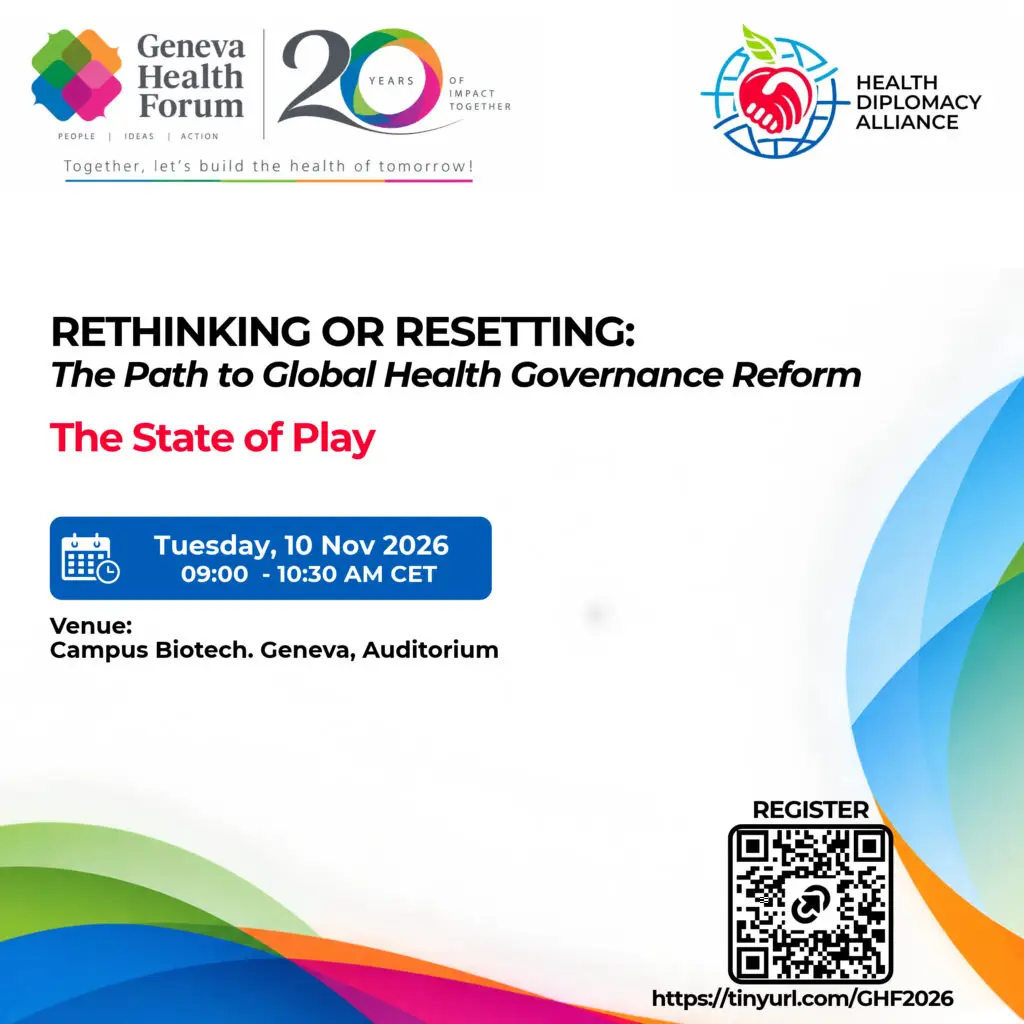
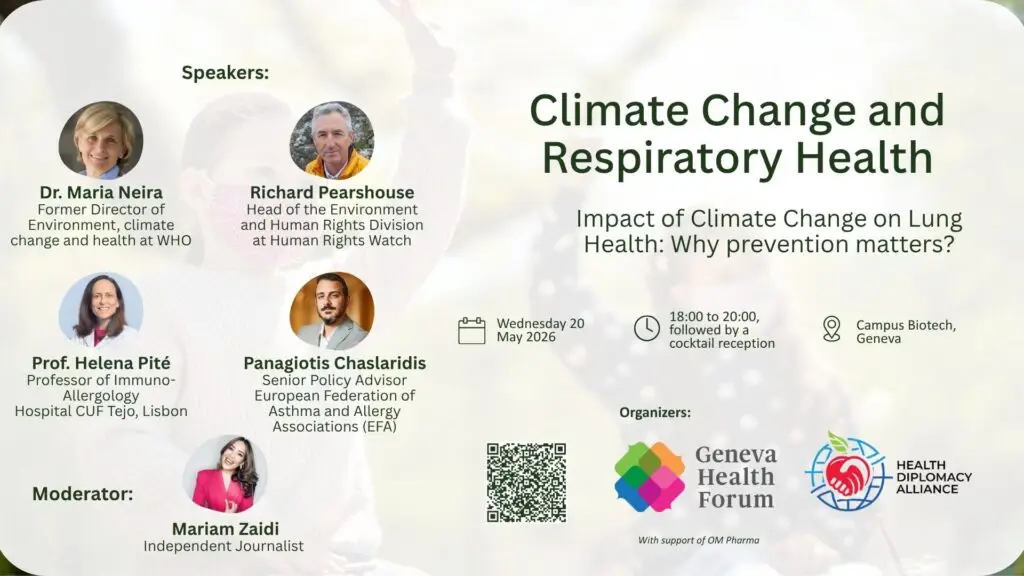
This side event, organized by Health Diplomacy Alliance and Geneva Health Forum, and explores the growing impact of climate change on respiratory health and the increasing burden of respiratory infections worldwide.
Rising temperatures, air pollution, and changing environmental conditions are contributing to worsening air quality, prolonged allergy seasons, and heightened vulnerability to diseases such as asthma and chronic obstructive pulmonary disease (COPD).
Bringing together experts, policymakers, and practitioners, the session will examine how climate-related factors influence respiratory health; particularly among vulnerable populations; and discuss practical prevention strategies.
The event will also focus on bridging research and policy to strengthen public health responses, promote innovation, and enhance resilience in the face of climate-driven health challenges.
Dr. Maria Neira
Former Director of Environment, climate change and health at WHO
Richard PEARSHOUSE
Head of the Environment and Human Rights Division at Human Rights Watch
Prof. Helena Pité
Professor of immuno-allergology
Hospital CUF Tejo, Lisbon
Panagiotis CHASLARIDIS
Senior Policy Advisor
European Federation of Asthma and Allergy Associations (EFA)
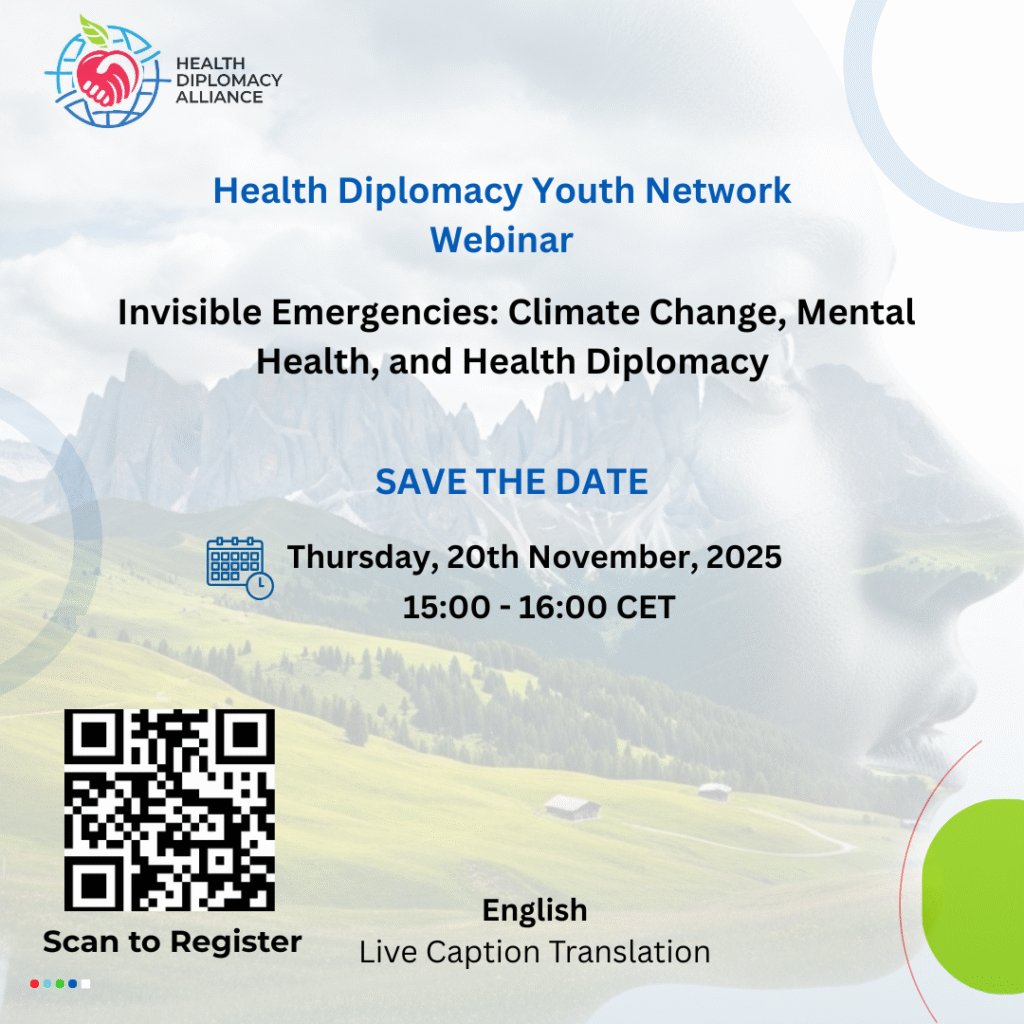
As climate impacts intensify, exacerbating trauma, food insecurity, displacement, and health inequities, mental health continues to be overlooked in climate strategies, underscoring the need for integrated action. Held in the wake of the Health Day deliberations at COP30, the webinar organized by the Health Diplomacy Youth Network responded to growing recognition of the psychological toll of climate change on vulnerable and climate-affected communities. With participation from youth leaders, environmental psychology experts, and community mental health practitioners, the session brought mental health to the forefront of climate diplomacy.
Ayesha Ali, Coordinator of the Commonwealth Youth Health Network, opened the session by highlighting the gap between policy commitments and real-world access to mental health services in climate-vulnerable regions, especially for women, rural populations, and young people.
Matteo Consiglio, Lead, Food and Water Systems, Swiss Youth for Climate, underscored how climate-driven food insecurity contributes to anxiety, stress, and psychosocial instability, calling for stronger links between food systems, environment, and public health.
Dr. Jakub S. Bil, Universal Health Coverage Working Group Co-Chair, Global Mental Health Action Network, emphasized community-based and rights-based mental health approaches, noting that climate impacts frequently compound pre-existing trauma and inequities, and stressed co-design of solutions with affected communities as central to sustainable implementation.
Dr. Harshita Umesh, Focal Point, Health Working Group, YOUNGO, highlighted the limited integration of mental health within UNFCCC processes and called for mental health to be embedded across adaptation and disaster response mechanisms, while Dion Ras, Executive Committee Member, International Association for Youth Mental Health, brought a grassroots lens, emphasizing peer support, lived experience, and the need for accessible, youth-informed systems of care in the face of climate stressors.
During the panel discussion, Ebunoluwa Ayinmode steered a conversation that underscored the gap between policy ambition and implementation, the invisibility of cumulative climate-related trauma in formal frameworks, and the need for health diplomacy to align institutions, communities, and youth constituencies around shared priorities
This event marks an important step in elevating the climate–mental health objectives enshrined in the Belem Health Action Plan by mobilizing diverse expertise, amplifying youth and community voices, and identifying practical pathways for integrated, equity-focused action. The Health Diplomacy Youth Network remains committed to advancing diplomatic engagement, intergenerational collaboration, and evidence-based advocacy to ensure that mental health becomes a central pillar of climate resilience.
The 2025 Intergenerational Dialogue on AMR was a key initiative in the Health Diplomacy Alliance 7-7-7 Campaign during World AMR Awareness Week that highlighted seven actions on AMR led by seven stakeholder groups through seven days in the week.
The dialogue built on global momentum amplified youth perspectives through findings from a pre-event survey that seeked to understand their initiatives, concerns, and solutions towards an inclusive global governance on AMR, promote cross-generational exchanges on effective solutions, foster capacity-building and partnership, especially in last-mile settings, and develop actionable recommendations to embed inclusive engagement and health diplomacy within the global instruments governing AMR response grounded in a One Health approach.
Diana Rizzolio, Coordinator of the Geneva Environmental Network, opened the session by conveying warm greetings and setting the stage for the dialogue. She welcomed participants, framed the significance of the exchange, and underscored the value of bringing diverse voices together. In concluding her introduction, she invited the audience to turn their attention to the next speaker and formally introduced Katherine Urbáez.
Katherine Urbáez, Executive Director of the Health Diplomacy Alliance, offered her opening remarks by outlining the purpose and spirit of the gathering. She described the AMR Week 7-7-7 Campaign, explaining how it showcased seven core actions from seven stakeholder groups across the seven days of the week. She noted that the Health Diplomacy Alliance highlighted AMR efforts in Geneva, online, and through hybrid formats, all while prioritizing engagement with global audiences in a multilingual, cross-sectoral, and intergenerational way. She walked participants through the key initiatives of the campaign, including the display of campaign and HDA flags on the Pont du Mont Blanc; an awareness stand at Geneva’s main train station, Gare Cornavin, featuring messages and activities from multiple supporting organizations; a social media effort spotlighting contributions from diverse global actors alongside the seven key actions on AMR; and the blue illumination of the Jet d’Eau at the center of Lac Léman. She concluded by underscoring the core aim of the campaign: to involve every category of stakeholder, bridge generations, and ensure the broadest possible diversity in AMR awareness and action.
Presentation of findings from pre-event youth survey
Bill Whilson A. BALJON | Working Group Liason, Health Diplomacy Youth Network
Bill Whilson A. Baljon, Working Group Liaison of the Health Diplomacy Youth Network, presented outcomes and key messages from the pre event youth survey on AMR. He outlined three clear priority areas guiding youth perspectives on AMR. He emphasized the need to strengthen education and awareness efforts, expand surveillance and data-sharing mechanisms, and regulate antibiotic use more effectively, particularly within agriculture and livestock systems. He noted that young people unmistakably want to be part of the solution, and the wide range of activities they are eager to pursue—research, awareness initiatives, international negotiations, and digital advocacy—reflects their strong drive to contribute. He highlighted that this momentum reveals substantial potential at the global level, where youth feel more genuinely included and more encouraged to participate than they do within local or national settings.
Keynote Address: Advancing national action on AMR
H.E. Amb. Fernando LUGRIS | Member, the Global Leaders Group on Antimicrobial Resistance, Ambassador of Uruguay
H.E. Amb. Fernando Lugris, Member of the Global Leaders Group on AMR and Ambassador of Uruguay, delivered the keynote address by presenting Uruguay’s stance on advancing national efforts against AMR and strengthening support for youth. He described how Uruguay marks AMR Awareness Week by convening institutions working across the issue to demonstrate ongoing progress. He affirmed that AMR remains a pressing challenge with far-reaching effects across health systems and the environment, stressing that “it is time to turn commitments into concrete actions.” He explained that Uruguay invests across multiple sectors—vaccines, pharmaceuticals, research, and veterinary sciences—to reinforce national readiness. He emphasized the value of collaboration between academia and government ministries, including partnerships with the Caribbean region, and underscored the significance of empowering young people in schools and universities. He encouraged stronger implementation of AMR action plans and noted the need for greater investment in diagnostics, innovation, and policymaking. He concluded by stressing that it is essential to ensure that future generations inherit a world safeguarded from the escalating risks posed by AMR.
A cross-sectoral One Health discussion on key actions to prevent and mitigate AMR
In the context of the triple planetary crisis, what key actions are needed to address antimicrobial resistance (AMR)?
Jacqueline ALVAREZ | Head, Chemicals and Health Branch, UN Environment Programme
Ms Jacqueline Alvarez emphasized that very few people recognize AMR as an environmental concern or understand the reasons behind it. She framed her remarks within the context of the triple planetary crisis—climate change, biodiversity loss, and pollution—explaining how rising temperatures heighten disease risks, and greater disease burdens intensify AMR. She noted that extreme weather events similarly exacerbate the issue, while shifts in soil health and biodiversity reveal the emergence and spread of resistance even when it cannot be directly observed. She underscored priority actions: strengthening governance, legislation, and regulatory frameworks; expanding knowledge and evidence through research to better understand the problem without delaying action, since resistant genes are already present in the environment; and maintaining a focus on prevention, where small steps can yield significant impact. She added that healthcare facilities pose major challenges and stressed that, for UNEP, children and youth are essential partners, as the rapid spread of information among younger generations is key to delivering the right messages.
How do you envision that emerging professionals like you are contributing to solutions at the intersection of animal welfare and antimicrobial resistance (AMR), and what are the challenges you understand are still needed in your region?
Prothoma KALIDAHA | Chair, Standing Committee on Animal Welfare 2025-2026, International Veterinary Students’ Association
Ms Prothoma Kalidaha explained the intrinsic link between animal welfare and AMR, noting that animals fall sick more easily when their conditions are inadequate, resulting in heavier antibiotic use. She emphasized that promoting proper welfare is already a strong step toward ensuring healthier animals. She highlighted that even as students, young people can contribute meaningfully through awareness and action, particularly in regions where antibiotics are perceived as the quickest solution, making education vital. She pointed out that research is an area where young and undergraduate students can already participate. She also acknowledged persistent challenges, including the shortage of qualified veterinarians—especially in rural areas—which leads communities to rely on less qualified and cheaper alternatives. She closed by stressing that together, young professionals can make a real impact through prevention and by strengthening One Health, which she described as the most important point.
How inclusive are the implementation of GAP and IPEA processes in ensuring intergenerational and multisectorial representation?
Jean Pierre NYEMAZI | Director, Quadripartite Joint Secretariat on Antimicrobial Resistance (AMR) and Head, Governance & Strategic Initiatives Unit, AMR Department, World Health Organization
Dr Jean Pierre Nyemazi highlighted the significance of the independent panel and affirmed that youth have been engaged as key stakeholders in its work. He explained that AMR becomes easier to address when coordination exists across all sectors and communities. He stressed that young people are not only beneficiaries but critical actors; therefore, early-career inclusion in AMR dialogue is essential. He noted that youth must be better represented at the national level, where they are often under-included, and emphasized that efforts must continue to expand their presence. He added that youth participation is needed in implementation as well, emphasizing that at every level, young people are indispensable.
What are the key AMR challenges and awareness efforts in the Pacific Islands, and how are last-mile actions and populations, such as in Papua New Guinea, being included in AMR solutions?
Simeon PETER | National President 2025-2027, Papua New Guinea Tertiary Students Christian Fellowship
Simeon Peter explained that Pacific Island countries remain under-resourced in combating AMR, particularly regarding surveillance capacity. He underscored the need for increased laboratory personnel and expanded stewardship training. He noted that a Fleming Fund country grant supported by the Australian government is helping to build laboratory and hospital capacity for surveillance data, which in turn is used to design tailored programs to confront AMR challenges. He added that governments in the region are implementing WHO recommendations to develop national AMR plans. He emphasized that regulatory challenges significantly impact pharmaceutical supply chains, with a portion of imported drugs in Papua New Guinea being substandard, and noted that these medicines are sold over the counter and sometimes even on the streets rather than through pharmacies.
How do you see the engagement of youth in your region as part of the current global AMR governance, how representative is their participation across sectors, and what steps can be taken to improve inclusivity?
Karina KHATIC | Quadripartite Working Group on Youth Engagement for AMR
Dr Karina Khatic affirmed that young people are increasingly receiving opportunities, platforms, and recognition as champions working on AMR. She emphasized that young researchers studying AMR require support to synthesize evidence across One Health dimensions. She stressed that youth should play a role in the implementation of global action plans and other instruments guiding AMR responses.
How is the FAO addressing the link between food security and antimicrobial resistance (AMR) through, and what can be done to enhance representative participation and collective action?
Dominique Burgeon emphasized the deep connection between food security and AMR, noting that misuse in agriculture and livestock production threatens human, animal, and environmental health, and ultimately the safety of the whole supply chain. He outlined the FAO action plan on AMR, which focuses on reducing unnecessary antimicrobial use in crops, livestock, and aquaculture; promoting good farming practices; improving biosecurity; and encouraging alternatives such as vaccines and probiotics. He described FAO’s commitment to strengthening global antimicrobial surveillance through InFARM, which monitors antimicrobial use worldwide. He highlighted the RENOFARM initiative and its 5Gs—good health services, good production services, good alternatives, good connections, and good incentives—designed to help farmers enhance animal health and productivity safely and sustainably without relying on antibiotics. He noted FAO’s close collaboration with WHO, WOAH, and UNEP to align strategies and support countries implementing National Action Plans, alongside engagement with the Multistakeholder Partnership Platform to coordinate collective efforts. He emphasized representative participation and a whole-of-society approach involving farmers, veterinarians, food processors, policymakers, researchers, and communities. He added that governments are crucial for setting targets and sharing data transparently; smallholders need incentives and technical support to adopt improved practices; the private sector can invest in stewardship programs; and civil society can raise awareness and shift behaviors.
How is antimicrobial resistance (AMR) being addressed in conflict and humanitarian settings, what key actions have been taken?
Duha SHELLAH | Vice Chair, WHO Eastern Mediterranean Regional Office (EMRO) Youth Council
Dr Duha Shellah described AMR as a daily reality in places experiencing prolonged conflict, where conditions that perpetuate resistance occur simultaneously—overcrowded shelters, damaged water and sanitation systems, shortages of essential antibiotics, and disrupted diagnostic and surveillance capacity. She detailed how the collapse of laboratory and clinical services restricts treatment options and complicates management for frontline young professionals. She noted that disrupted supply chains allow substandard and unregulated antibiotics to circulate, fueling resistance, while overcrowding accelerates infection transmission, including drug-resistant organisms, in environments with limited infection-control resources. She explained that data collection becomes fragmented, surveillance systems collapse, and access to laboratories narrows, creating a gap between the true AMR burden and what appears in national or global reports. She highlighted that youth-led networks are promoting safe antibiotic use, young researchers are contributing to community mapping and real-time recommendations, and youth volunteers are bridging health facilities and communities through triage and last-mile health education. She emphasized that experienced leaders provide strategic insight while youth mobilize on the ground, making intergenerational collaboration essential to AMR response. She concluded by stating that AMR must be integrated into emergency response plans, and that ensuring reliable access to quality-assured antibiotics and diagnostics, training frontline professionals in stewardship, strengthening surveillance capacity, and investing in youth-led efforts are critical.
Antimicrobial stewardship is a national priority, and pharmacists play a key role in safe prescribing and guideline implementation. As a recent graduate, how would you use your understanding of stewardship to work with pharmacists and other professionals to address antimicrobial resistance (AMR)?
Eleanor FONJI | Chairperson of Public Health, International Pharmaceutical Students Federation
Eleanor Fonji emphasized the importance of informing and educating pharmacists and healthcare practitioners about how their actions influence AMR, paired with intervention training to strengthen stewardship practices. She explained that regularly updating knowledge through presentations on new developments and research is an effective educational approach. She noted that pharmacists contribute by reviewing antibiotic prescriptions in a timely manner, optimizing dosing, supporting clinicians with updated antimicrobial-therapy guidelines, and participating in case reviews and ward rounds. She stressed that stewardship is a collective responsibility in which all healthcare professionals understand the role they play in safeguarding antibiotics.
What actions are needed in animal health to sustain global momentum on antimicrobial resistance (AMR) and ensure the sector is involved in all multisectorial discussion and in the engagement of all generations in the process?
Javier YUGUEROS MARCOS | Head of the Antimicrobial Resistance and Veterinary Products Department, World Organisation for Animal Health
Javier Yugueros-Marcos explained that veterinary communities worldwide have faced around one hundred disease outbreaks in the past six months and emphasized that AMR stems from weak animal health systems, making their strengthening essential for veterinarians managing daily challenges. He described WOAH’s advocacy through bilateral engagement with Chief Veterinary Officers and regional conferences, supported by awareness campaigns. He highlighted the positive momentum within the animal-health community, noting that antimicrobial use in animals has shown a downward trend over the years. He referred to a 2024 WOAH economic study revealing that countries permitting antimicrobials as growth promoters use 45% more antimicrobials than countries that restrict such use. He emphasized that awareness, surveillance, and regulation are central to reducing AMR and noted that the youth pre-event survey aligns with these priorities. He mentioned that WOAH has created informative leaflets to translate complex UN political-declaration language into actionable steps for veterinarians. He emphasized the need to understand the planet as shared by humans and other animals, highlighting the interconnectedness and spillover potential between ecosystems. He stressed that education is a first priority to sensitize children to ecological interdependence, social responsibility, and AMR. He noted that multistakeholder coordination is essential for policy action, offering the example from WAAW where France released national antimicrobial-consumption reports for animals and humans, revealing a decline in animal use while human use rises—showing that progress in one sector does not guarantee system-wide success. He concluded by reaffirming WOAH’s commitment to helping youth establish cross-sectoral collaboration mechanisms at the national level to gain exposure and experience in addressing critical challenges.
How can equity and access be strengthened in the design and implementation of key actions to combat antimicrobial resistance (AMR)?
Federica CASTELLANA | Secretary, Young World Federation of Public Health Associations (WFPHA)
Federica Castellana emphasized that equity and access begin by placing young professionals at the center of AMR discussions. She described how the Young WFPHA working group’s AMR chapter advances awareness, advocacy, and research while convening stakeholders from different regions within the youth age group, which helps highlight diverse needs and co-create solutions. She shared an example from Djibouti, where a community-centered One Health project championed by the Italian Red Cross has enabled community members and livestock owners to lead disease surveillance. Villagers are trained to collect and share data with local health authorities using a bottom-up approach, ensuring that AMR solutions reflect local realities.
What is the role of health diplomacy in shaping and governing a collaborative, One Health–driven response to antimicrobial resistance (AMR), especially when there are other health and political priorities?
Yasmine BAIROUK | Intern, Health and Environment, Health Diplomacy Alliance
Yasmine Bairouk explained that health diplomacy ensures global and regional AMR commitments are translated into effective, context-adapted national policies. She emphasized that monitoring and accountability are essential to understanding the real impact of political commitments. She announced that the Health Diplomacy Alliance will launch the Click-The-Box Initiative next year to support governments and the Quadripartite in monitoring accountability around political commitments. She highlighted diplomacy as a key mechanism to strengthen budgeting and financing, mobilize non-traditional sectors, and support innovation, diagnostics, and science. She concluded by stressing that global AMR communication must remain accessible and understandable for all.
Closing
Ms Katherine Urbáez closed the dialogue by summarizing the discussion and highlighting the key themes explored by the panelists. She underscored the importance of addressing the triple planetary crisis, the misuse of antimicrobials, the global action plan, healthy communities, political engagement, food security, biosecurity, livestock production, conflict settings, and data collection, while noting the trend of reduced antimicrobial use in animals. She emphasized how youth remain central across each of these dimensions of the AMR equation. She concluded the event by outlining the next steps toward 2026, reaffirming the importance of continuing to engage quadripartite organizations each year during World AMR Awareness Week.
The 7-7-7 Campaign, was our flagship initiative for our World Antimicrobial Resistance Awareness Week (18–24 November 2025), engaging during 7 days, 7 actions and 7 group of stakeholders. Key events included flag displays on Pont du Mont-Blanc from 17 to 19 November, an awareness booth at Geneva Cornavin Main Train Station on 18 November, and the blue illumination of Geneva’s Jet d’Eau on 23 November.
Throughout the week, an online social media campaign ran with partners from various sectors and participants who amplified the campaign’s reach and highlighted their work related to AMR.
As a conclusion to WAAW 2025, the 2025 Global Intergenerational Dialogue on AMR took place on 24 November in collaboration with the Geneva Environment Network, underscoring the critical need for cross-sectoral collaboration to sustainably address AMR.
Pont -Du-Mont Blanc
One of the most noticeable aspects of our 777 campaign was the deployment of the Alliance’s and the AMR campaign’s flags during November 17–19, 2025.
On average, 55,000 cars, 14,500 pedestrians, and 6,500 cyclists pass through the Pont du Mont Blanc each day.
This exceptionally high circulation, which included pedestrian traffic, private automobiles, public transportation, and active mobility users, made it the perfect setting for educating the Canton of Geneva’s citizens and passersby about AMR.
Thousands of extremely diverse and energetic travelers saw the flags throughout the course of the three days, raising awareness of AMR and highlighting the importance of health diplomacy in public spaces.
Train Station Booth
A full-day AMR awareness stand at Gare Cornavin, the largest and busiest train station in Geneva, with more than 170,000 passengers passing through daily. Our objective was to engage directly with the people and raise awareness about antimicrobial resistance in an accessible way.
The stand featured:
A large projection screen showing educational and informative content produced by us and the organizations that joined our 777 campaign
Distribution of educational and informative materials, including flyers, infographics, and factsheets.
An interview corner for short recordings with passersby and partners.
Throughout the day:
We interacted with individuals of all ages in multiple languages to make our outreach inclusive (English, French, Spanish, Portuguese)
Many visitors learned about AMR for the first time
Social Media Campaign
Over 7 days, we convened a social media campaign across our platforms to highlight 7 key actions from 7 stakeholder groups to reduce the global AMR burden.
The actions includedInfection Prevention and Control, Water Sanitation and Hygiene, stewardship, surveillance, innovation, R&D, manufacture, equitable access, One Health approach, evidence-based policy, financing, and health diplomacy.
The 7 stakeholder groups represented a whole-of-society approach to curbing the global health threat and included AMR Survivors, Health workers, Governments and Policy Makers, Civil society, philanthropy, academia, International Organizations, Private Sector, Media.
The content spanned languages such as Maltese, English, Spanish, French, Hindi, Portuguese, Italian, and Malayalam
The social media outreach from over 20 global organizations who participated in the campaign totalled 15,231 impressions, likes, reactions, and reposts.
Jet d’Eau Ilumination
The illumination of the Jet d’Eau in blue on 23 November was one of the key activities carried out as part of our 777 campaign.
Lighting of the Jet d’Eau supports awareness of key issues, humanitarian emergencies, or highlights events organized in international Geneva. For WAAW2025, the Jet adorned itself in brilliant blue to illuminate the AMR challenge at the heart of the harbor.
This symbolic icon of the city of Geneva, lighting it in blue, raised visibility, strengthened public awareness, and encouraged collective action in support of the campaign’s goals to reduce the global burden on AMR.
2025 Intergenerational Dialogue on AMR
Co-hosted by the Health Diplomacy Alliance and Geneva Environment Network, the 2025 Global Intergenerational Dialogue on AMR brought together speakers from Quadripartite and Youth led organizations and built on global momentum, amplified youth perspectives through dedicated surveys, fostered inter-generational exchanges of cross sectoral and cross regional success stories and highlighted actionable recommendations to embed inclusive One Health approach in global AMR governance.
Climate change is a force multiplier that drives migration and exacerbates the spread of infectious diseases. Effective health diplomacy is required to address this complex climate-migration-disease nexus. The climate crisis increases the frequency of extreme weather events, such as droughts, wildfires, flooding, and tropical storms, which lead to more environmentally-driven conflicts and instability, driving migration. In 2024 alone, more than 45 million people were displaced due to environmental disasters, which is nearly double the average annual displacement that occurred over the last decade.
Climate migration can result in endemic infectious diseases becoming epidemic, increased environments for pathogens to interact via zoonoses, and potential spillover events into human populations. Over 50% of the currently identified infectious diseases will be aggravated by climate hazards. Additionally, climate-related events contribute to an increase in vector-borne, waterborne, and infectious diseases. As an example, Venezuelan migrants traveling through the Andes experience increased rates of infectious and vector-borne diseases from contaminated water due to flooding or drought. Other migrants’ movement through the Darién Gap in Central American has also caused high rates of respiratory and diarrhea cases, as well as increased spread of Yellow Fever in Panama from Colombia.
At the Alliance, our Pillars of Work embrace the intersectional approach necessary to address this triple threat nexus. In line with our focuses on One Health, Environmental & Climate Change, and Right to Health, we convened expert policy analysts and researchers to share their insights on this multifaceted issue.
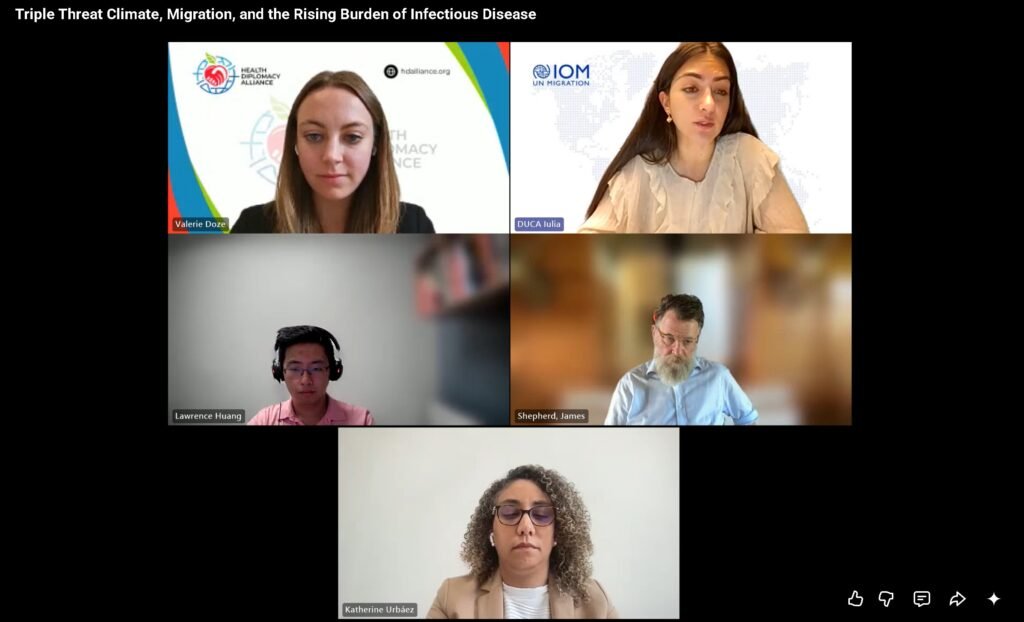
The webinar opened with introductory remarks from Katherine Urbáez, Executive Director of the Health Diplomacy Alliance, as she set the stage for by highlighting health diplomacy’s role as a key, practical tool to coordinate at the multi-sectoral level to promote the shared solutions necessary to address this interlinking topic. She emphasized that health diplomacy is vital to facilitate the dialogue and cooperation among diverse actors, including governments, international organizations, civil society, and health services.
Diving into the field-specific experts, the event was moderated by Valerie Doze, Climate Health Intern at the Health Diplomacy Alliance. The discussion was started by Iulia Duca, Programme Officer in the Climate Action Division at the International Organization for Migration (IOM). She emphasized that climate, migration, and health are not isolated issues, but are rather deeply interconnected, influencing and amplifying each other. Thus, a comprehensive approach is necessary to respond in a coherent, inclusive, and cross-sectoral capacity, which IOM recognizes in their work. From drought in the Horn of Africa to floods in Pakistan, people are being uprooting from their homes.
Ms. Duca continued to explain that displacement today is often prolonged, occurring internally, and taking place in fragile contexts where health systems are already under threat. In these environments, the risk of infection, diseases, and outbreaks are amplified, and access to essential health services is negatively impacted. IOM witnesses first-hand how environmental impacts disrupt traditional migration routes, causing people to be pushed into overcrowded informal settlements. She explained how this overcrowding results in forced interactions with new ecological zones, increasing disease transmission risk. These displaced populations also suffer from limited or no access to primary health care, resulting in disrupted vaccinations, inadequate maternal and child care, and improper nutrition, water, and sanitation. Thus, a multi-sectoral approach is needed to address these compounding issues. Ms. Duca stressed the need to mobilize resources and actions through fostering partnerships across diplomacy, health, climate, and migration sectors to invest in more resilient systems that ensure people on the move are not left behind but rather protected, empowered, and included in every decision.
Bringing the infectious disease perspective, the next perspectives were offered by Dr. James Shepherd (MD PhD), a faculty physician in the Section of Infectious Disease, Department of Medicine of Yale University School of Medicine. Dr. Shepherd emphasized that environmental factors bring infectious disease hosts, such as humans, in contact with agents, which are infections. Health diplomacy focuses firstly on hosts, or the human aspect of contracting diseases. Having previously worked for the WHO as a tuberculosis (TB) and HIV specialist in South Asia, he helped with the Global Outbreak and Response Network during the COVID-19 pandemic. Based in a 1,000,000 population camp in Cox’s Bazar, Bangladesh, health diplomacy required them to work with IOM, UNHCR, MSF, Save the Children, Red Cross, Red Crescent, and the Bangladeshi government to assist these forcibly displaced Myanmar natives. He stressed the importance of international cooperation on these efforts, which has since been stymied by the massive shift in US domestic politics. Global health has benefited from the support from the UN, WHO, Gavi, and other large international efforts focused on infectious diseases and climate change. Therefore, he shared thoughts on the potential for organizations to become more collaborative amidst the funding cuts, evolving diplomatically into new ways of working together.
Dr. Shepherd continued to explain how humans in an environment are incredibly conducive to the transmission of infectious diseases, especially when almost no facilities and public health services are provided, which can result in another global pandemic. For instance, human movement from the countryside to unincorporated settlements on the edge of cities can change the complexion of infectious diseases. In Dharavi, a settlement in Mumbai, India, is a fertile place for infectious diseases, such as TB and now, COVID-19, to spread, due to the high population density and lack of sanitary public health facilities.
Bringing his climate-migration experience was Lawrence Huang, a policy analyst with the Migration Policy Institute’s International Program. Having worked on MPI’s Global Initiative on Climate Mobility, he spoke on displacement and migration related to climate and environmental shocks. Research consistently shows that climate change is rarely the sole factor determining people’s movement, but it is usually a threat multiplier of economic, social, political, or health related drivers of mobility. While not the main issue, environment and climate drivers are often hidden behind other factors driving human displacement, such as loss of livelihoods and homes. This intersection of massive disasters leads to internal and cross-boundary movement. Mr. Huang elaborated that climate change and health interact in these situations in terms of vulnerability to infectious diseases and other health shocks, especially as health services can decline during disasters and other climate shocks.
Mr. Huang emphasized the critical missing piece of the work, which is that migrants, refugees, and displaced people are often excluded from climate action, response, and programming. After losing their homes and moving into informal settlements, many migrants are often hit by floods, landslides, and other disasters because the settlements are located in areas without climate resilient infrastructure and systems. He stressed the importance of integrated holistic approaches to solve these compounding crises. As policymaking tends to be siloed, cross-sectoral collaboration is vital.
Our Alliance is committed to leveraging health diplomacy to support member states and relevant stakeholders to increase collaboration across health, migration, and climate policy. This event, by fostering conversations about the gaps in this triple threat nexus, and exploring solutions to address these issues, aligns with our work to build strengthen the global response to health challenges by promoting cross-sector coordination.