Tag: environment

  • AMR – G7 Summit, Evian – June 2026

    AMR – G7 Summit, Evian – June 2026

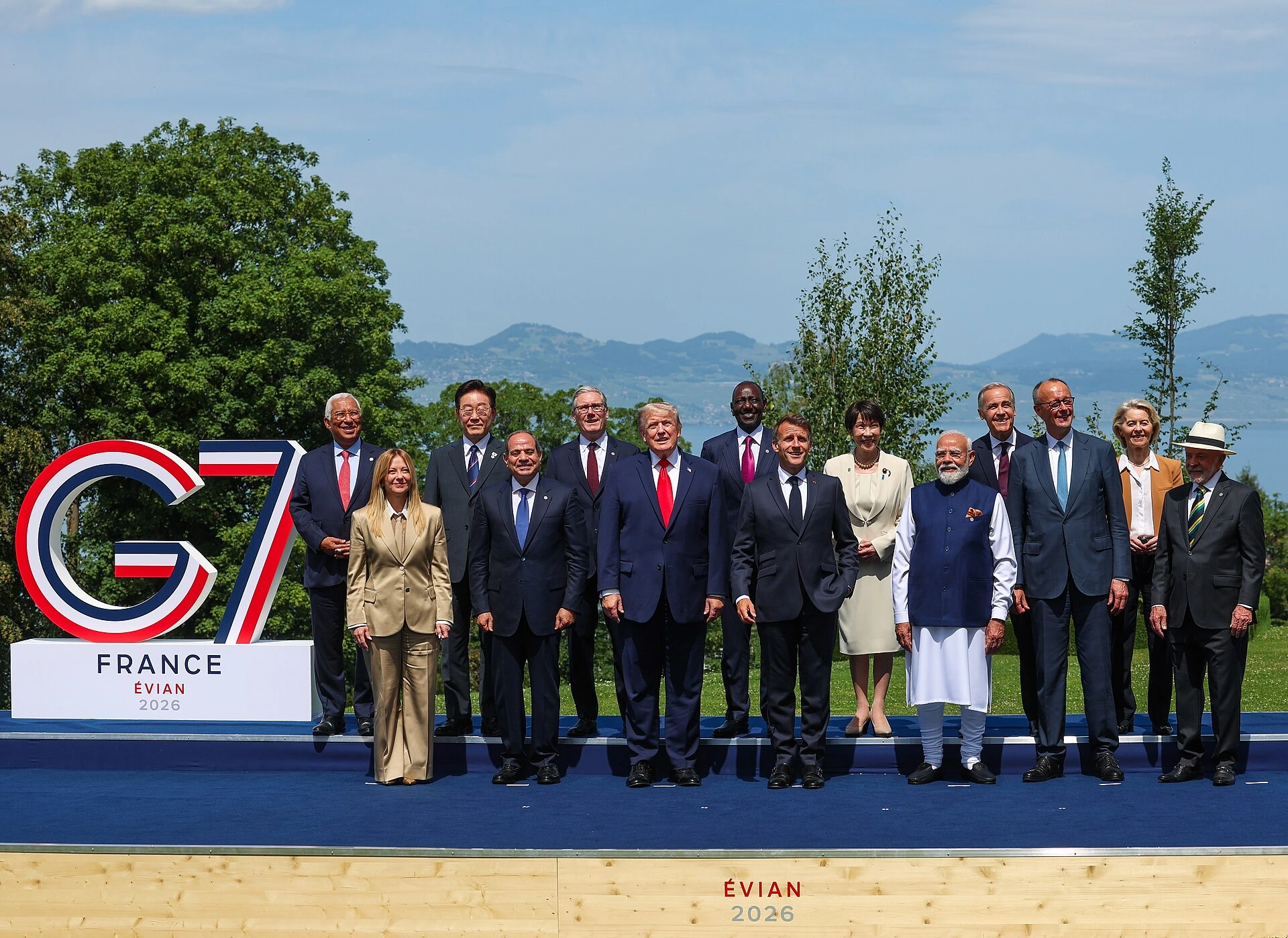
    Antimicrobial resistance (AMR) has emerged over the past decade as an accelerating challenge to health, development and security agendas. While often framed as a technical matter, AMR is in fact a structural phenomenon directly shaped by how societies organize their health systems, food production, environmental regulation, and international cooperation. In this respect, it resembles other crossborder challenges that have forced policymakers to rethink traditional distinctions between domestic and foreign policy, with consequences that are particularly pronounced in low and middle-income countries where health systems are already under strain. 

    The G7 Summit in Evian comes at a moment when this structural dimension of AMR is increasingly evident. The adoption of a political declaration on AMR at the United Nations General Assembly on 2024 and the recent One Health Summit during April in Lyon have both acknowledged that the continued erosion of antimicrobial effectiveness threatens to reverse gains in life expectancy, productivity and poverty reduction. However, as with many global health issues, there remains a gap between the scale of the commitments made and the pace at which they are translated into implementation on the ground.  

    The Health Diplomacy Alliance views health as both an outcome of, and a contributor to, broader patterns of stability and cooperation. AMR illustrates this dual role. On the one hand, rising resistance directly affects the ability of health systems to deliver, thus eroding public trust when health services can no longer provide effective treatment for common infections. On the other hand, the way governments, international organizations and private actors respond to AMR signals the reliability of global cooperation and the value placed on prevention. 

    Recent discussions at Lyon One Health summit have reinforced the understanding that AMR cannot be addressed in isolation from its wider One Health context. Therefore, in light of these developments, this commentary identifies areas where sustained G7 engagement, coordinated with other partners, could have substantial impact if it is sustained over time.  

    AMR must be recognized as a strategic global risk

    There is a case for G7 governments to treat AMR as a core strategic risk, by integrating it into national security strategies, development cooperation frameworks and climate policies rather than confining it to health ministries alone. Doing so would recognize that resistance undermines not only clinical outcomes, but also economic resilience, trade, and the functioning of health systems in crisis settings. 

    Political commitments and implementation

    G7 countries are well placed to support and close the implementation and financing gap that continues to limit the effectiveness of many national AMR action plans. This does not imply substituting for domestic responsibility, but highlighting on existing mechanisms, such as development banks, the Pandemic Fund and other global health instruments to support investments in primary health care, laboratories, surveillance and workforce development that are essential for both AMR and broader health security. A shared objective, for example, that by 2030 a majority of countries have fully costed, and partially funded AMR plans aligned with One Health principles, would offer a useful point for such efforts and enable more systematic monitoring of progress over time. 

    Closing financing gaps – for national AMR Plans

    The G7 is well positioned to lend political and financial support to the development of integrated One Health governance for AMR. Many national AMR action plans exist on paper, but too few are fully costed, funded and operationalized. The G7, could support predictable financing for laboratories, surveillance, primary care, workforce development and infection prevention, especially in low and middle-income countries where the burden of resistance is compounded by broader weaknesses in health systems.  

    Building interoperable One Health surveillance, diagnostics and data systems

    Attention should be given to surveillance and data. The One Health Data Convergence initiatives launched in Lyon specifically stress the need for systems that connect human, animal, and environmental information in usable ways. Such support should be designed in a way that strengthens national institutions rather than creating parallel structures and could include investments in the analytical and policy capacities needed to interpret and act on the data generated Support for diagnostics capacity and analytical expertise would make it possible to detect resistance earlier and to respond more effectively. 

    Ensure AMR policies prioritize civil‑society engagement

    Any meaningful response to AMR will depend on structured engagement with civil society organizations and other community actors who can connect scientific evidence with practice. CSOs are already supporting AMR efforts in areas such as awarenessraising, behavior change, surveillance, and monitoring of policy commitments, but their potential contributions to implementation and knowledge generation are still underutilized. Involving CSOs, youth groups and local authorities in the codesign of interventions, communitybased research and implementation science can help ensure that AMR policies are grounded in realworld experience and that scientific guidance is adapted to local contexts.  

    The AMR issue is important because it exposes the limits of fragmented responses and the need for a more integrated approach to health, development, and diplomacy.  

    Closer alignment between political commitments with financing, governance, and implementation would strengthen the international response to AMR and reinforce the practical relevance of One Health approach.  The Health Diplomacy Alliance will continue to follow this development with interest and reflect it on its Check the Box Initiative.  

  • World Environment Day Celebration 2026

    World Environment Day Celebration 2026

    In celebration of World Environment Day 2026, we are pleased to participate in Multilateral Geneva Driving Collective Climate Action, hosted by the Geneva Environment Network in collaboration with the United Nations Environment Programme Europe Office and partners.

    As part of the World Environment Day Forum, HDA will join other Geneva-based organizations on 5 June to contribute to discussions on the links between health, climate change, and sustainable development. Climate change has significant implications for health systems, population health, and health equity, making it an important area for international cooperation and policy dialogue.

    HDA works to promote collaboration and exchange among stakeholders involved in global health policy and diplomacy. Through engagement with governments, international organizations, academia, civil society, and other partners, HDA supports dialogue on approaches to addressing complex health challenges that increasingly intersect with environmental and climate-related issues.

    The event will bring together representatives from international organizations, governments, civil society, academia, and the private sector at the International Environment House II in Geneva. Discussions will focus on the role of multilateral cooperation in advancing climate action ahead of the 2026 United Nations Climate Change Conference (COP31) in Antalya, Türkiye, and on the contribution of Geneva-based institutions to international policy processes.

    Participants are invited to visit the Health Diplomacy Alliance booth to learn more about our activities, exchange perspectives on the health impacts of climate change, and discuss areas of common interest and potential collaboration.

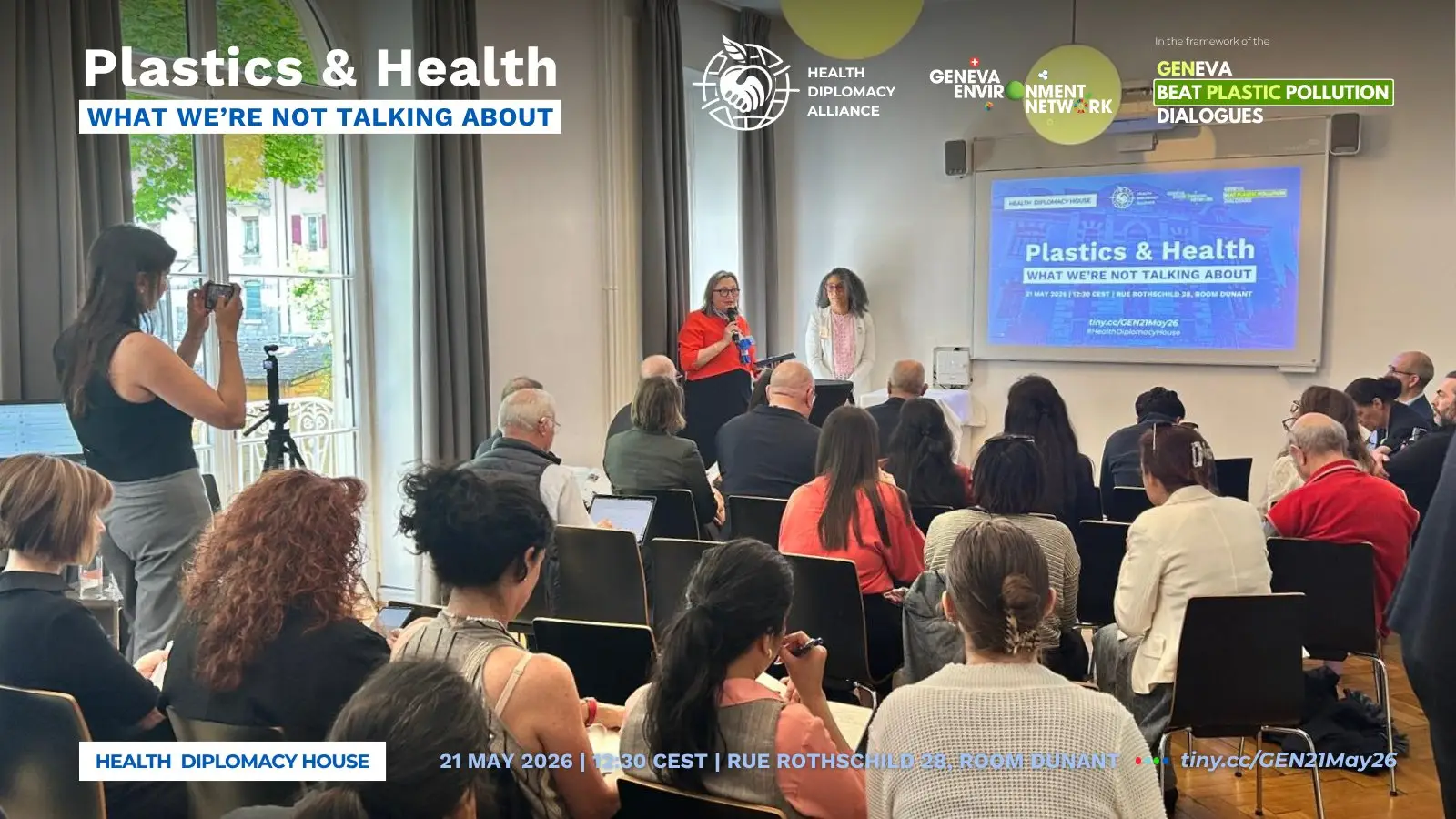
  • Plastics & Health: What We’re Not Talking About | Health Diplomacy House

    Plastics & Health: What We’re Not Talking About | Health Diplomacy House

    On the sidelines of the 79th World Health Assembly (WHA79), the Health Diplomacy Alliance and Geneva Environment Network hosted the Health Diplomacy House on Thursday, 21 May 2026. The House was an informal working space where organizations can convene sessions, hold discussions, and collaborate on practical health policy issues. Part of the “Predictable Uncertainty” series, it brings together policymakers, diplomats, academia, civil society, philanthropic organizations, and patient groups.


    The programme consisted of roundtables, small group discussions, and space for bilateral meetings and media engagement, with a flexible agenda expected to cover topics such as One Health, antimicrobial resistance, climate and health, health financing, and global health governance.

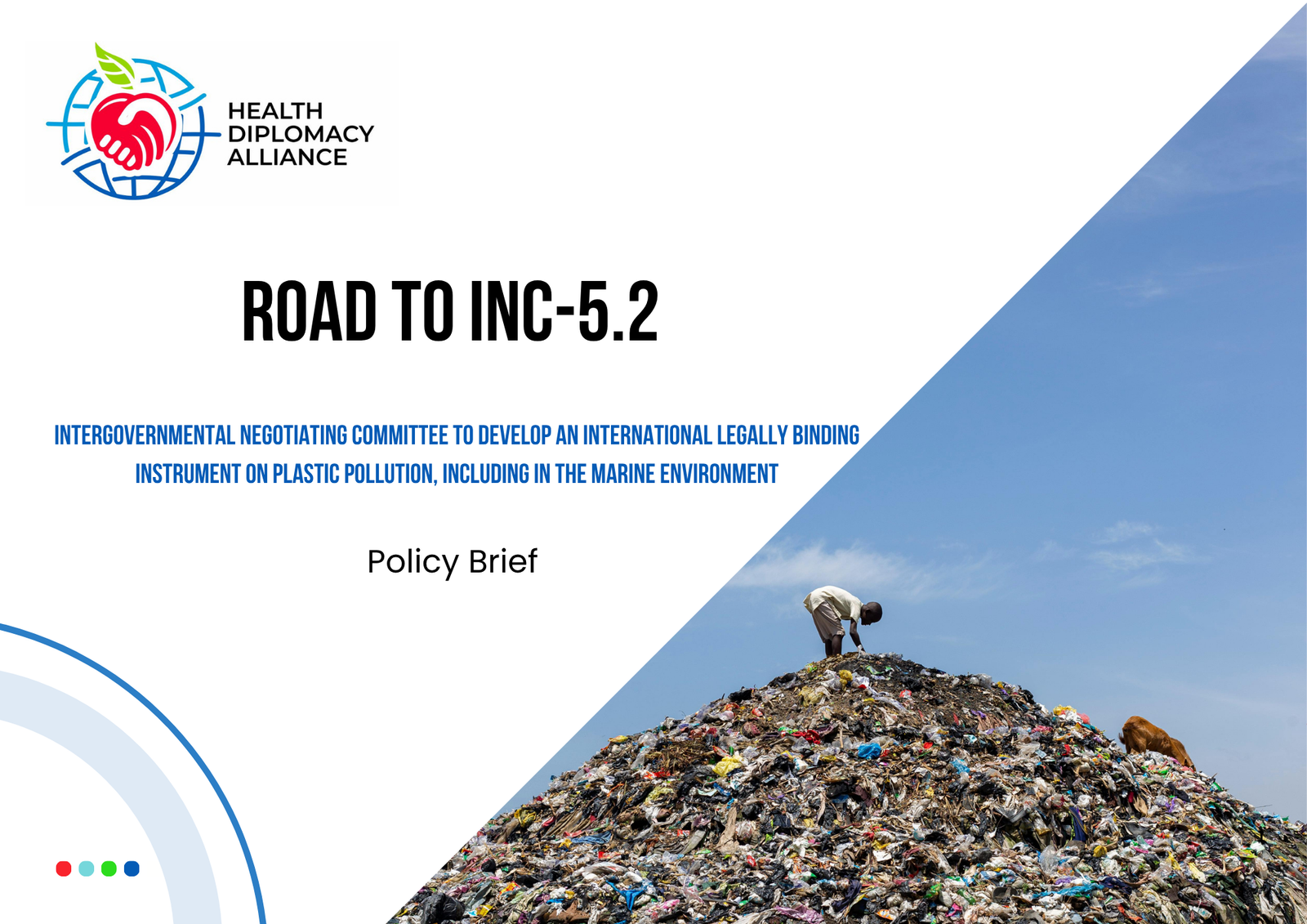
    This growing recognition was reflected at the Seventy-sixth World Health Assembly (WHA76), held in Geneva in May 2023, where Member States adopted a resolution on the impacts of chemicals, waste, and pollution on human health. Initially tabled by Peru, Canada, Colombia, Ecuador, El Salvador, Mexico, Monaco, Switzerland, Uruguay, and the European Union and its Member States, the resolution calls for scaling up work on plastics and health. It also encourages contributions to the Intergovernmental Negotiating Committee (INC) mandated UNEA Resolution 5/14 to develop a legally binding instrument on plastic pollution, including in the marine environment. The resolution further acknowledges related multilateral processes, including those under the Human Rights Council.

    Since then, WHO has called for the highest attainable standard of human and environmental health to be a core objective of the plastics treaty. WHO has highlighted the need to address both known and anticipated health risks associated with plastics, including chemicals and additives, as well as microplastics and nanoplastics, across all stages of the plastics lifecycle.


    This event featured Lightning Talks by diplomats, scientists, policymakers, and other experts. These talks will highlight why it is essential to communicate more clearly, consistently, and effectively about the health impacts of plastic pollution, and why health must be placed at the centre of global action on plastics.

    Lightning Talks

    From Science to Treaty: Placing Health at the Core of Global Plastics Governance

    Miriam G. MEDEL GARCIA | Head, Environment Team, Permanent Mission of Mexico to the United Nations Office and other international organizations in Geneva

    Plastics & Health | Giving the Attention it Needs

    Rüdiger KRECH | Acting Director, Department of Environment, Climate Change, One Health and Migration, World Health Organization

    The Global Health Burdens of Plastics: The Lancet Countdown on Health and Plastics

    Hervé RAPS | Research Liaison Physician, Centre Scientifique de Monaco

    Plastics & Health | Impacts Across the Full Lifecycle

    David AZOULAY | Director, Switzerland & Environmental Health Program, Center for International Environmental Law

    Food‑contact Chemical Regulation Ineffective for Health Protection

    Etienne CABANE | Engagement Director, Food Packaging Forum


    Plastic & Health | Mainstreaming Scientific Knowledge

    Roman LEHNER | SNF SPARK Grant Holder, Department of Chemistry, Biochemistry, and Pharmaceutical Sciences, University of Bern

    Considering Key Elements for the Protection of Human Health in the Future Treaty on Plastic Pollution

    Carolyn DEERE BIRKBECK | Executive Director, Forum on Trade, Environment & the SDGs (TESS), Geneva Graduate Institute

    Plastic & Health | Scaling Proven Solutions

    María Alejandra GONZÁLEZ | Global Plastics Advocacy Manager, WWF Norway

    Sports for Nature | Swimming 191km to Raise Awareness for Global Ocean and Health Protection against Plastic Pollution

    Noam YARON | Record-Breaking Swiss Ultra-Endurance Athlete Advocating for Ocean Protection

    Video

    Live from the Résidence Rothschild

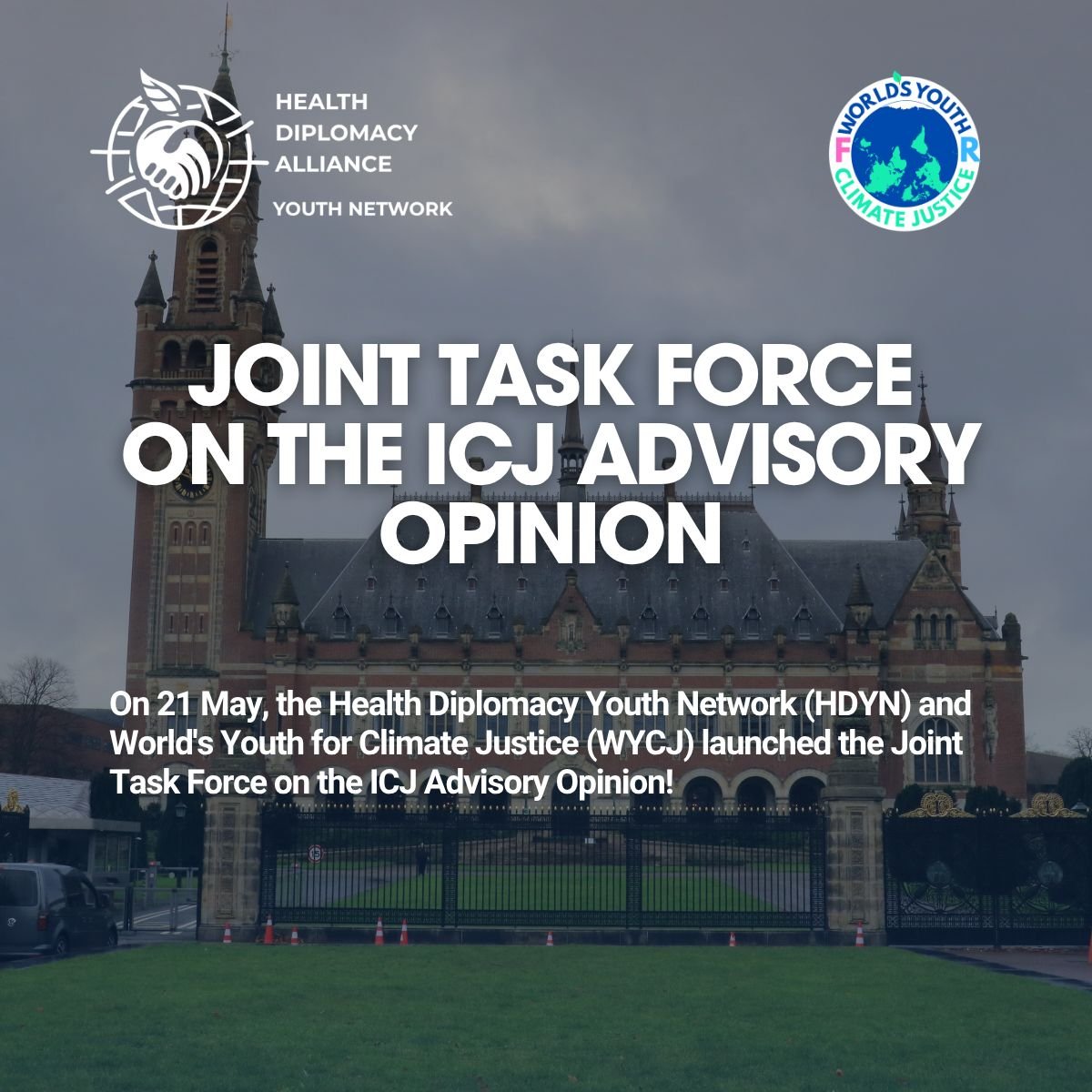
  • Launch of the Joint Task Force on the ICJ Advisory Opinion

    Launch of the Joint Task Force on the ICJ Advisory Opinion

    We are pleased to announce the signing of a Memorandum of Understanding (MoU) with the East, Central, and Southern Africa Health Community (ECSA-HC), marking an important step toward strengthening collaboration in health diplomacy, regional health governance, and capacity development across Africa and beyond.

    The MoU establishes a framework for cooperation between the two organizations in areas of shared interest, recognizing the growing importance of diplomacy, partnership building, and cross-sector collaboration in addressing today’s complex health challenges.

    Through this collaboration, HDA and ECSA-HC aim to promote dialogue and knowledge exchange on health diplomacy and global health while supporting initiatives that strengthen leadership, institutional capacity, and regional cooperation.

    The partnership will also create opportunities for joint activities, including policy engagement, research, training, technical exchanges, and the convening of stakeholders from across government, academia, civil society, and international organizations.

    The agreement also underscores the importance of regional organizations in shaping global health discussions and ensuring that diverse perspectives contribute to international decision-making processes. By combining HDA’s expertise in health diplomacy with ECSA-HC’s extensive regional network and experience, both organizations are well positioned to advance practical solutions that respond to evolving health priorities.

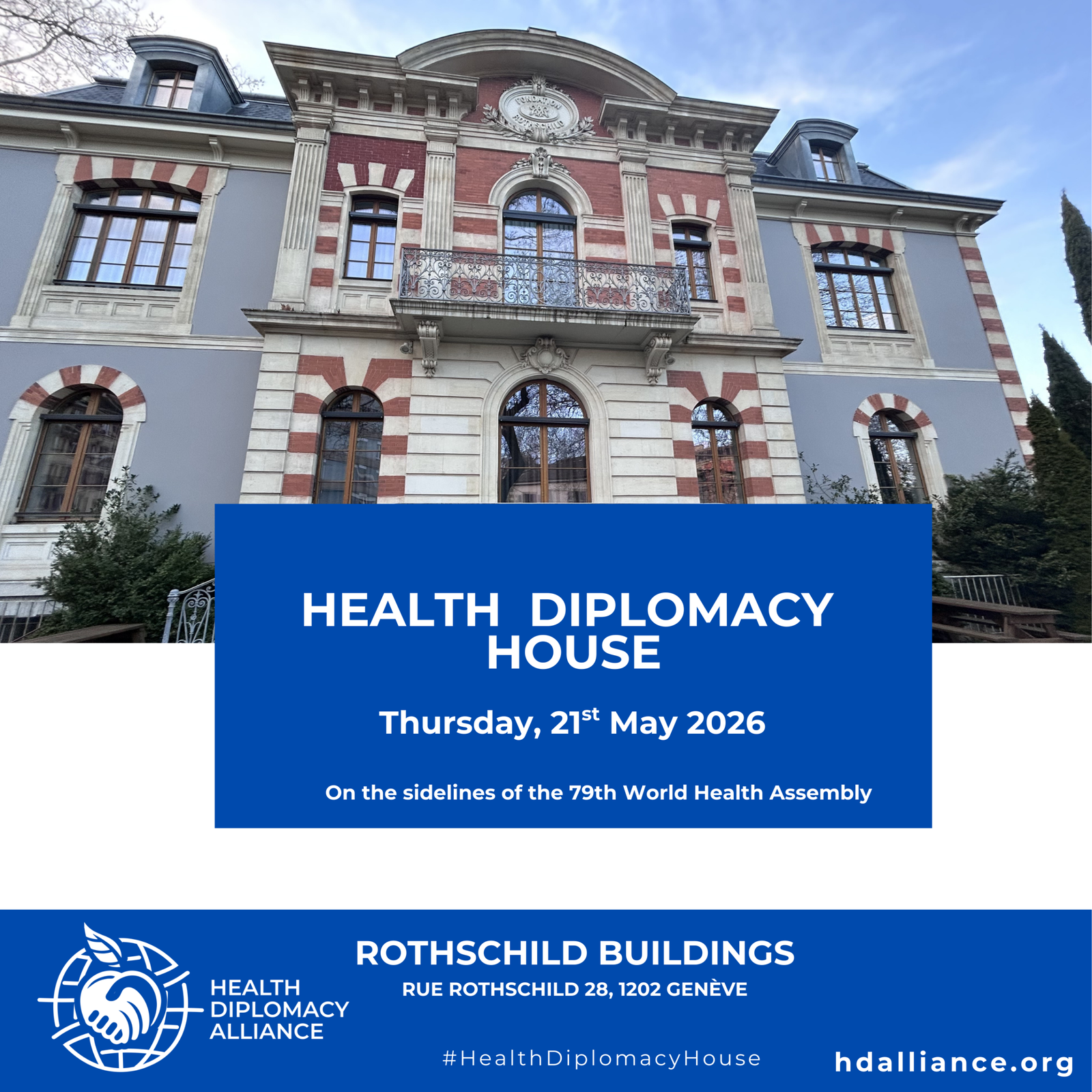
  • Health Diplomacy House

    Health Diplomacy House

    The Health Diplomacy House is an informal, practical space where organizations convene sessions, hold discussions, and work on concrete health policy issues. Located in the historic Rothschild buildings, formerly the Ancien Hôpital Ophtalmologique (1874–1978), it offers a simple and functional setting for focused exchange.

    As part of the Predictable Uncertainty series, it brings together policymakers, diplomats, academia, youth, civil society, philanthropic actors, the private sector, and patient groups.

    The programme includes multiple sessions and dialogues covering One Health, antimicrobial resistance, women’s leadership, health economics, pandemic preparedness, climate and health, health financing, and global health governance and reform.

    The day will conclude with a reception, offering space for continued informal exchange among participants.

    Each session requires individual registration. You must register separately for every session you wish to attend, as places are limited and allocated on a first-come, first-served basis.

    We look forward to welcoming you in The House.

    Light breakfast at 7:20 AM & 9:30 AM

    MORNING SESSIONS

    8 :00 AM- 9:00 AM CET

    Global Health Architecture and Governance: Reflection in an Era of Predictable Uncertainty

    OPENING

    Salle Dunant

    The opening session of the Health Diplomacy House brings participants into a focused, informal conversation on how global health is changing across governance, financing, and institutional processes. It sets the tone for subsequent partner organization sessions within the Health Diplomacy Alliance, including our strategic priorities—AMR, climate change and health, health governance, and sustainable financing—and how these connect to wider reform processes. The session is designed as a space that goes beyond standard exchanges, supporting reflection on how current shifts connect across agendas and shape future cooperation and coordination in global health.

    Special Guests:

    Dr. Flavia Bustero
    GW Voices | Former WHO Assistant Director-General | Vice-Chair, Foundation Botnar | Co-Chair, Lancet Commission on GBV
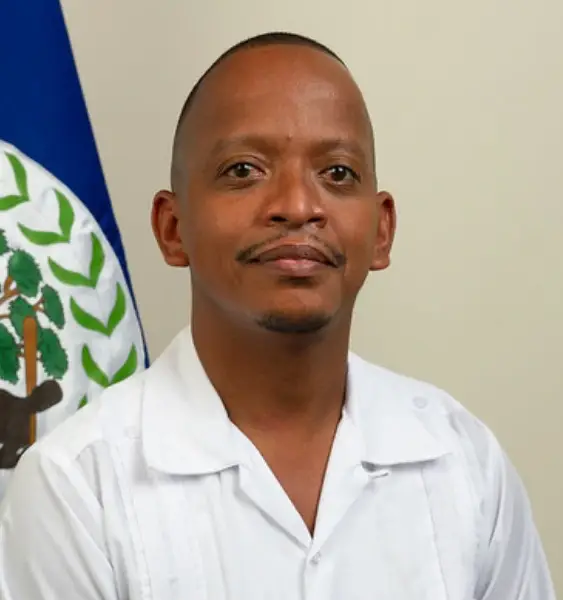
    Hon. Kevin Bernard
    Minister of Health and Wellness of Belize
    Dr. Bruce Aylward
    Coordinator of UN80 Initiative and WHO Reform | Former WHO Assistant Director – General
    Marilyne Andersen
    Director General , Geneva Science Diplomacy Anticipator (GESDA)

    Facilitators:

    Richard Pearshouse
    Senior Member – Advisory Committee – Health Diplomacy Alliance \ Head of the Environment and Human Rights Division , Human Rights Watch
    Katherine Urbáez
    Executive Director, Health Diplomacy Alliance

    Salle Calvin

    9:00 AM- 10:00 AM CET

    Traditional Medicine at the Nexus of Climate, Biodiversity, and Land Restoration (Rio Conventions)

    This side event explores the role of traditional medicine at the intersection of climate action, biodiversity conservation, and land restoration aligned with the Rio Conventions (UNFCCC, Convention on Biological Diversity, and UNCCD). Rooted in Indigenous knowledge systems, traditional medicine depends on healthy ecosystems and diverse plant species, many of which serve as vital resources for both human and ecological health. Medicinal plants act as “natural pharmacies” within forests, supporting wildlife and maintaining ecosystem balance. The session will highlight how safeguarding biodiversity strengthens traditional healing systems, while restoration efforts benefit from medicinal plant diversity. Bringing together youth, Indigenous voices, and global stakeholders, the event aims to position traditional medicine as a bridge connecting health, nature, and sustainable development.

    Panelists

    Mr. Gokul Rajendran
    CEO @ Govardhan & GITMA
    Dr. Naeema Al Qasseer
    Global Health & Development Expert & Former WHO Senior Official
    Ms. Cristina Romanelli
    Programme Officer, Biodiversity, Climate Change and Health, WHO
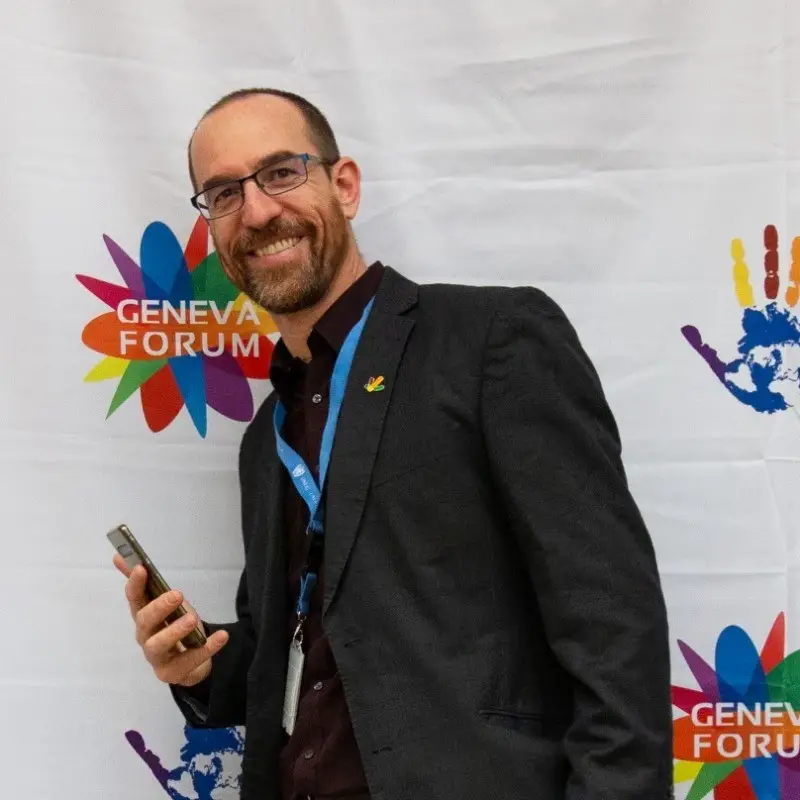
    Mr. Thomas Egli
    Founder @ Geneva Forum

    Virtual Speaker:

    Dr. Mona El-Sherbini
    Asso. Prof. of Infectious Parasitic Disease @ Cairo University, Egypt

    Moderator:

    Mr. Domenico
    Founder @ International One Health Conference

    Salle Dunant

    9:30 AM- 11:00 AM CET

    What’s at Stake and What Comes Next for Global Health Reform

    This interactive session explores the future of global health reform at a critical moment for international cooperation. As numerous reform initiatives emerge, it has become increasingly challenging for stakeholders to track developments and engage meaningfully.

    The session will provide clear and accessible insights into the structural drivers behind global health reform, highlighting four key paradigm shifts shaping the future. It will also examine major milestones—from the Gavi Leap and Accra Reset to ongoing WHO-led processes—while addressing both opportunities and risks for meaningful change.

    Participants will be invited to engage, reflect, and contribute to shaping the next era of global health.

    Special Guests:

    Hanan Mohamed al-Kuwari
    Advisor to the Prime Minister for Public Health Affairs, Former Minister of Public Health, Qatar
    Ebere Okerere
    Global Health Adviser at the Mohamed bin Zayed Foundation for Humanity
    Helen Clark
    Former Prime Minister of New Zealand and Former Administrator of the United Nations Development Programme (UNDP)
    Dr. Magda Robalo
    Member of the High-Level Panel of the Accra Reset Initiative, President and co-founder of The Institute for Global Health and Development (IGHD)
    Satoshi Ezoe
    Senior Assistant Minister for Global Health, Ministry of Health, Labour and Welfare (MHLW), Japan
    Minghui Ren
    Professor, Department of Global Health, School of Public Health, Peking University
    John-Arne Røttingen
    CEO, Wellcome Trust
    Richard- Horton
    Editor-in-Chief, The Lancet
    Mark R. Dybul
    Chief Strategy Officer & Professor, Center for Global Health Practice and Impact, Georgetown University Medical Center
    Peter Piot
    Handa Professor of Global Health, LSHTM; Special Advisor on European and Global Health Security
    Michel Kazatchkine
    Senior Fellow, Global Health Centre, Geneva Graduate Institute; Senior Advisor, WHO Regional Office for Europe; Member, Independent Panel for Pandemic Preparedness and Response (IPPR)

    Facilitator:

    Dr Anders Nordström
    Director, PIPDH | Former Swedish Global Health Ambassador | Former Acting DG, WHO

    Salle Calvin

    10:00 AM- 11:00 AM CET

    Climate Change and Respiratory Health (Fireside Chat)

    This session will explore how climate change is affecting respiratory health worldwide. It will highlight the impact of rising temperatures, air pollution, and environmental changes on conditions like asthma and COPD, particularly among vulnerable populations. The session will bring together experts and policymakers to discuss prevention strategies, strengthen public health responses, and bridge the gap between research and policy.

    Panelists:

    Christian Terreaux
    Public Affairs Director, OM Pharma
    Abigail C Headshot
    Abigail Corrao
    Adjunct Professor, Georgetown University; Co-Founder, Global Health Governance as Public Service.
    Panagiotis Chaslaridis
    Senior Policy Advisor, European Federation of Allergy and Airways Diseases Patients’ Associations
    Katherine Urbáez
    Executive Director, Health Diplomacy Alliance
    Prof. Helena Pité
    Professor of immuno-allergology Hospital CUF Tejo, Lisbon

    Salle Calvin

    11:05 AM – 12:05 PM CET

    From Security to Stability: Health Interventions in Fragile and Conflict Affected Settings

    To what extent do different types of health-focused aid interventions in fragile and conflict-affected settings strengthen health system resilience? And how does improved resilience influence sociopolitical stability in these contexts? Drawing on an applied research project conducted by students at Graduate Institute of International and Development Studies in collaboration with Health Diplomacy Alliance, the session will present findings from four case studies: the Ebola response in Guinea, health interventions in the Tigray region of Ethiopia, a community-based intervention in Burundi, and the Free Healthcare Initiative in Sierra Leone. Based on interviews conducted with humanitarian workers, government officials, and health practitioners, the research examines whether and under what conditions health interventions can contribute not only to improved health outcomes, but also to broader forms of resilience, including trust-building, institutional legitimacy, social cohesion, and pathways toward greater sociopolitical stability.

    During the session, the student research team will present their project and key findings, followed by an open discussion on the practical and policy implications emerging from the research. The dialogue will focus on identifying recommendations for how health interventions in fragile and conflict-affected settings can be designed and implemented more effectively to strengthen health system resilience while supporting longer-term stability and recovery.

    Panelists:

    Anna Weinzierl
    First year Master’s in International and Development Studies, specialising in Sustainable Trade and Finance
    Vittoria Cateni
    First-year Master’s student in International and Development Studies, specializing in Migration.
    Charlotte Howden
    First year Master’s in International and Development Studies, specialising in Global Health
    Pia Mehdwan
    First-year Master’s student in International and Development Studies, specializing in Global Health.

    Salle Dunant

    11:15 AM- 12:35 PM CET

    Financing Health Through Diplomacy: Unlocking Debt-for-Health Swaps

    Financing Health Through Diplomacy: Unlocking Debt-for-Health Swaps” is a workshop session organized by JLI Center for Global Health Diplomacy. The session addresses growing financial pressures on health systems in low- and middle-income countries, driven by rising debt, declining aid, and constrained public resources. It aims to strengthen understanding of innovative and blended financing mechanisms, with a focus on debt-for-health swaps as a practical tool to unlock fiscal space for health investments. 

    Through presentations and discussion, participants will explore the working debt swap model through case studies, highlighting lessons learned, enabling factors, and implementation challenges. The session also emphasizes the role of health diplomacy in bringing together governments and partners to negotiate sustainable solutions. Designed as an interactive workshop, it encourages peer exchange and aims to generate actionable insights and better knowledge on the ways innovative financing in coordination with health diplomacy can be used to advance national health strategies.

    Panelists:

    Christoph Benn
    Executive Director, JLI Center for Global Health Diplomacy
    Cristina Nakano
    Project Manager for Innovative Financing, JLI Center for Global Health Diplomacy

    Moderator:

    Rafael Garcia
    Portfolio Manager, JLI Center for Global Health Diplomacy

    More Speakers and facilitators to be announced. 

    Light lunch at 11:40 AM & 12:40 PM

    LUNCH SESSION

    Salle Calvin

    12:10 PM – 13:20 PM CET

    Women at the Heart of Health Diplomacy. Heal, Lead, Seal.

    Women are at the core of health diplomacy, yet they are excluded from, or marginalized within, high-stakes health decisions, at every level from community to global. This session will convene women at different stages of leadership and from different sectors and regions, to create space for inter-generational dialogue amongst women leaders in global health. Throughout the session, participants will interrogate questions like: Where does real power sit in health negotiations, and how do women learn to navigate it? and, What would a genuinely gender-responsive health diplomacy process look like, and who has to change for it to happen? The discussion will center the real experiences of how women are excluded from, or marginalized within, high-stakes health decisions, at every level from community to global, and the specific challenges facing young women entering health diplomacy. Through honest and open conversation with one another, participants will build connections, solidarity, and mentorship across generations and sectors.

    Special Guests:

    Dr. Jacqueline Kitulu
    President of the World Medical Association
    Emma Rawson Te-Patu
    President World Federation of Public Health Associations. Expert Member United Nations Permanent Forum on Indigenous Issues
    Dr. Paula Reges
    Advisor, Global Health | Pasteur Network
    Dr. Valeria Gigante
    Lead, R&D and Innovation Workstream for Antimicrobial Resistance (AMR), World Health Organization

    Facilitators: 

    Mattar headshot
    Dr. Caline Mattar
    Professor of Medicine & Public Health | Infectious Diseases Specialist
    Abigail C Headshot
    Abigail Corrao
    Adjunct Professor, Georgetown University; Co-Founder, Global Health Governance as Public Service.

    Speakers :

    Arantxa Cedillo
    Founder, Arctype® | Senior Strategic Communications Advisor, Health Diplomacy Alliance
    Haadiya Ahmed
    Geopolitical Analyst | Fellow, Health Diplomacy Alliance

    Salle Dunant

    12:30 PM- 1:20 PM CET

    Plastics & Health: What we’re not talking about

    The session will explore the often-overlooked health impacts of plastics across their full lifecycle, from production to disposal, highlighting growing scientific evidence on risks linked to plastic pollution, chemicals, microplastics and nanoplastics. It will also examine how health considerations can be more effectively integrated into ongoing global negotiations for a legally binding plastics treaty. Through short lightning talks by experts from diplomacy, science, and policy, the discussion will focus on why health must sit at the centre of global plastics action and how scientific knowledge can be better communicated and translated into policy.

    Panelists:

    Miriam G. Medel Garcia
    Head, Environment Team, Permanent Mission of Mexico to the United Nations Office and other international organizations in Geneva
    Rüdiger Krech
    Acting Director, Department of Environment, Climate Change, One Health and Migration, World Health Organization (WHO)
    Hervé Raps
    Research Liaison Physician, Centre Scientifique de Monaco
    David Azoulay
    Director, Switzerland & Environmental Health Program, Center for International Environmental Law (CIEL)
    Etienne Cabane
    Engagement Director, Food Packaging Forum
    Roman Lehner
    SNF SPARK Grant Holder, Department of Chemistry, Biochemistry, and Pharmaceutical Sciences, University of Bern
    Carolyn Deere Birkbeck
    Executive Director, Forum on Trade, Environment & the SDGs (TESS), Geneva Graduate Institute
    María Alejandra Gonzáez
    Global Plastics Advocacy Manager, WWF Norway
    Noam Yaron
    Record-Breaking Swiss Ultra-Endurance Athlete Advocating for Ocean Protection

    AFTERNOON SESSIONS

    Salle Rousseau

    1:00 PM – 2:00 PM CET

    Closing the Gap: Governance and Financing for an Effective Global Response to Antibiotic Resistance

    ReAct’s roundtable, scheduled for May 21, 2026, on the sidelines of the 79th World Health Assembly in Geneva, will convene a small group of policymakers and experts to discuss the role of global governance and financing in addressing critical implementation gaps in the response to antibiotic resistance.


    The relevance of this discussion is underscored by a deteriorating global health financing landscape, marked by significant aid cuts and growing geopolitical instability that is straining multilateral cooperation. The roundtable will 1) reflect on strengths and limitations of the existing governance system and 2) explore options to expand and optimize both domestic and international financing.
    As a longstanding civil society convener at the intersection of governance and financing, ReAct seeks – through this focused dialogue – to support the alignment of strengthened governance and resource mobilization with national needs.

    Panelists:

    By Invitation Only

    Salle Calvin

    1:30 PM – 2:30 PM CET

    The International Court of Justice Advisory Opinion on Climate Change: Implications for Global Health Governance

    The International Court of Justice (ICJ) has recently issued an advisory opinion on the obligations of states in respect of climate change. This opinion has prompted considerable discussion within international law and global health circles regarding its potential relevance to the work of the World Health Organization (WHO) and its member states. In the context of the World Health Assembly’s ongoing engagement with climate change and health, including through the 2025 Global Action Plan on Climate Change and Health, there is growing interest in understanding how the advisory opinion may inform future global health law and governance.

    The 79th World Health Assembly offers an important opportunity to explore these questions with the broader global health community. The Health Diplomacy Youth Network (HDYN), in partnership with World’s Youth for Climate Justice (WYCJ), will host this fireside chat to provide an overview of what an advisory opinion is and how it functions within international law, present a clear overview of the Court’s key findings on state obligations in respect of climate change, and explore the potential relevance of the advisory opinion to global health governance frameworks, including through the work of the WHO and its member states.

    In conversation with Dr. Nilufer Oral, member of the International Law Commission, the fireside chat will examine possible considerations for integrating findings of the advisory opinion into ongoing global health law and governance processes, and support the launch of the HDYN–WYCJ Joint Task Force on the International Court of Justice Advisory Opinion on Climate Change.

    Panelists:

    Nilufer Oral
    Director, Centre of International Law, National University of Singapore; Member, United Nations International Law Commission
    Matthew Carvalho
    Chair, Health Diplomacy Youth Network; Adjunct Research Fellow (Global Governance and Diplomacy), Sunway Centre for Planetary Health, Sunway University; Co-Chair, Committee on Global Health Law, American Branch of the International Law Association

    Salle Rousseau

    2:00 PM – 3:30 PM CET

    The Role of Journalism in Global Health Diplomacy

    This session will explore the role of journalism in Global Health Diplomacy. Specifically, we will discuss the journalistic practices of Geneva Health Files in reporting global health negotiations in Geneva at the World Trade Organization, and the World Health Organization, during the pandemic and post-pandemic years. We will tell the story of how we came to report on closed-door negotiations to provide a service to negotiators, diplomats and other stakeholders during the negotiations on the WTO TRIPS Waiver, the amendments to the International Health Regulations, and the Pandemic Agreement. We will also discuss the impact we have had, and the traction we received in response to our journalism. The session will explore the tool of independent journalism to further transparency and accountability in global health policymaking. It will also underscore the importance of having access to rigorous journalism, for all delegations for timelyimpartial and accurate coverage of opaque decision-making.

    Panelists:

    Priti Patnaik
    Founder & Publisher at Geneva Health Files

    Salle Calvin

    2:30 PM – 3:20 PM CET

    From Co‑Benefits to Core Value: Health in Climate Policy

    As climate action accelerates, health is increasingly cited as a co‑benefit, but too often health impacts remain undervalued, inconsistently measured, or sidelined in real investment and policy decisions. This small, interactive session at Health Diplomacy House will explore how economic evidence and value assessment can make health impacts visible, credible, and decision‑relevant in climate policy.

    The discussion will examine how better alignment of climate and health evidence can strengthen cross‑government decisions, inform financing priorities, and support more effective climate action with meaningful health gains.

    With contributions from OHE, LSHTM, and climate leaders, and limited to around 40 participants, the session is designed to enable focused exchange, practical insight, and candid discussion among senior policymakers, diplomats, and partners working at the climate–health–finance nexus.

    Panelists:

    Professor Andy Haines
    Professor of Environmental Change and Public Health, The London School of Hygiene & Tropical Medicine
    Professor Mireia Jofre-Bonet
    Chief Research Officer, Head of Education, OHE
    Dr. Iris Blom
    Penholder of the Pan-European Commission on Climate and Health at WHO Regional Office for Europe
    Dr. Tamer Rabie
    Global Program Lead for Climate and Health, World Bank
    Shouro Dasgupta
    Environmental Economist — Fondazione CMCC | Visiting Senior Fellow — Grantham Research Institute on Climate Change and the Environment, London School of Economics and Political Science

    Salle Calvin

    3:00 PM – 4:30 PM CET

    Roundtable on the International Court of Justice Advisory Opinion

    This Strategic Roundtable brings together invited experts with experience across the Pandemic Agreement negotiations and the ICJ advisory opinion process to help shape the programme of work for the Health Diplomacy Youth Network–World’s Youth for Climate Justice Joint Task Force on the ICJ Advisory Opinion.

    Convenors: :

    Matthew Carvalho
    Chair, Health Diplomacy Youth Network; Adjunct Research Fellow (Global Governance and Diplomacy), Sunway Centre for Planetary Health, Sunway University; Co-Chair, Committee on Global Health Law, American Branch of the International Law Association
    Katherine Urbaez
    Executive Director, Health Diplomacy Alliance
    Nicole Ann Ponce
    Co-Founder and Global Advocacy Lead, World’s Youth for Climate Justice

    By Invitation Only

    Salle Dunant

    3:30 PM – 4:50 PM CET

    Changing Paradigms of Global Health Governance and Health Security Architecture: Reflections from South and Southeast Asia

    Contemporary global health governance (GHG) is increasingly characterised by fragmentation, geopolitical competition, power asymmetries, and a gradual retreat of traditional donors. At the same time, countries of the Global South are calling for a more equitable and representative order, prompting a rethinking of global health governance structures and financing mechanisms. South and Southeast Asia—given their demographic weight, epidemiological transitions, and growing economic and political influence—are central to shaping these shifts. The region faces a dual challenge: advancing universal health coverage (UHC) while addressing cross-border threats such as climate-related health risks and pandemic prevention, preparedness, and response (PPPR). This side event situates these challenges within ongoing World Health Assembly discussions and explores how strengthened regional cooperation can complement global multilateral processes. It focuses on three key pathways: (1) cross-border knowledge sharing, norm-setting, and technical exchanges; (2) the amplification of Global South voices and pooled expertise; (3) the value of issue-based coalitions and regional agendas on PPPR, which address the rapidly shifting health security architecture in South and Southeast Asia. The session builds on two research studies examining global and regional health governance dynamics and the implications of the Pandemic Agreement for regional cooperation in Asia.

    Panelists:

    Laveesh Bhandari 
    President, CSEP
    David McCoy
    Policy Research Lead, UNU-IIGH
    Priyadarshini Singh
    Fellow, CSEP
    Nadine Monteiro
    Research Analyst, CEP
    Yik Ying Teo
    Dean, Saw Swee Hock School of Public Health, National University of Singapore
    Suerie Moon
    Co-Director, Global Health Centre, Geneva Graduate Institute

    Salle Rousseau

    3:40 PM – 5:00 PM CET

    Advancing a Common Care Framework for Ethical Health Worker Mobility

    This session will explore how to make international health worker mobility fairer, more sustainable and more credible for all parties involved.

    It will introduce the Common Care Framework, a practical policy model for governing health worker mobility not simply as a matter of recruitment, but as a broader relationship that must also address integration, professional recognition, worker protection, retention, and mutual benefit between countries of origin and destination. Structured around the principles of respect, recognition and utility, the Framework aims to define what responsible and workable mobility should look like in practice for governments, employers, health workers and communities. The discussion will connect this approach to current global debates on the WHO Global Code of Practice, the WHO Support and Safeguards List, and the ILO fair recruitment framework, with a view to identifying more concrete and accountable ways of governing health worker mobility

    Panelists:

    By Invitation Only

    CLOSING SESSION

    Salle Dunant

    5:00PM – 6:30 PM CET

    CHECK THE BOX – AMR

    CLOSING

    The closing session of the Health Diplomacy House will focus on tracking political commitments on antimicrobial resistance, assessing the distance between declaration and implementation, and identifying the diplomatic and policy levers needed to accelerate action.

    Facilitators:

    Katherine Urbáez
    Executive Director, Health Diplomacy Alliance
    Mattar headshot
    Dr. Caline Mattar
    Professor of Medicine & Public Health | Infectious Diseases Specialist
    Prof. Sabiha Essack
    Professor in Pharmaceutical Sciences at the University of KwaZulu-Natal (UKZN) in Durban, South AfricaDeputy Director, Policy & Strategy ReAct Africa
    Tracie Muraya
    Deputy Director, Policy & Strategy ReAct Africa
    Dr. Benedikt Huttner
    Unit Head of Research, Access, Stewardship and AMU Surveillance (RSA), WHO

    7:00 PM

    RECEPTION

    Rue Rothschild 28, 1202 Geneva, Switzerland
    🚌
    Bus (TPG)
    1 25
    Nearby stops:
    Châteaubriand & Gautier
    🚊
    Tram (TPG)
    15
    Stop:
    Butini
    🚆
    Train (CFF/SBB)
    RL1 RL3
    Stations:
    Gare Cornavin & Geneva-Sécheron
    ⛴️
    Lake boat
    M4
    Stop: Châteaubriand (Lac)
    2 min walk — scenic option
    ✈️
    From the airport
    ~20 min
    Train from Geneva Airport → Cornavin, then bus 1 or 25 to Gautier or Châteaubriand

    The venue is a 10-minute walk from Geneva Cornavin — the central hub for all public transport in Geneva.
    Limited parking on site. The nearest paid parking is Parking Butini, a short walk from the venue. We encourage the use of public transport in line with our sustainability commitments.
    View on Google Maps ↗

    GETTING THERE

    Program
  • Climate Change and Respiratory Health

    Climate Change and Respiratory Health

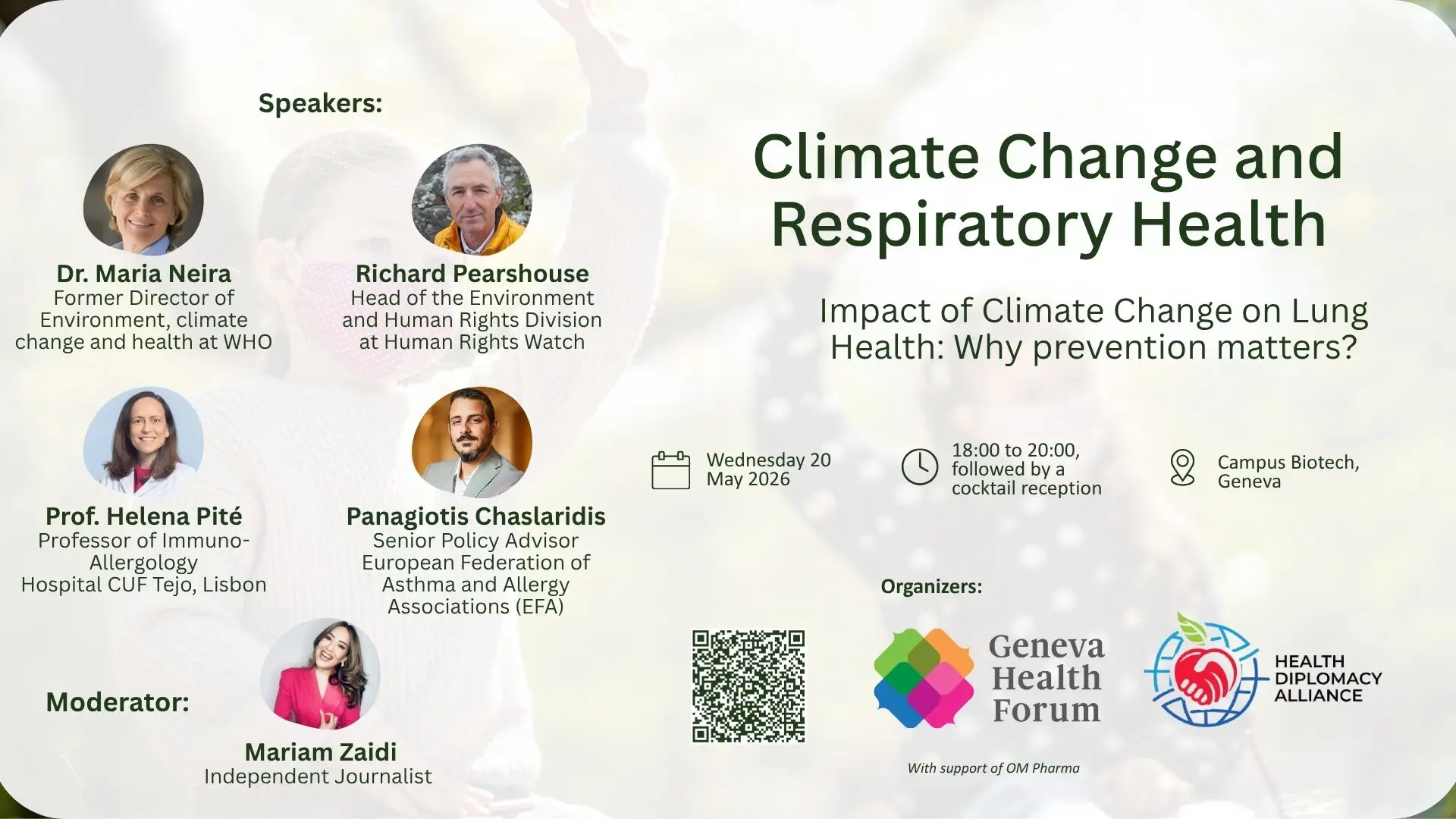
    This side event, organized by Health Diplomacy Alliance and Geneva Health Forum, and explores the growing impact of climate change on respiratory health and the increasing burden of respiratory infections worldwide.

    Rising temperatures, air pollution, and changing environmental conditions are contributing to worsening air quality, prolonged allergy seasons, and heightened vulnerability to diseases such as asthma and chronic obstructive pulmonary disease (COPD).

    Bringing together experts, policymakers, and practitioners, the session will examine how climate-related factors influence respiratory health; particularly among vulnerable populations; and discuss practical prevention strategies.

    The event will also focus on bridging research and policy to strengthen public health responses, promote innovation, and enhance resilience in the face of climate-driven health challenges.

    Dr. Maria Neira

    Former Director of Environment, climate change and health at WHO

    Richard PEARSHOUSE

    Head of the Environment and Human Rights Division at Human Rights Watch

    Prof. Helena Pité

    Professor of immuno-allergology
    Hospital CUF Tejo, Lisbon

    Panagiotis CHASLARIDIS

    Senior Policy Advisor, European Federation of Allergy and Airways Diseases Patients’ Associations

    Mariam ZAIDI

    Journalist, Independant 

    Panelists

    Agenda

    18.00

    Welcome and registration

    18.15

    Introduction by Mariam Zaidi

    18.20

    Interactive panel discussion

    Climate change and respiratory health, importance of prevention Meaningful policy action: bridging research and practice.

    19.20

    Interactive Q&A

    19.50

    Wrap-up and next steps

    20.00

    Networking dinner buffet

  • World Antimicrobial Resistance Awareness Week

    World Antimicrobial Resistance Awareness Week

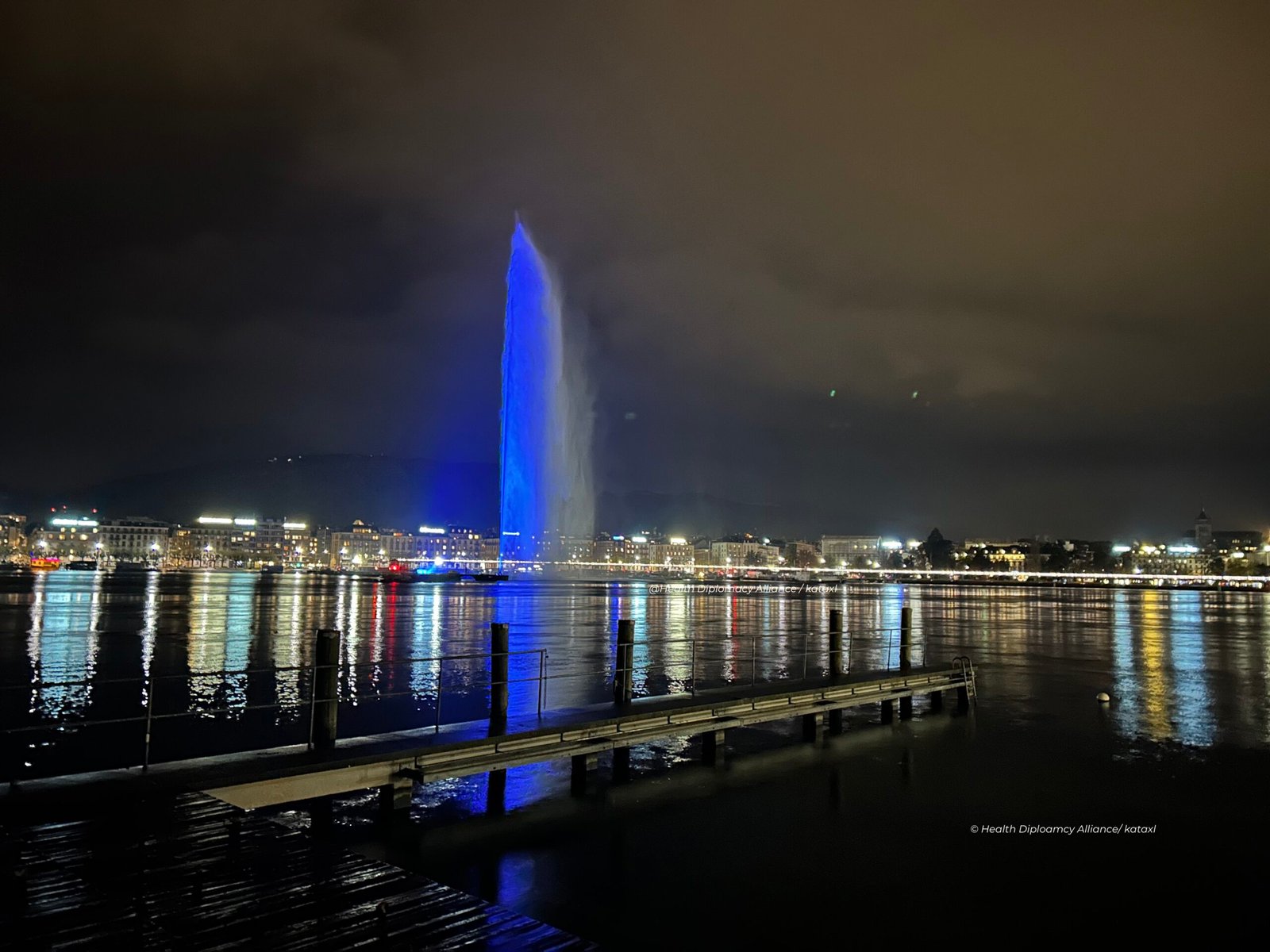
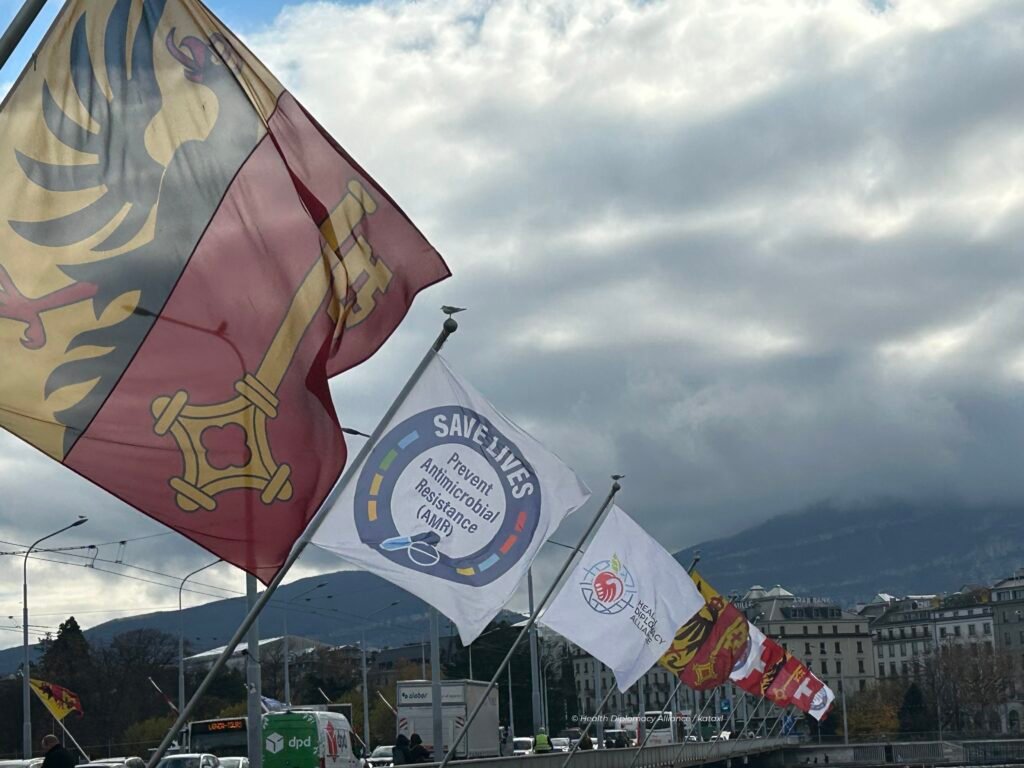
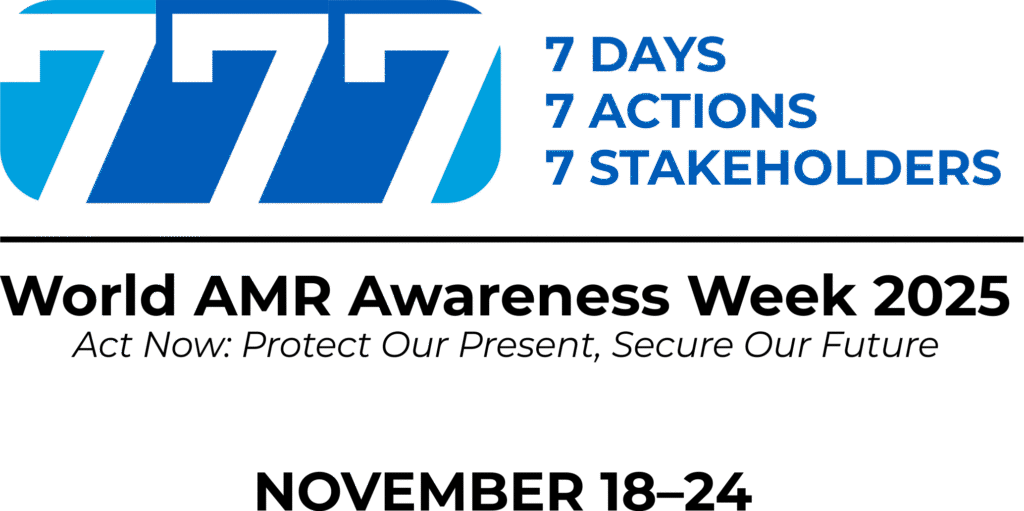
    The 7-7-7 Campaign was our flagship initiative for our World Antimicrobial Resistance Awareness Week (18–24 November 2025), engaging 7 days, 7 actions and 7 groups of stakeholders. Key events included flag displays on Pont du Mont-Blanc from 17 to 19 November, an awareness booth at Geneva Cornavin Main Train Station on 18 November, and the blue illumination of Geneva’s Jet d’Eau on 23 November.

    Throughout the week, an online social media campaign ran with partners from various sectors and participants who amplified the campaign’s reach and highlighted their work related to AMR.

    As a conclusion to WAAW 2025, the 2025 Global Intergenerational Dialogue on AMR took place on 24 November in collaboration with the Geneva Environment Network, underscoring the critical need for cross-sectoral collaboration to sustainably address AMR.

    Pont -Du-Mont Blanc

    One of the most noticeable aspects of our 777 campaign was the deployment of the Alliance’s and the AMR campaign’s flags during November 17–19, 2025.

    On average, 55,000 cars, 14,500 pedestrians, and 6,500 cyclists pass through the Pont du Mont Blanc each day.

    This exceptionally high circulation, which included pedestrian traffic, private automobiles, public transportation, and active mobility users, made it the perfect setting for educating the Canton of Geneva’s citizens and passersby about AMR.

    Thousands of extremely diverse and energetic travelers saw the flags throughout the course of the three days, raising awareness of AMR and highlighting the importance of health diplomacy in public spaces.

    Train Station Booth

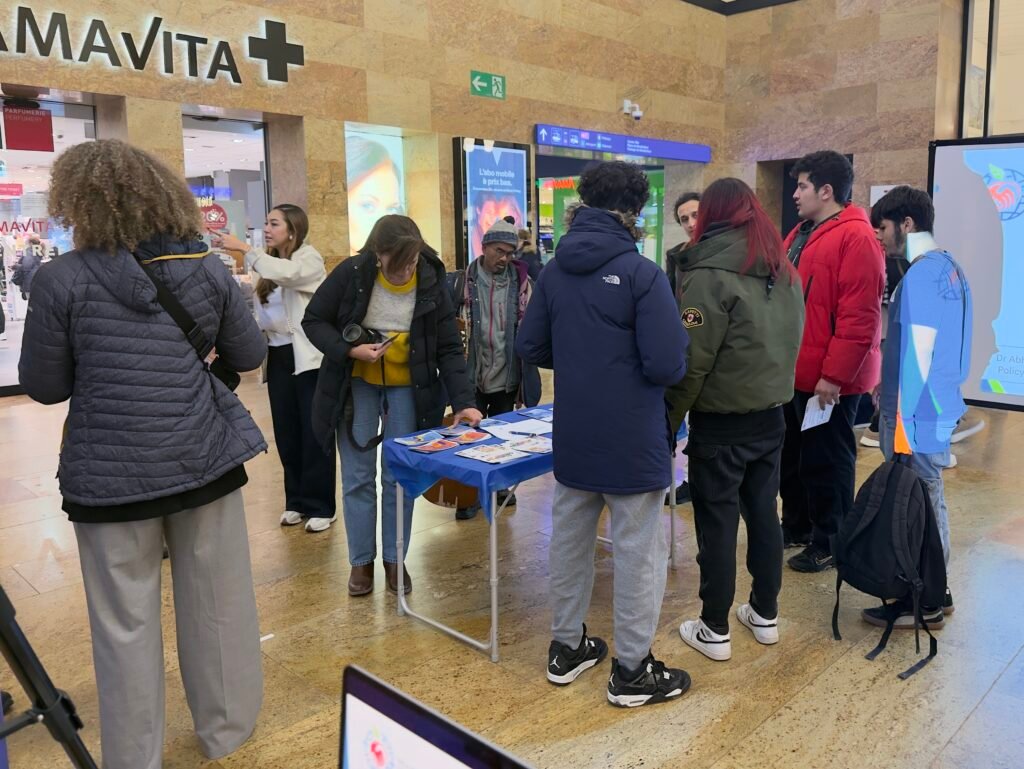
    A full-day AMR awareness stand at Gare Cornavin, the largest and busiest train station in Geneva, with more than 170,000 passengers passing through daily. Our objective was to engage directly with the people and raise awareness about antimicrobial resistance in an accessible way.  

    The stand featured: 

    • A large projection screen showing educational and informative content produced by us and the organizations that joined our 777 campaign
    • Distribution of educational and informative materials, including flyers, infographics, and factsheets.
    • An interview corner for short recordings with passersby and partners. 


     Throughout the day: 

    • We interacted with individuals of all ages in multiple languages to make our outreach inclusive (English, French, Spanish, Portuguese)
    • Many visitors learned about AMR for the first time 

    Social Media Campaign

    Over 7 days, we convened a social media campaign across our platforms to highlight 7 key actions from 7 stakeholder groups to reduce the global AMR burden.

    The actions included Infection Prevention and Control, Water Sanitation and Hygiene, stewardship, surveillance, innovation, R&D, manufacturing, equitable access, the One Health approach, evidence-based policy, financing, and health diplomacy.  

    The 7 stakeholder groups represented a whole-of-society approach to curbing the global health threat and included AMR Survivors, Health workers, Governments and Policy Makers, Civil society, philanthropy, academia, International Organizations, the Private Sector, and the Media.

    The content spanned languages such as Maltese, English, Spanish, French, Hindi, Portuguese, Italian, and Malayalam

    The social media outreach from over 20 global organizations who participated in the campaign totalled 15,231 impressions, likes, reactions, and reposts.

    Jet d’Eau Ilumination


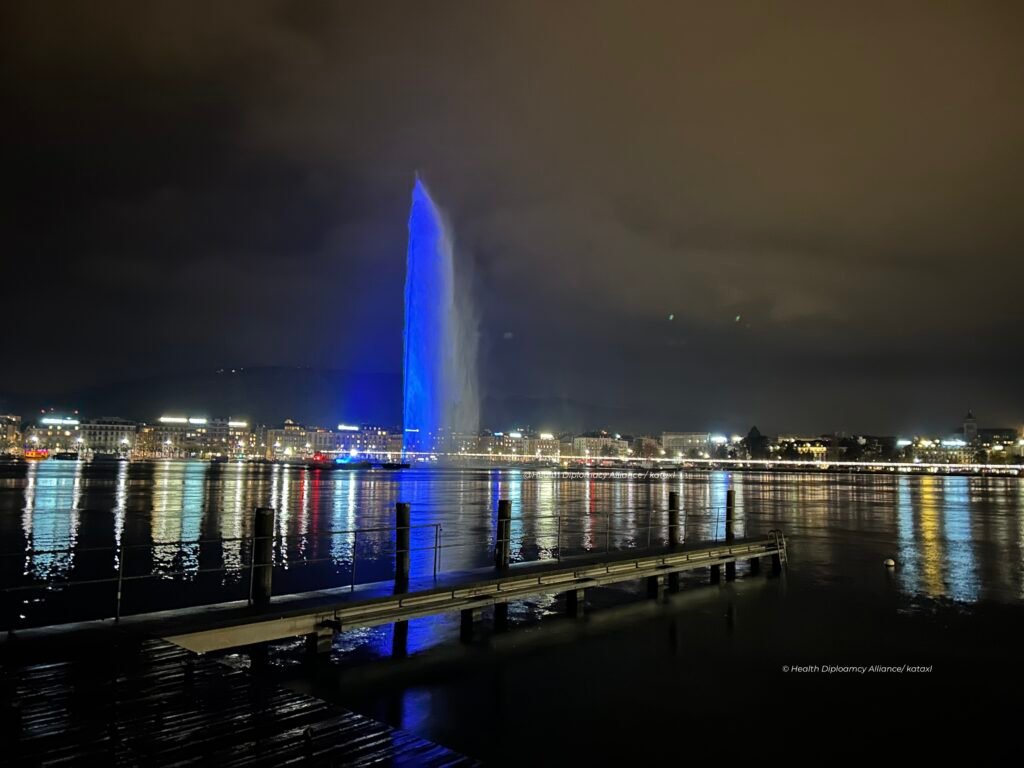
    The illumination of the Jet d’Eau in blue on 23 November was one of the key activities carried out as part of our 777 campaign.

    Lighting of the Jet d’Eau supports awareness of key issues and humanitarian emergencies or highlights events organized in international Geneva. For WAAW2025, the Jet adorned itself in brilliant blue to illuminate the AMR challenge at the heart of the harbor.  

    This symbolic icon of the city of Geneva, lighting it in blue, raised visibility, strengthened public awareness, and encouraged collective action in support of the campaign’s goals to reduce the global burden on AMR.


    2025 Intergenerational Dialogue on AMR


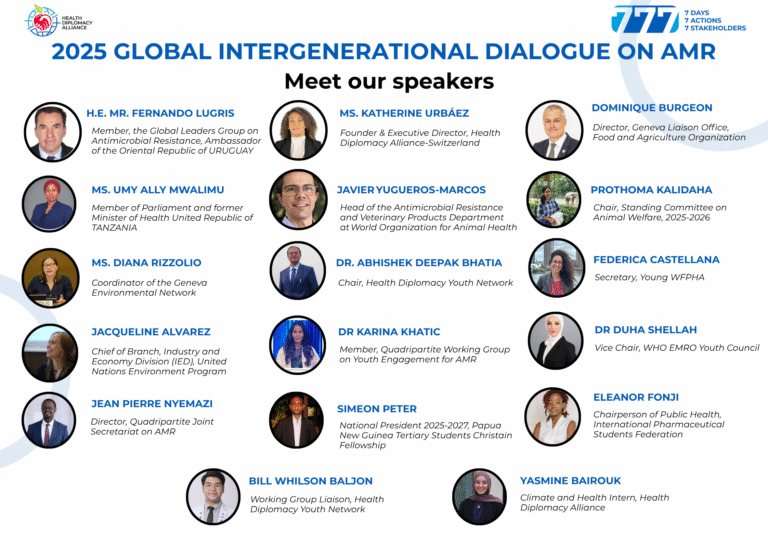
    Co-hosted by the Health Diplomacy Alliance and Geneva Environment Network, the 2025 Global Intergenerational Dialogue on AMR brought together speakers from Quadripartite and Youth led organizations and built on global momentum, amplified youth perspectives through dedicated surveys, fostered inter-generational exchanges of cross sectoral and cross regional success stories and highlighted actionable recommendations to embed an inclusive One Health approach in global AMR governance. 

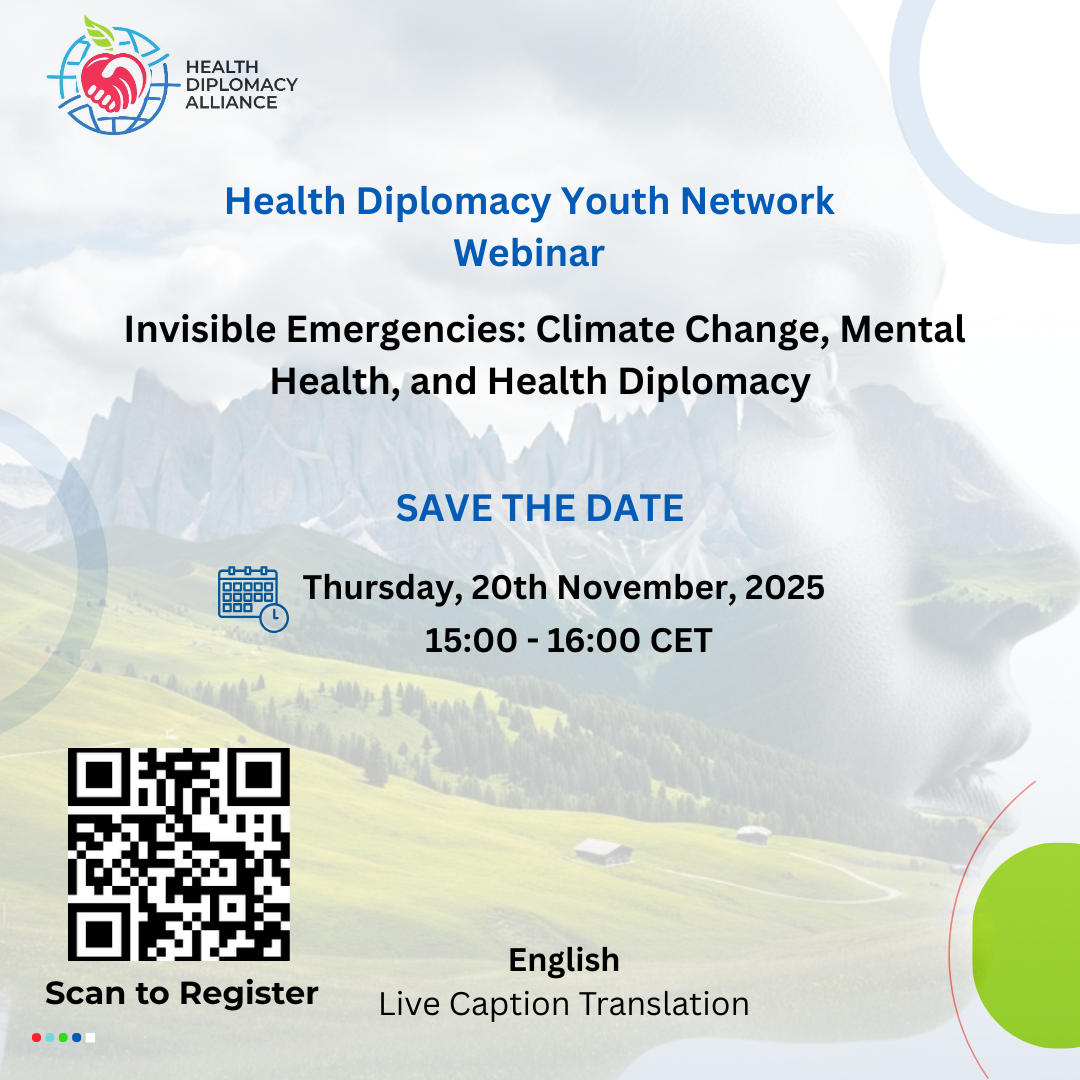
  • Invisible Emergencies: Climate Change, Mental Health, and Health Diplomacy

    Invisible Emergencies: Climate Change, Mental Health, and Health Diplomacy

    As climate impacts intensify, exacerbating trauma, food insecurity, displacement, and health inequities, mental health continues to be overlooked in climate strategies, underscoring the need for integrated action. Held in the wake of the Health Day deliberations at COP30, the webinar organized by the Health Diplomacy Youth Network responded to growing recognition of the psychological toll of climate change on vulnerable and climate-affected communities. With participation from youth leaders, environmental psychology experts, and community mental health practitioners, the session brought mental health to the forefront of climate diplomacy.

    Ayesha Ali, Coordinator of the Commonwealth Youth Health Network, opened the session by highlighting the gap between policy commitments and real-world access to mental health services in climate-vulnerable regions, especially for women, rural populations, and young people.

    Matteo Consiglio, Lead, Food and Water Systems, Swiss Youth for Climate, underscored how climate-driven food insecurity contributes to anxiety, stress, and psychosocial instability, calling for stronger links between food systems, environment, and public health.

    Dr. Jakub S. Bil, Universal Health Coverage Working Group Co-Chair, Global Mental Health Action Network, emphasized community-based and rights-based mental health approaches, noting that climate impacts frequently compound pre-existing trauma and inequities, and stressed co-design of solutions with affected communities as central to sustainable implementation.

    Dr. Harshita Umesh, Focal Point, Health Working Group, YOUNGO, highlighted the limited integration of mental health within UNFCCC processes and called for mental health to be embedded across adaptation and disaster response mechanisms, while Dion Ras, Executive Committee Member, International Association for Youth Mental Health, brought a grassroots lens, emphasizing peer support, lived experience, and the need for accessible, youth-informed systems of care in the face of climate stressors.

    During the panel discussion, Ebunoluwa Ayinmode steered a conversation that underscored the gap between policy ambition and implementation, the invisibility of cumulative climate-related trauma in formal frameworks, and the need for health diplomacy to align institutions, communities, and youth constituencies around shared priorities

    This event marks an important step in elevating the climate–mental health objectives enshrined in the Belem Health Action Plan by mobilizing diverse expertise, amplifying youth and community voices, and identifying practical pathways for integrated, equity-focused action. The Health Diplomacy Youth Network remains committed to advancing diplomatic engagement, intergenerational collaboration, and evidence-based advocacy to ensure that mental health becomes a central pillar of climate resilience.

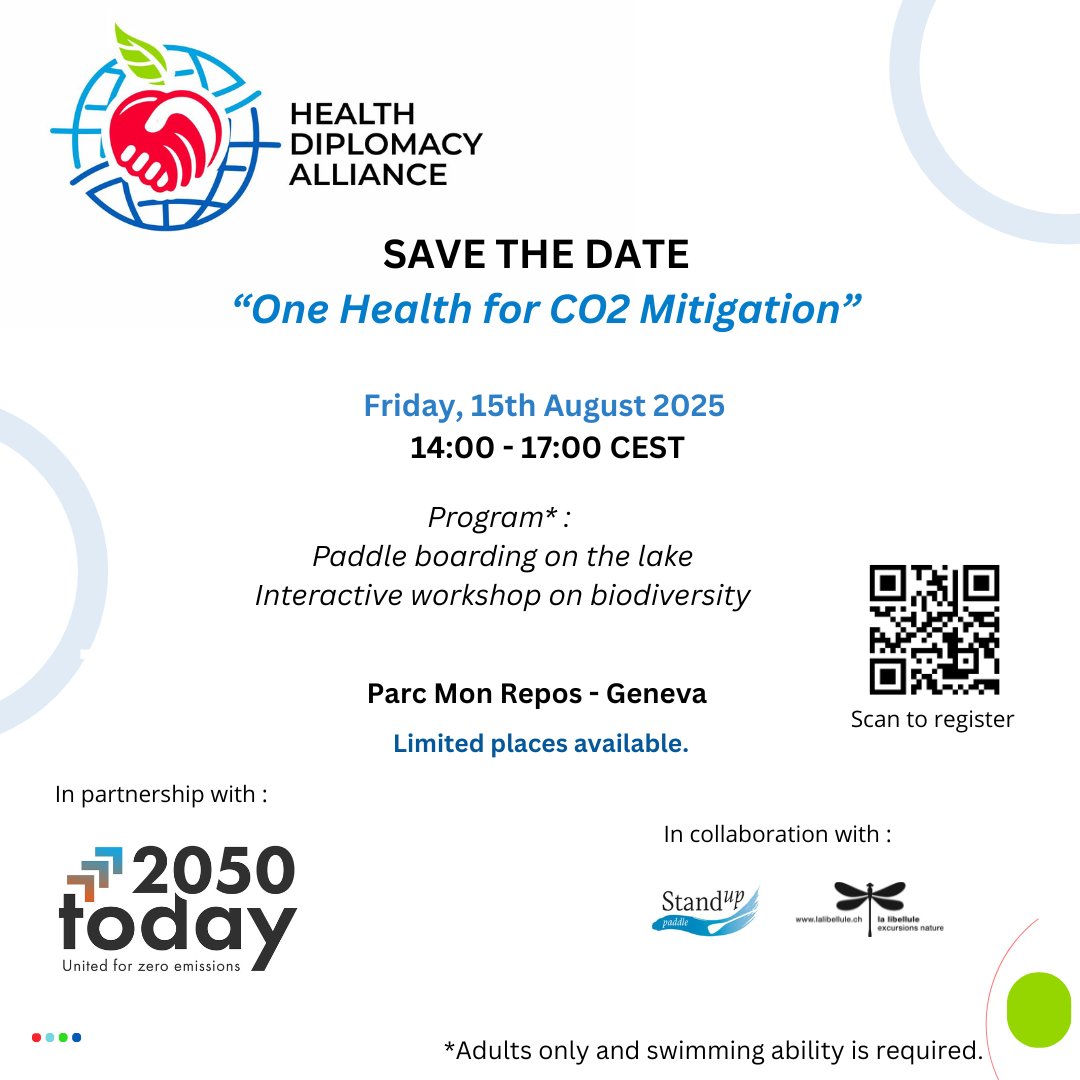
  • One Health and CO2 Mitigation

    One Health and CO2 Mitigation

    The 7-7-7 Campaign, was our flagship initiative for our World Antimicrobial Resistance Awareness Week (18–24 November 2025), engaging during 7 days, 7 actions and 7 group of stakeholders. Key events included flag displays on Pont du Mont-Blanc from 17 to 19 November, an awareness booth at Geneva Cornavin Main Train Station on 18 November, and the blue illumination of Geneva’s Jet d’Eau on 23 November. 

    Throughout the week, an online social media campaign ran with partners from various sectors and participants who amplified the campaign’s reach and highlighted their work related to AMR. 

    As a conclusion to WAAW 2025, the 2025 Global Intergenerational Dialogue on AMR took place on 24 November in collaboration with the Geneva Environment Network, underscoring the critical need for cross-sectoral collaboration to sustainably address AMR. 

    Pont -Du-Mont Blanc

    One of the most noticeable aspects of our 777 campaign was the deployment of the Alliance’s and the AMR campaign’s flags during November 17–19, 2025.

    On average, 55,000 cars, 14,500 pedestrians, and 6,500 cyclists pass through the Pont du Mont Blanc each day.

    This exceptionally high circulation, which included pedestrian traffic, private automobiles, public transportation, and active mobility users, made it the perfect setting for educating the Canton of Geneva’s citizens and passersby about AMR.

    Thousands of extremely diverse and energetic travelers saw the flags throughout the course of the three days, raising awareness of AMR and highlighting the importance of health diplomacy in public spaces.

    Train Station Booth

    A full-day AMR awareness stand at Gare Cornavin, the largest and busiest train station in Geneva, with more than 170,000 passengers passing through daily. Our objective was to engage directly with the people and raise awareness about antimicrobial resistance in an accessible way.  

    The stand featured: 

    • A large projection screen showing educational and informative content produced by us and the organizations that joined our 777 campaign
    • Distribution of educational and informative materials, including flyers, infographics, and factsheets.
    • An interview corner for short recordings with passersby and partners. 


     Throughout the day: 

    • We interacted with individuals of all ages in multiple languages to make our outreach inclusive (English, French, Spanish, Portuguese)
    • Many visitors learned about AMR for the first time 

    Social Media Campaign

    Over 7 days, we convened a social media campaign across our platforms to highlight 7 key actions from 7 stakeholder groups to reduce the global AMR burden.

    The actions included Infection Prevention and Control, Water Sanitation and Hygiene, stewardship, surveillance, innovation, R&D, manufacture, equitable access, One Health approach, evidence-based policy, financing, and health diplomacy.  

    The 7 stakeholder groups represented a whole-of-society approach to curbing the global health threat and included AMR Survivors, Health workers, Governments and Policy Makers, Civil society, philanthropy, academia, International Organizations, Private Sector, Media.

    The content spanned languages such as Maltese, English, Spanish, French, Hindi, Portuguese, Italian, and Malayalam

    The social media outreach from over 20 global organizations who participated in the campaign totalled 15,231 impressions, likes, reactions, and reposts.

    Jet d’Eau Ilumination


    The illumination of the Jet d’Eau in blue on 23 November was one of the key activities carried out as part of our 777 campaign.

    Lighting of the Jet d’Eau supports awareness of key issues, humanitarian emergencies, or highlights events organized in international Geneva. For WAAW2025, the Jet adorned itself in brilliant blue to illuminate the AMR challenge at the heart of the harbor.  

    This symbolic icon of the city of Geneva, lighting it in blue, raised visibility, strengthened public awareness, and encouraged collective action in support of the campaign’s goals to reduce the global burden on AMR. 


    2025 Intergenerational Dialogue on AMR


    Co-hosted by the Health Diplomacy Alliance and Geneva Environment Network, the 2025 Global Intergenerational Dialogue on AMR brought together speakers from Quadripartite and Youth led organizations and built on global momentum, amplified youth perspectives through dedicated surveys, fostered inter-generational exchanges of cross sectoral and cross regional success stories and highlighted actionable recommendations to embed inclusive One Health approach in global AMR governance.