Category: Governance

  • Health Diplomacy House

    Health Diplomacy House

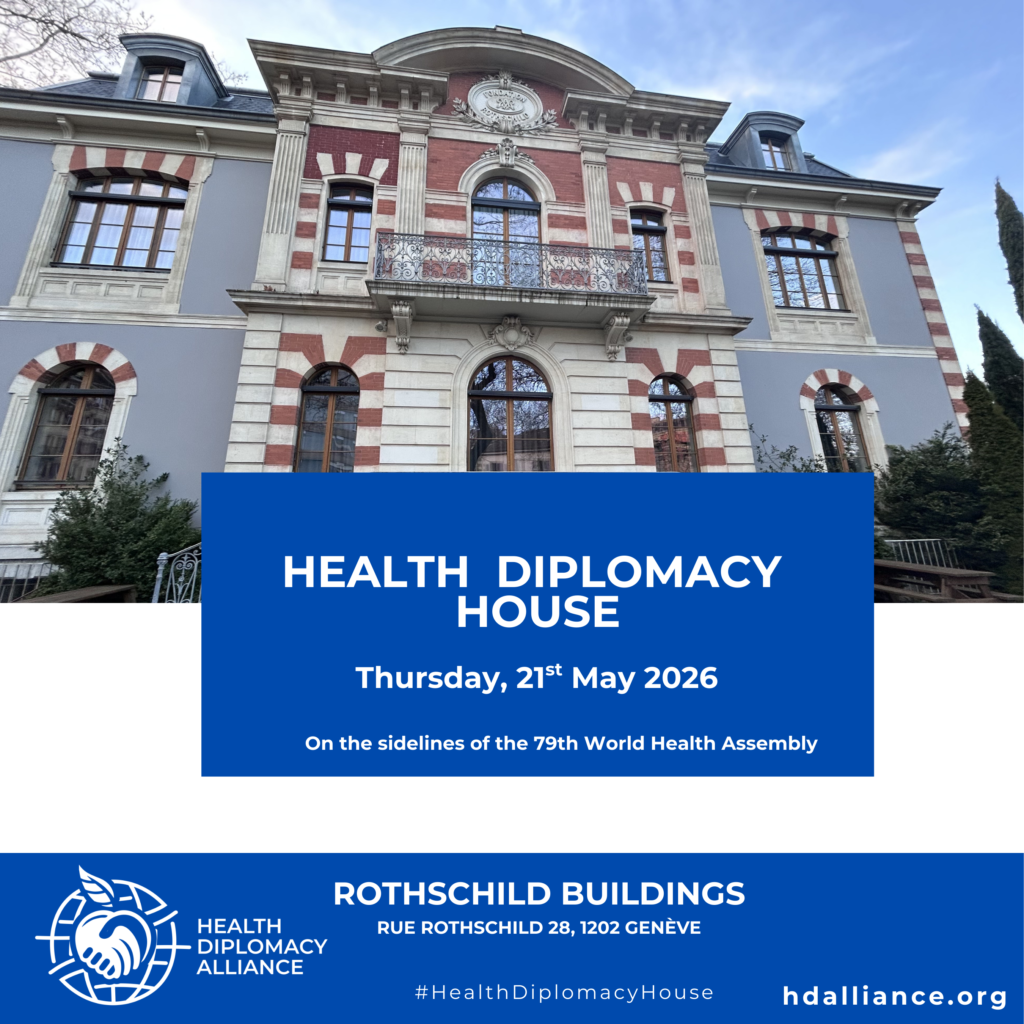
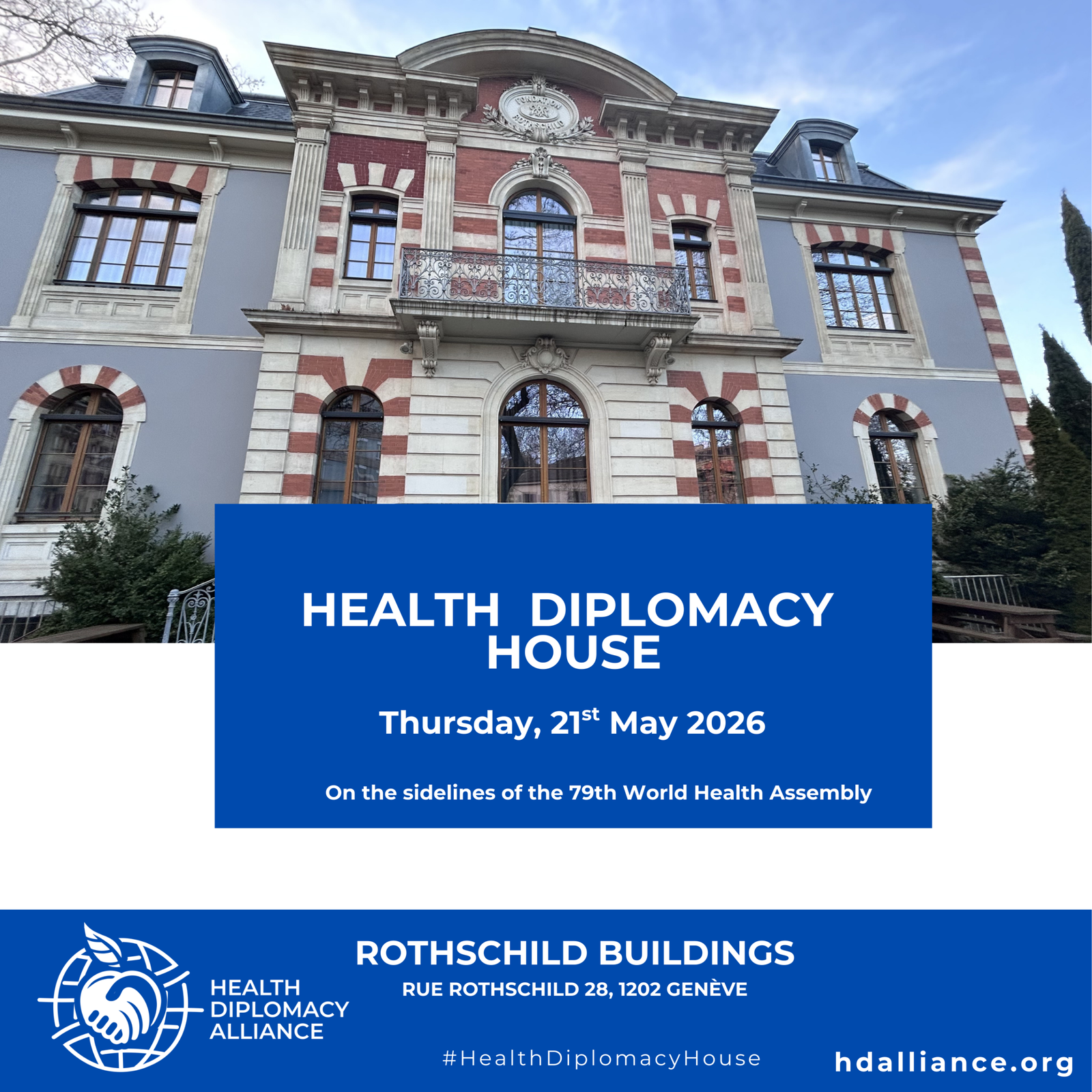
    On the sidelines of the 79th World Health Assembly, we will convene the Health Diplomacy House on Thursday, 21 May 2026, in Geneva.

    The Health Diplomacy House is an informal, co-creation space where organizations can host sessions, lead discussions, and work together on practical health policy issues. It is part of the “Predictable Uncertainty” series of events held by the Health Diplomacy Alliance throughout the year and brings together policymakers, diplomats, academia, civil society, philanthropic organizations, patient groups, and other partners engaged in global health.

    The aim is to provide a setting that supports open exchange and practical collaboration, outside formal formats, while addressing complex and evolving health challenges.

    The venue is located in the historic Rothschild buildings, originally built in the 19th century as a hospital and later repurposed. The space is modest and practical and suited for focused discussions and exchange.

    The House will host a series of discussions, roundtables, and smaller exchanges throughout the day, as well as provide space for bilateral meetings and media interactions.

    While the agenda remains open, sessions are expected to focus on

    • One Health, including global health security and antimicrobial resistance
    • Climate change and health
    • Health financing
    • Global health architecture and governance

    We encourage sessions that are guided by a clear agenda but remain flexible in format, without pre-set questions or scripted interventions, to allow for open and responsive discussion.

    The day will conclude with an informal outdoor* gathering, providing an opportunity to continue discussions with Assembly participants.

    If your organization would like to contribute by hosting a session or discussion, please indicate your interest via the short form below by 12 April 2026. Space is limited, and the agenda is currently being finalized.

    We look forward to welcoming you to the Health Diplomacy House during the 79th WHA.

    * Subject to weather conditions. 
     

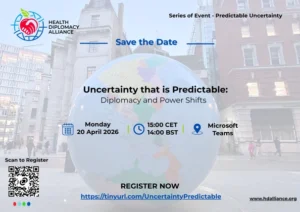
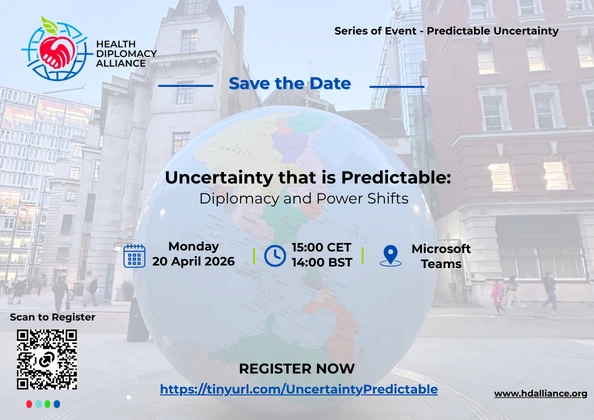
  • Uncertainty That is Predictable: Diplomacy and Power Shifts

    Uncertainty That is Predictable: Diplomacy and Power Shifts

    Rationale 

    The beginning of 2026 continues to mark a critical juncture in international relations, defined by shifting geopolitical power balances, emerging alliances, evolving diplomatic practices, and complex regional dynamics. This landscape is shaped by unprecedented challenges—including escalating conflicts, financial market uncertainties, and increasing pressure on global governance frameworks. 

    In this context, the Health Diplomacy Alliance recognizes the need to move beyond a narrow focus on health alone and to engage deeply with the broader geopolitical environment. Understanding how these global shifts influence the environment in which health decisions are made is essential to advancing effective health foreign policy. 

    This online panel is part of the Alliance’s commitment to exploring the intersection of geopolitics, diplomacy, and health governance. By fostering integrated diplomatic responses, the event will draw on the expert analysis of distinguished speakers with deep knowledge of global power dynamics and international diplomacy. They will unpack how shifting geopolitical realities shape the environment in which health decisions are made, enabling policymakers and practitioners to apply these insights for more informed and effective health strategies. 

    Objectives 

    • To analyze key geopolitical and diplomatic trends, shaping the international system in 2026. 
    • To assess the evolution of regional cooperation and its impact on global stability. 
    • To explore shifts in multilateralism amid rising nationalism and fragmented new alliances. 
    • To examine the interplay of war, conflict, and economic volatility in diplomacy. 
    • To understand the implications of geopolitical changes affecting global health architecture and governance reform.  

    Panelists

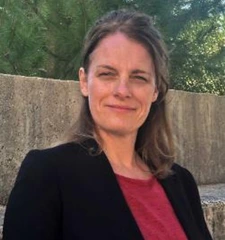
    Professor Simone Susanne Dietrich

    Associate Professor of Political Science and International Relations, University of Geneva

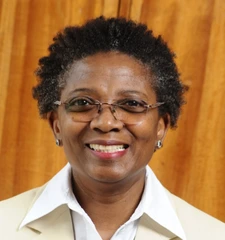
    Professor Funmi Olonisakin

    Vice President (IES), King’s College London; Professor of Security, Leadership and Development

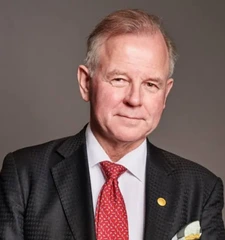
    Professor Ole Petter Ottersen

    Professor of Medicine, University of Oslo; Former President, Karolinska Institutet

  • Gobernanza y Arquitectura de la Salud Global: Desafíos, Financiamiento y las Reformas de la OMS

    Gobernanza y Arquitectura de la Salud Global: Desafíos, Financiamiento y las Reformas de la OMS

    Sobre esta sesión

    El webinario titulado Gobernanza y Arquitectura de la Salud Global: Desafíos, Financiamiento y las Reformas de la OMS analizó la profunda transición que atraviesa la estructura sanitaria internacional en un contexto geopolítico de alta incertidumbre y volatilidad. Durante el evento, los especialistas coincidieron en que la pandemia de COVID-19 expuso debilidades estructurales que han acelerado la necesidad de reformar el multilateralismo para hacerlo más inclusivo, transparente y resiliente ante futuras crisis. Un eje central de la discusión fue la importancia de fortalecer los mecanismos regionales y subregionales, como el caso de la Secomisca en Centroamérica y República Dominicana, que ha logrado generar bienes públicos mediante la negociación conjunta de medicamentos, permitiendo ahorros significativos y una mayor soberanía sanitaria frente a los vaivenes globales. 


    En términos de financiamiento, los ponentes destacaron la urgencia de avanzar hacia modelos más predecibles y sostenibles que reduzcan la dependencia de ayudas externas condicionadas y fragmentadas. Se subrayó que la salud global debe entenderse hoy como un activo estratégico de seguridad y estabilidad económica, lo que exige reconstruir la confianza institucional en organismos como la Organización Mundial de la Salud. Al respecto, la representación de España enfatizó su rol como puente de diálogo entre la Unión Europea e Iberoamérica, defendiendo la necesidad de un tratado de pandemias jurídicamente vinculante y un liderazgo político basado en valores de equidad y acceso universal. 


    Finalmente, el debate abordó la creciente influencia de nuevos actores, como la filantropía global, y la necesidad de integrar sus recursos en una arquitectura coherente liderada por los Estados para asegurar que las prioridades respondan al consenso público y no a intereses privados. Los resultados de consultas regionales en América Latina y el Caribe reflejaron un fuerte deseo de descentralizar la toma de decisiones, moviendo el centro de gravedad desde las potencias tradicionales hacia las regiones para abordar desafíos complejos como el cambio climático y los determinantes comerciales de la salud. El evento concluyó reafirmando que la diplomacia en salud es la herramienta esencial para sincronizar estas agendas técnicas y políticas, garantizando que las reformas institucionales sean científicamente sólidas y políticamente viables.

    Panelistas

    Mencía Manso De Zúñiga Spottorno

    Embajadora en Misión Especial para la Salud Global

    José Renán De León Cáceres

    Secretario Ejecutivo – Secretaría Ejecutiva del Consejo de Ministros de Salud de Centroamérica y República Dominicana – SE-COMISCA

    Prof. Paola Abril Campos Rivera

    Profesora de investigación en Instituto Tecnológico y de Estudios Superiores de Monterrey

    Ginnette Morales Calderón

    Jefa de Despacho de la Secretaría Ejecutiva del Consejo de Ministros de Salud de Centroamérica y República Dominicana – SE – COMISCA

    Dr. Casimiro Vizzini

    Gerente Senior de Salud en la Africa-Europe Foundation (AEF)

    Katherine Urbaez

    Moderadora
    Health Diplomacy Alliance

    Video del evento