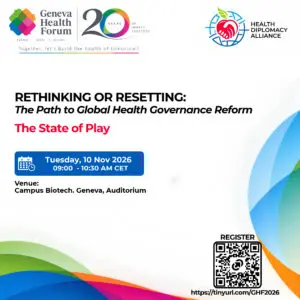
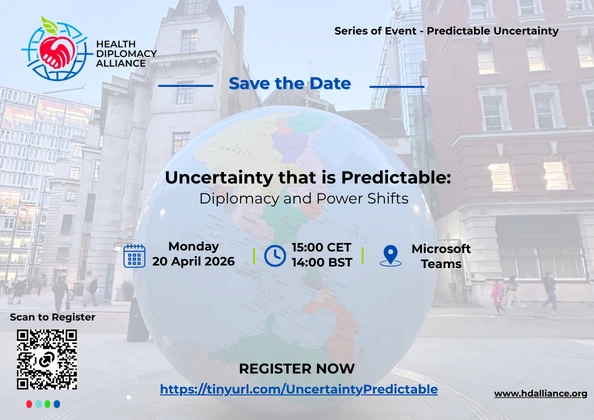
This online panel, hosted by the Health Diplomacy Alliance, explores how shifting geopolitical dynamics in 2026 are shaping global health governance and diplomacy. Bringing together expert perspectives, the discussion examines the intersection of international relations, conflict, and economic uncertainty with health decision-making. It aims to provide policymakers and practitioners with insights to navigate complex global challenges and strengthen health-focused diplomatic strategies.
Summary
As part of the Predictable Uncertainty series, the Health Diplomacy Alliance convened a virtual panel on 20 April 2026 to examine how geopolitical power shifts, contested multilateralism, and regional insecurity are reshaping diplomacy and the conditions under which health decisions are made. Moderated by Ahmad Mujtaba and Katherine Urbáez (Executive Director, HDA), the discussion brought together perspectives from peace and security, global health governance, and international political economy to address a central question: How should diplomacy respond when uncertainty is no longer an exception but the operating environment?
The discussion made one point clear that turbulence is not random. It is structured. It emerges from recognizable trends in the international system, including the diffusion of social power, the persistence of political exclusion, the weakening of multilateral institutions, and the strategic instrumentalisation of health, aid, and supply chains. What appears chaotic is, in important respects, predictable. That predictability creates both a warning and an opportunity. It warns that the erosion of solidarity, legitimacy, and institutional trust will continue to generate crisis. However, it also offers a basis for redesign in a way that if the drivers of instability are visible, then diplomatic and governance responses can be built with greater realism, resilience, and justice.
A world defined by contested power
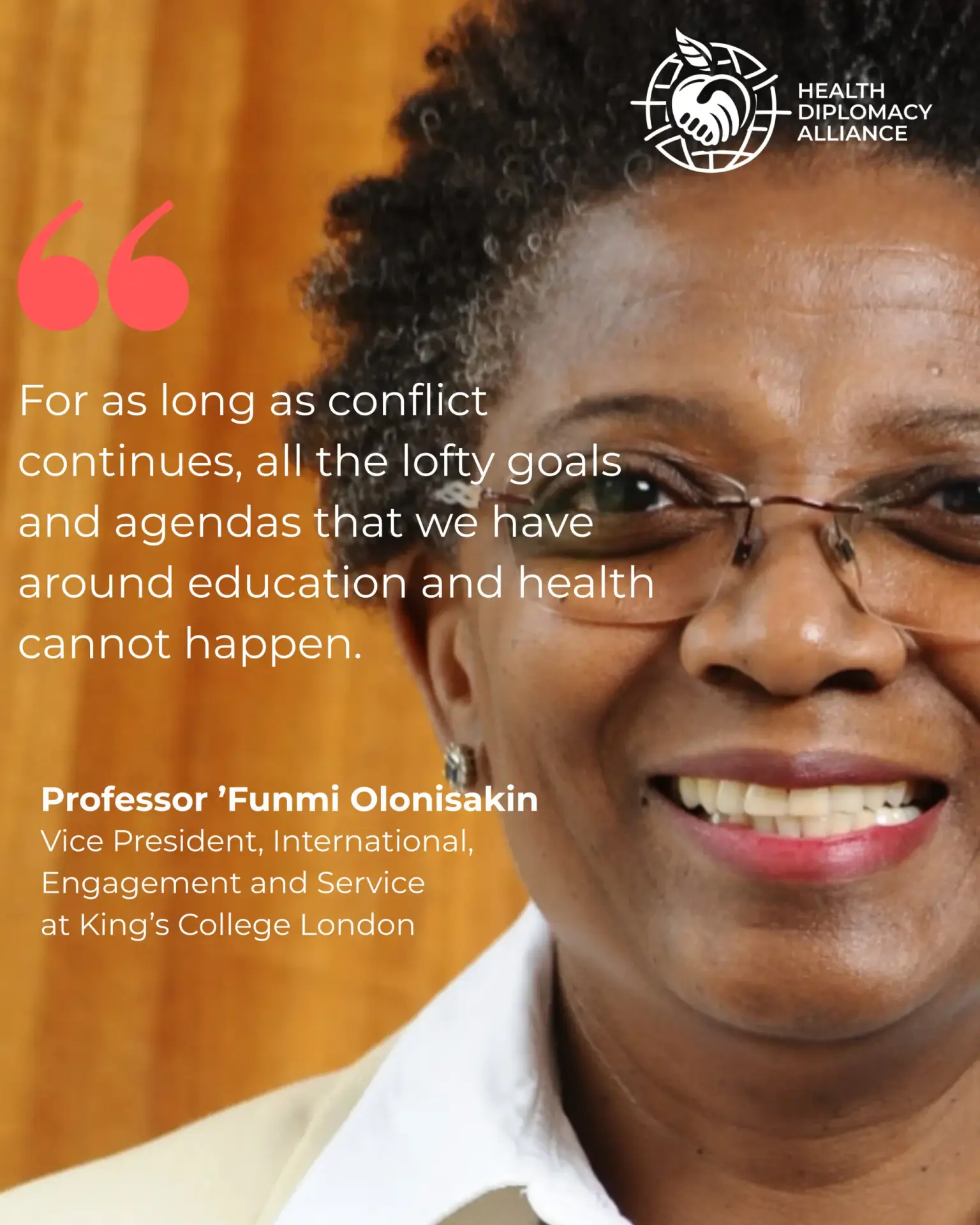
A major contribution of the discussion was its insistence that global uncertainty must be understood through the lens of power. Prof. Funmi Olonisakin argued that the present moment is shaped by at least three overlapping dynamics, including the contestation between social, economic, and political power; the rebalancing of voice and agency between the “Global South” and “Global North”; and the recurrence of violent conflict in new and increasingly entrenched forms. Her analysis suggested that the international system is not merely becoming more multipolar. It is becoming more contested from below, as citizens, communities, and historically marginalized regions assert claims that existing structures have been unwilling or unable to absorb.
This matters because instability is not generated only by rivalry among major powers. It is also generated by exclusion within states and across the global order. Prof Olonisakin warned that societies cannot be stripped of voice, opportunity, and belonging without producing recurrent violence. Her distinction between the “owners of peace” and the “beholders of peace” illuminated a fundamental normative and policy challenge, peacebuilding and diplomacy are still too often structured around armed actors and external stakeholders, rather than the communities that endure conflict and bear primary responsibility for sustaining recovery.
For a health diplomacy audience, this intervention has immediate implications. If exclusion is a driver of instability, then health cannot be treated solely as a technical sector downstream from politics. It becomes part of the political settlement itself, a site of legitimacy, public trust, social protection, and inclusion.
The multilateral order is under strain, but nostalgia is not a strategy
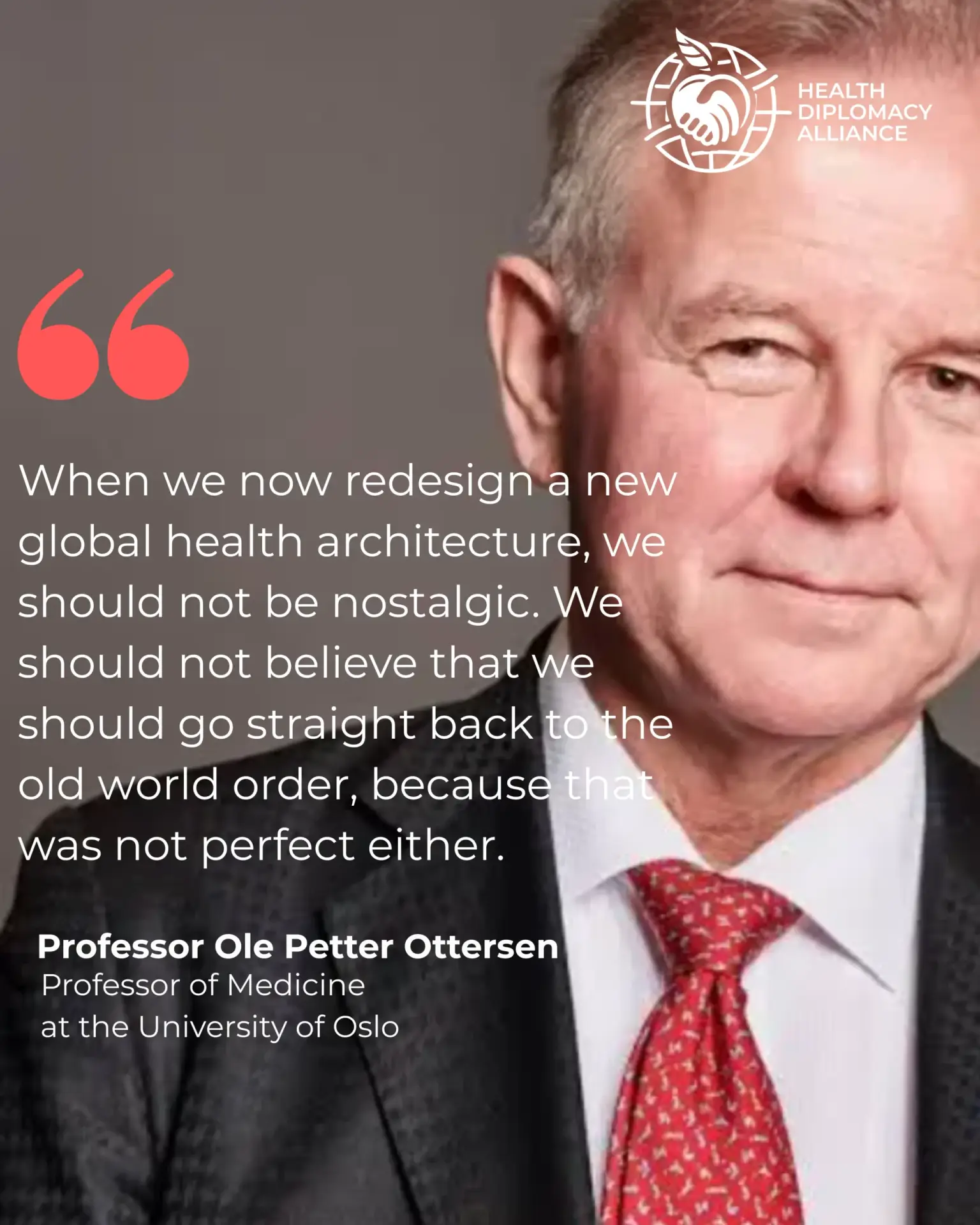
Prof. Ole Petter Ottersen placed the discussion squarely within the crisis of global health governance. He described the current system as the one under severe pressure, deepening inequities, the targeting of health systems in conflict, erosion of the rules-based order, and the weakening of institutions that once underpinned international cooperation. Further argued that the challenge is not only one of institutional performance, but one of geopolitical disruption. Global health is being reshaped by the same forces that are destabilizing diplomacy more broadly. One of the most important insights from his intervention was that defending multilateralism does not mean defending the old order uncritically. Prof Ottersen explicitly argued against nostalgia. In his view, the task is to redesign global health architecture on fairer terms. He outlined a reform agenda centered on five priorities including resisting the dismantling of core global health infrastructure; avoiding a simplistic return to past arrangements; building a more just and representative system; advancing regionalization; and shifting from reactive crisis response to long-term capacity building, especially in the “Global South”. He added that debt relief and governance frameworks better aligned with One Health are necessary components of any viable reform path.
This is a consequential argument because it suggests that the future of international health cooperation will depend less on abstract commitments to “global solidarity” and more on whether institutions can redistribute authority, support regional capability, and align financing with national and regional priorities rather than donor convenience.
Regionalisation is becoming a necessity, not a preference
A strong point of convergence across the discussion was the growing importance of regions. Prof Ottersen pointed to institutions such as Africa CDC as evidence that regional bodies can assume functions that were once concentrated at the global level. In his view, stronger regional ownership, greater self-reliance, and local capacity for areas such as vaccine production are no longer optional ambitions. They are practical responses to a world in which multilateral guarantees can no longer be assumed.
At the same time, Prof Olonisakin offered a necessary corrective that regionalization should not be romanticized. She warned that in security terms, some regional institutions remain weak, fragmented, or unable to contain conflict, citing the persistence of violence in parts of Africa and the harmful role of competing middle-power interventions. Her point was that the effectiveness of regionalism depends on whether broader political architectures are repaired and made more inclusive. Without that repair, fragmentation at the regional level may expand before any meaningful consolidation becomes possible.
Health must be treated as a strategic domain of foreign policy
One of the clearest takeaways from the event was that health diplomacy must move beyond the language of soft power and technical cooperation. When Katherine Urbáez asked how health can be positioned more effectively within foreign policy, Prof Ottersen argued that policymakers must be persuaded of two interlocking realities, first, that health equity and gender equality are linked to peace; and second, that human health is inseparable from climate, animal health, and epidemic risk through a One Health lens. In other words, health is not peripheral to strategic policy. It is central to stability.
That insight was reinforced from another angle by Prof Olonisakin, who argued that health can also serve as an entry point for peace. She noted that humanitarian and health responses can open space for ceasefires, temporary de-escalation, and common ground, precisely because they address needs shared across conflict lines. Her observation points to a neglected diplomatic instrument: health not only as an object of governance, but as a channel for trust-building in otherwise polarized environments.
Great-power rivalry now runs through global health
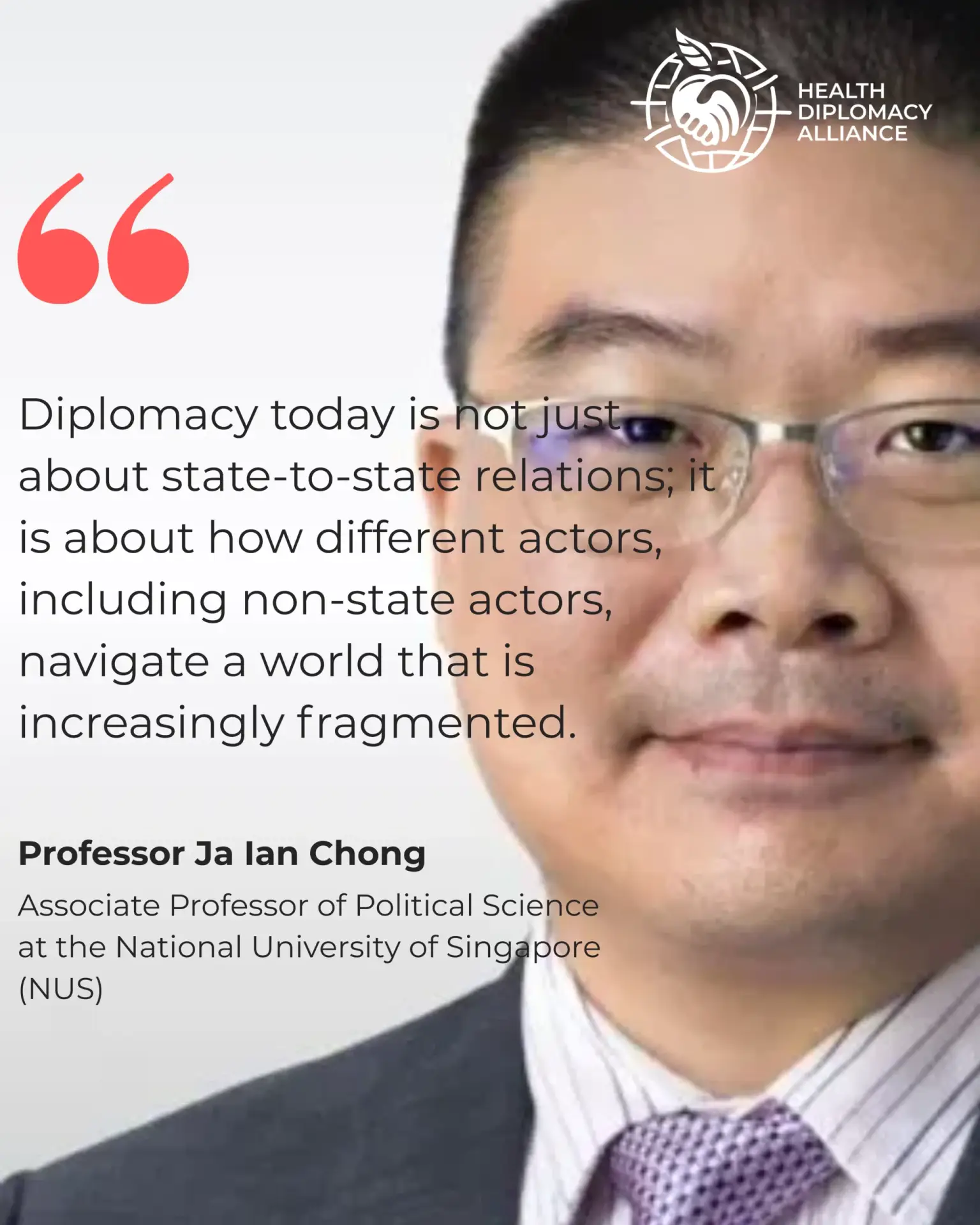
When Prof. Ja Ian Chong joined the discussion, he brought the “elephant in the room” into sharper focus, the strategic competition between the United States and China. His intervention accentuated that global health can no longer be analyzed as if it sits outside geopolitical rivalry. Whether in vaccines, supply chains, financing, or narrative contestation, health is now one of the arenas through which states seek leverage and advantage. As he put it, “strategies for advancing health must account for agendas that may need to be worked with, worked around, or actively countered”.
This was one of the event’s most hardheaded insights. Prof Chong cautioned against assuming that major actors are operating in good faith around global public goods. He stressed that health and related forms of cooperation are increasingly being reframed through national-interest narratives, with publics encouraged to view them skeptically. That means health diplomacy must become more politically literate. It must anticipate narrative warfare, not only material disruption.
He recommended that, in a contested environment, resilience depends on diversification, redundancy, and reduced dependence on narrow chokepoints. Speaking in the context of supply chains and health security, he argued for alternative routes, broader sourcing, and issue-based cooperation that can withstand major-power rivalry. When asked how to prepare for predictable uncertainty in one word, Chong’s answer was “redundancy,” while Ottersen’s was “scenario planning.” Together, those answers amounted to a doctrine of preparedness for a fractured era.
Financing, ownership, and the politics of reform
Another important thread concerned the role of donors and philanthropic actors. Prof Ottersen noted that fragmented financing can force countries to reshape national health strategies around external preferences rather than domestic priorities. This weakens coherence and makes durable system-building more difficult. His intervention pointed toward a structural critique that development assistance and philanthropy are not neutral supplements to governance. They shape incentives, authority, and fragmentation. The reform challenge, then, is not merely to secure more funding, but to ensure stronger recipient ownership over how external financing aligns with long-term system development.
This has obvious implications for health diplomacy. If global health governance is to become more just and effective, the question is not only who funds, but who decides, who sets priorities, and whose institutions are strengthened in the process.
Conclusions
The discussion pointed to a clear strategic imperative: in a more fragmented geopolitical environment, health diplomacy must become more inclusive, more regionally anchored, and more politically realistic.
Redesign multilateralism to be more just, representative, and fit for today’s geopolitical realities.
- Empower regional health institutions to play a stronger role in preparedness, coordination, and governance.
- Invest in long-term national and regional health capacity instead of relying on crisis-driven emergency responses.
- Place leadership from countries with limited financial resources at the center of reform, not at the margins of implementation.
- Broaden diplomacy beyond elites by including communities, civil society, and those most affected by conflict.
- Use health as a practical pathway for peacebuilding, trust-building, and cooperation in divided settings.
- Embed health firmly within foreign policy as a strategic priority, not a secondary technical issue.
- Prepare for disruption through redundancy, diversified supply chains, and stronger scenario planning.
- Safeguard global health cooperation from zero-sum rivalry and geopolitical instrumentalization.
- Ensure donor and philanthropic support strengthens country-led systems rather than deepening fragmentation.
Video of the Event
Panelists
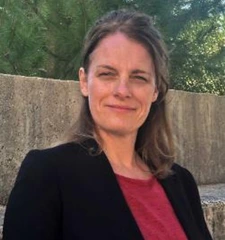
Professor Simone Susanne Dietrich
Associate Professor of Political Science and International Relations, University of Geneva
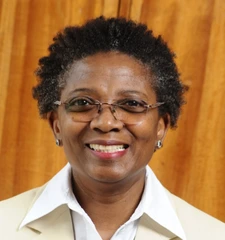
Professor Funmi Olonisakin
Vice President (IES), King’s College London; Professor of Security, Leadership and Development
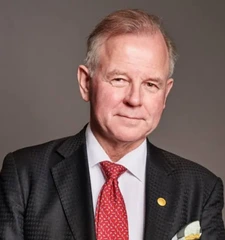
Professor Ole Petter Ottersen
Professor of Medicine, University of Oslo; Former President, Karolinska Institutet

Professor Ja Ian Chong
Associate Professor of Political Science at the National University of Singapore (NUS)