Category: Governance

  • Health Diplomacy House

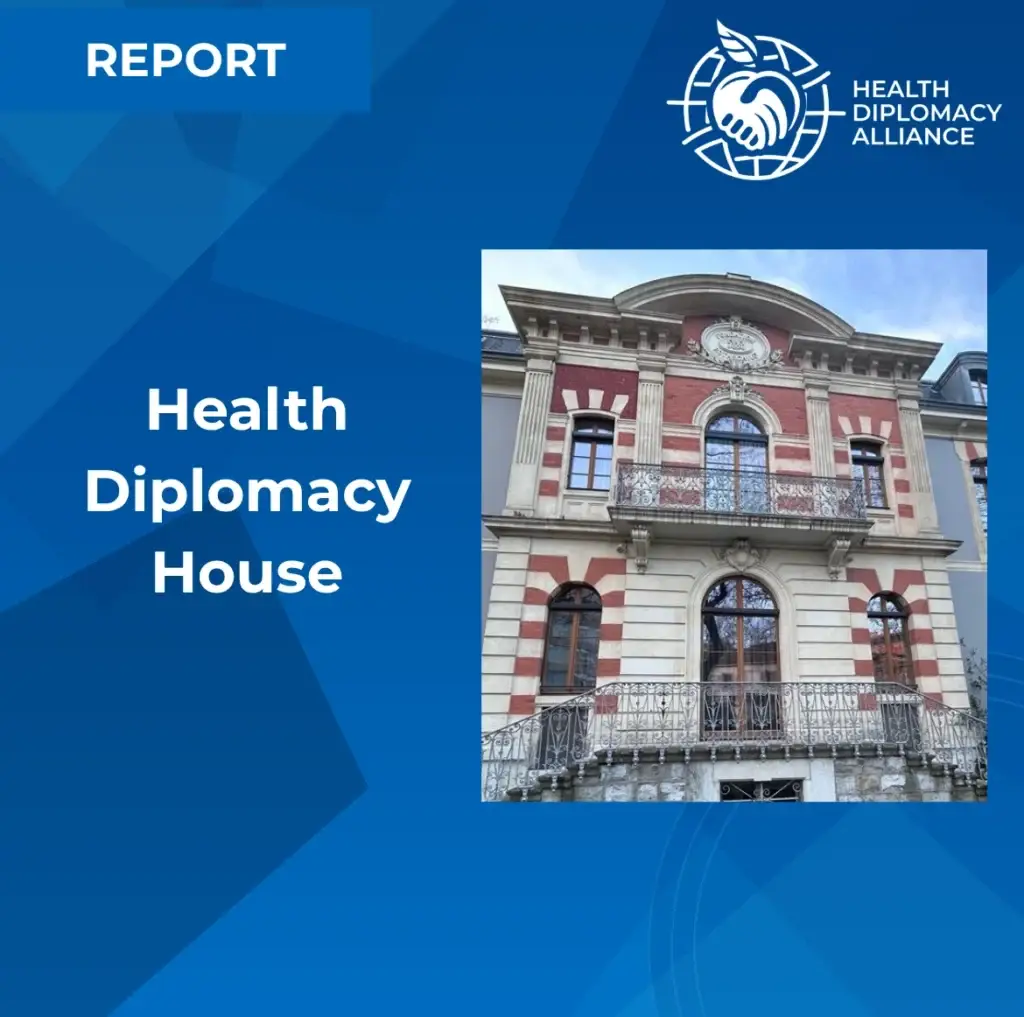
    Health Diplomacy House

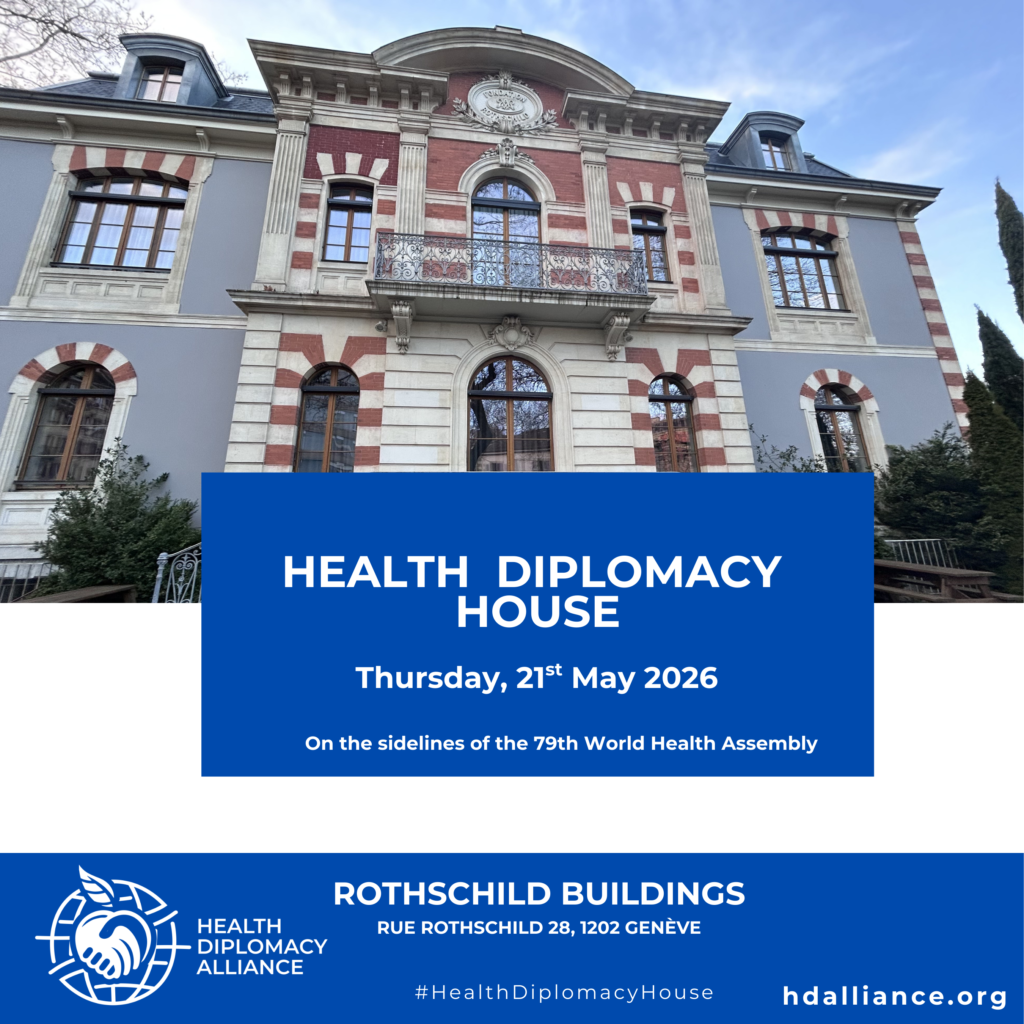
    The Health Diplomacy House is an informal, practical space where organizations convene sessions, hold discussions, and work on concrete health policy issues. Located in the historic Rothschild buildings, formerly the Ancien Hôpital Ophtalmologique (1874–1978), it offers a simple and functional setting for focused exchange.

    As part of the Predictable Uncertainty series, it brings together policymakers, diplomats, academia, youth, civil society, philanthropic actors, the private sector, and patient groups.

    The programme includes multiple sessions and dialogues covering One Health, antimicrobial resistance, women’s leadership, health economics, pandemic preparedness, climate and health, health financing, and global health governance and reform.

    The day will conclude with a reception, offering space for continued informal exchange among participants.

    Each session requires individual registration. You must register separately for every session you wish to attend, as places are limited and allocated on a first-come, first-served basis.

    We look forward to welcoming you in The House.

    MORNING SESSIONS

    OPENING

    8 :00 AM- 9:00 AM CET

    Global Health Architecture and Governance: Reflection in an Era of Predictable Uncertainty

    Light breakfast at 7:20 AM

    The opening session of the Health Diplomacy House brings participants into a focused, informal conversation on how global health is changing across governance, financing, and institutional processes. It sets the tone for subsequent partner organization sessions within the Health Diplomacy Alliance, including our strategic priorities—AMR, climate change and health, health governance, and sustainable financing—and how these connect to wider reform processes. The session is designed as a space that goes beyond standard exchanges, supporting reflection on how current shifts connect across agendas and shape future cooperation and coordination in global health.

    Special Guests:

    Hon. Kevin Bernard
    Minister of Health and Wellness of Belize
    H.E. Mencía Manso de Zúñiga
    Ambassador at Large for Global Health, Ministry of Foreign Affairs of Spain
    Dr. Flavia Bustero
    GW Voices | Former WHO Assistant Director-General | Vice-Chair, Fondation Botnar | Co-Chair, Lancet Commission on GBV
    Dr. Magda Robalo
    Member of the High-Level Panel of the Accra Reset Initiative, President and co-founder of The Institute for Global Health and Development (IGHD)
    Dr. Bruce Aylward
    Coordinator of UN80 Initiative and WHO Reform | Former WHO Assistant Director – General
    Marilyne Andersen
    Director General , Geneva Science Diplomacy Anticipator (GESDA)

    Facilitators:

    Richard Pearshouse
    Senior Member – Advisory Committee – Health Diplomacy Alliance \ Head of the Environment and Human Rights Division , Human Rights Watch
    Katherine Urbáez
    Executive Director, Health Diplomacy Alliance

    9:00 AM- 10:00 AM CET

    Traditional Medicine at the Nexus of Climate, Biodiversity, and Land Restoration (Rio Conventions)

    This side event explores the role of traditional medicine at the intersection of climate action, biodiversity conservation, and land restoration aligned with the Rio Conventions (UNFCCC, Convention on Biological Diversity, and UNCCD). Rooted in Indigenous knowledge systems, traditional medicine depends on healthy ecosystems and diverse plant species, many of which serve as vital resources for both human and ecological health. Medicinal plants act as “natural pharmacies” within forests, supporting wildlife and maintaining ecosystem balance. The session will highlight how safeguarding biodiversity strengthens traditional healing systems, while restoration efforts benefit from medicinal plant diversity. Bringing together youth, Indigenous voices, and global stakeholders, the event aims to position traditional medicine as a bridge connecting health, nature, and sustainable development.

    Panelists

    Mr. Gokul Rajendran
    CEO @ Govardhan & GITMA
    Dr. Naeema Al Qasseer
    Global Health & Development Expert & Former WHO Senior Official
    Ms. Cristina Romeneli
    Programme Officer, Biodiversity, Climate Change and Health, WHO
    Mr. Thomas EGLI
    Founder @ Geneva Forum

    Virtual Speaker:

    Dr. Mona El-Sherbini
    Asso. Prof. of Infectious Parasitic Disease @ Cairo University, Egypt

    Moderator:

    Mr. Domenico
    Founder @ International One Health Conference

    9:30 AM- 11:00 AM CET

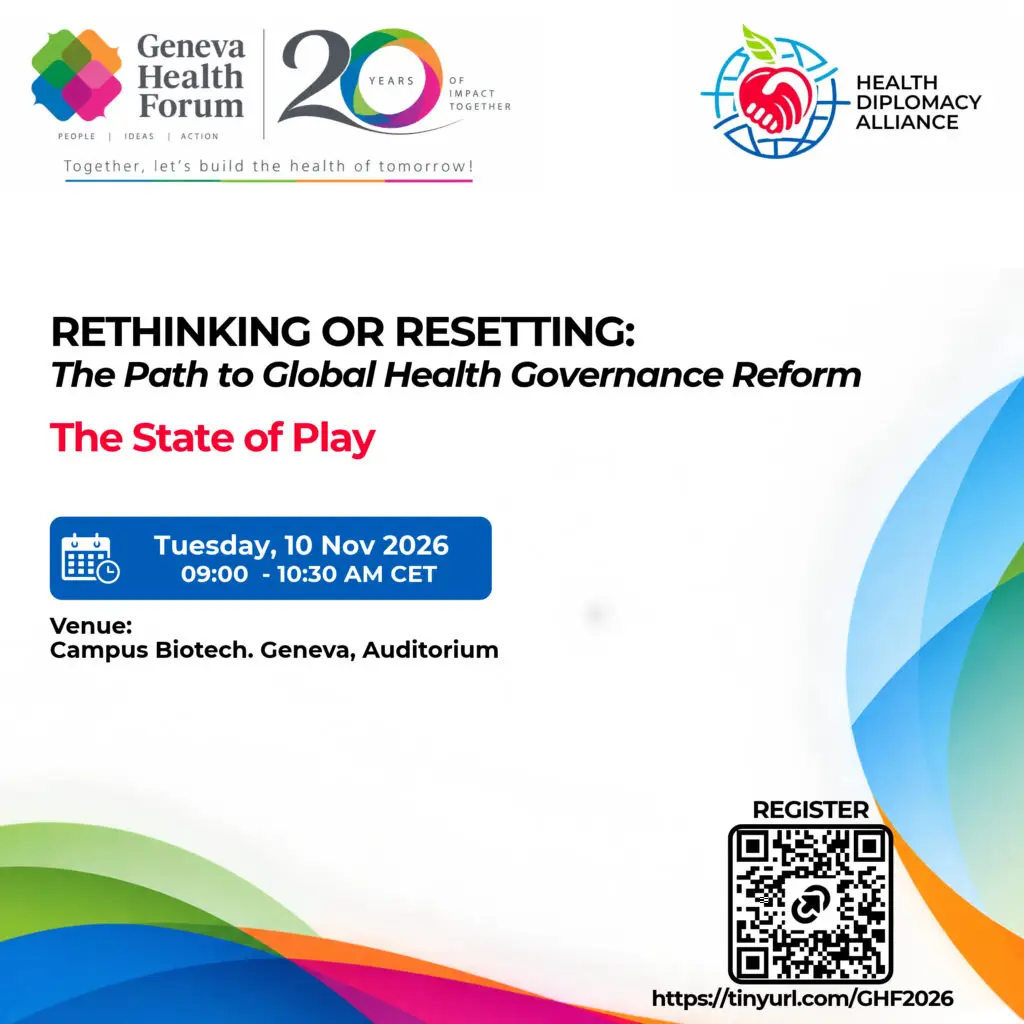
    What’s at Stake and What Comes Next for Global Health Reform

    This interactive session explores the future of global health reform at a critical moment for international cooperation. As numerous reform initiatives emerge, it has become increasingly challenging for stakeholders to track developments and engage meaningfully.

    The session will provide clear and accessible insights into the structural drivers behind global health reform, highlighting four key paradigm shifts shaping the future. It will also examine major milestones—from the Gavi Leap and Accra Reset to ongoing WHO-led processes—while addressing both opportunities and risks for meaningful change.

    Participants will be invited to engage, reflect, and contribute to shaping the next era of global health.

    Special Guests:

    Hanan Mohamed al-Kuwari
    Advisor to the Prime Minister for Public Health Affairs, Former Minister of Public Health, Qatar
    Ebere Okerere
    Global Health Adviser at the Mohamed bin Zayed Foundation for Humanity
    John-Arne Røttingen
    CEO, Wellcome Trust
    Minghui Ren
    Professor, Department of Global Health, School of Public Health, Peking University
    Richard Horton
    Editor-in-Chief, The Lancet

    Facilitator:

    Dr Anders Nordström
    Director, PIPDH | Former Swedish Global Health Ambassador | Former Acting DG, WHO

    10:00 AM- 11:00 AM CET

    Climate Change and Respiratory Health (Fireside Chat)

    This session will explore how climate change is affecting respiratory health worldwide. It will highlight the impact of rising temperatures, air pollution, and environmental changes on conditions like asthma and COPD, particularly among vulnerable populations. The session will bring together experts and policymakers to discuss prevention strategies, strengthen public health responses, and bridge the gap between research and policy.

    Panelists:

    Christian Terreaux
    Member of BEAM Alliance
    Katherine Urbáez
    Executive Director, Health Diplomacy Alliance
    Panagiotis Chaslaridis
    Senior Policy Advisor, European Federation of Asthma and Allergy Associations (EFA)

    Speakers and facilitators to be announced. 

    11:15 AM- 12:35 PM CET

    Financing Health Through Diplomacy: Unlocking Debt-for-Health Swaps

    Financing Health Through Diplomacy: Unlocking Debt-for-Health Swaps” is a workshop session organized by JLI Center for Global Health Diplomacy. The session addresses growing financial pressures on health systems in low- and middle-income countries, driven by rising debt, declining aid, and constrained public resources. It aims to strengthen understanding of innovative and blended financing mechanisms, with a focus on debt-for-health swaps as a practical tool to unlock fiscal space for health investments. 


    Through presentations and discussion, participants will explore the working debt swap model through case studies, highlighting lessons learned, enabling factors, and implementation challenges. The session also emphasizes the role of health diplomacy in bringing together governments and partners to negotiate sustainable solutions. Designed as an interactive workshop, it encourages peer exchange and aims to generate actionable insights and better knowledge on the ways innovative financing in coordination with health diplomacy can be used to advance national health strategies.

    Panelists:

    Christoph Benn
    Executive Director, JLI Center for Global Health Diplomacy
    Cristina Nakano
    Project Manager for Innovative Financing, JLI Center for Global Health Diplomacy

    Moderator:

    Rafael Garcia
    Portfolio Manager, JLI Center for Global Health Diplomacy

    More Speakers and facilitators to be announced. 

    Registration:

    LUNCH SESSION

    12:30 PM- 1:20 PM CET

    Plastics & Health: What we’re not talking about

    The session will explore the often-overlooked health impacts of plastics across their full lifecycle, from production to disposal, highlighting growing scientific evidence on risks linked to plastic pollution, chemicals, microplastics and nanoplastics. It will also examine how health considerations can be more effectively integrated into ongoing global negotiations for a legally binding plastics treaty. Through short lightning talks by experts from diplomacy, science, and policy, the discussion will focus on why health must sit at the centre of global plastics action and how scientific knowledge can be better communicated and translated into policy.

    Panelists:

    Miriam G. Medel Garcia
    Head, Environment Team, Permanent Mission of Mexico to the United Nations Office and other international organizations in Geneva
    Rüdiger KRECH
    Acting Director, Department of Environment, Climate Change, One Health and Migration, World Health Organization (WHO)
    Hervé RAPS
    Research Liaison Physician, Centre Scientifique de Monaco
    David Azoulay
    Director, Switzerland & Environmental Health Program, Center for International Environmental Law (CIEL)
    Etienne Cabane
    Engagement Director, Food Packaging Forum
    Roman Lehner
    SNF SPARK Grant Holder, Department of Chemistry, Biochemistry, and Pharmaceutical Sciences, University of Bern
    Carolyn Deere Birkbeck
    Executive Director, Forum on Trade, Environment & the SDGs (TESS), Geneva Graduate Institute
    María Alejandra GONZÁLEZ
    Global Plastics Advocacy Manager, WWF Norway
    Noam Yaron
    Record-Breaking Swiss Ultra-Endurance Athlete Advocating for Ocean Protection

    AFTERNOON SESSIONS

    1:00 PM – 2:00 PM CET

    Closing the Gap: Governance and Financing for an Effective Global Response to Antibiotic Resistance

    ReAct’s roundtable, scheduled for May 21, 2026, on the sidelines of the 79th World Health Assembly in Geneva, will convene a small group of policymakers and experts to discuss the role of global governance and financing in addressing critical implementation gaps in the response to antibiotic resistance.


    The relevance of this discussion is underscored by a deteriorating global health financing landscape, marked by significant aid cuts and growing geopolitical instability that is straining multilateral cooperation. The roundtable will 1) reflect on strengths and limitations of the existing governance system and 2) explore options to expand and optimize both domestic and international financing.
    As a longstanding civil society convener at the intersection of governance and financing, ReAct seeks – through this focused dialogue – to support the alignment of strengthened governance and resource mobilization with national needs.

    Panelists:

    By Invitation Only

    1:30 PM – 2:20 PM CET

    Women at the Heart of Health Diplomacy. Heal, Lead, Seal.

    Women are at the core of health diplomacy, yet they are excluded from, or marginalized within, high-stakes health decisions, at every level from community to global. This session will convene women at different stages of leadership and from different sectors and regions, to create space for inter-generational dialogue amongst women leaders in global health. Throughout the session, participants will interrogate questions like: Where does real power sit in health negotiations, and how do women learn to navigate it? and, What would a genuinely gender-responsive health diplomacy process look like, and who has to change for it to happen? The discussion will center the real experiences of how women are excluded from, or marginalized within, high-stakes health decisions, at every level from community to global, and the specific challenges facing young women entering health diplomacy. Through honest and open conversation with one another, participants will build connections, solidarity, and mentorship across generations and sectors.

    Speakers:

    Dr. Valeria Gigante
    Lead, R&D and Innovation Workstream for Antimicrobial Resistance (AMR), World Health Organization
    Arantxa Cedillo
    Founder, Arctype® | Senior Strategic Communications Advisor, Health Diplomacy Alliance
    Mattar headshot
    Dr. Caline Mattar
    Professor of Medicine & Public Health | Infectious Diseases Specialist
    Abigail Corrao
    Adjunct Professor, Georgetown University; Co-Founder, Global Health Governance as Public Service.

    More Speakers and facilitators to be announced. 

    1:30 PM – 2:30 PM CET

    The International Court of Justice Advisory Opinion on Climate Change: Implications for Global Health Governance

    The International Court of Justice has recently issued an advisory opinion on the obligations of states in respect of climate change. This opinion has prompted considerable discussion within international law and global health circles regarding its potential relevance to the work of the World Health Organization (WHO) and its member states. In the context of the World Health Assembly’s ongoing engagement with climate change and health, including through the 2025 Global Action Plan on Climate Change and Health, there is growing interest in understanding how the advisory opinion may inform future global health law and governance.

    Panelists:

    Katherine Urbáez
    Executive Director – Health Diplomacy Alliance

    Speakers and facilitators to be announced. 

    2:00 PM – 3:30 PM CET

    The Role of Journalism in Global Health Diplomacy

    This session will explore the role of journalism in Global Health Diplomacy. Specifically, we will discuss the journalistic practices of Geneva Health Files in reporting global health negotiations in Geneva at the World Trade Organization, and the World Health Organization, during the pandemic and post-pandemic years. We will tell the story of how we came to report on closed-door negotiations to provide a service to negotiators, diplomats and other stakeholders during the negotiations on the WTO TRIPS Waiver, the amendments to the International Health Regulations, and the Pandemic Agreement. We will also discuss the impact we have had, and the traction we received in response to our journalism. The session will explore the tool of independent journalism to further transparency and accountability in global health policymaking. It will also underscore the importance of having access to rigorous journalism, for all delegations for timelyimpartial and accurate coverage of opaque decision-making.

    Panelists:

    Priti Patnaik
    Founder & Publisher at Geneva Health Files

    Speakers and facilitators to be announced. 

    2:30 PM – 3:20 PM CET

    From Co‑Benefits to Core Value: Health in Climate Policy

    As climate action accelerates, health is increasingly cited as a co‑benefit, but too often health impacts remain undervalued, inconsistently measured, or sidelined in real investment and policy decisions. This small, interactive session at Health Diplomacy House will explore how economic evidence and value assessment can make health impacts visible, credible, and decision‑relevant in climate policy.

    The discussion will examine how better alignment of climate and health evidence can strengthen cross‑government decisions, inform financing priorities, and support more effective climate action with meaningful health gains.

    With contributions from OHE, LSHTM, and climate leaders, and limited to around 40 participants, the session is designed to enable focused exchange, practical insight, and candid discussion among senior policymakers, diplomats, and partners working at the climate–health–finance nexus.

    Panelists:

    Professor Andy Haines
    Professor of Environmental Change and Public Health, The London School of Hygiene & Tropical Medicine
    Professor Mireia Jofre-Bonet
    Chief Research Officer, Head of Education, OHE
    Shouro Dasgupta
    Environmental Economist — Fondazione CMCC | Visiting Senior Fellow — Grantham Research Institute on Climate Change and the Environment, London School of Economics and Political Science

    3:00 PM – 4:30 PM CET

    Roundtable on the International Court of Justice Advisory Opinion

    The International Court of Justice has recently issued an advisory opinion on the obligations of states in respect of climate change. This opinion has prompted considerable discussion within international law and global health circles regarding its potential relevance to the work of the World Health Organization (WHO) and its member states. In the context of the World Health Assembly’s ongoing engagement with climate change and health, including through the 2025 Global Action Plan on Climate Change and Health, there is growing interest in understanding how the advisory opinion may inform future global health law and governance.

    Panelists:

    By Invitation Only

    3:30 PM – 4:50 PM CET

    Changing Paradigms of Global Health Governance and Health Security Architecture: Reflections from South and Southeast Asia

    Contemporary global health governance (GHG) is increasingly characterised by fragmentation, geopolitical competition, power asymmetries, and a gradual retreat of traditional donors. At the same time, countries of the Global South are calling for a more equitable and representative order, prompting a rethinking of global health governance structures and financing mechanisms. South and Southeast Asia—given their demographic weight, epidemiological transitions, and growing economic and political influence—are central to shaping these shifts. The region faces a dual challenge: advancing universal health coverage (UHC) while addressing cross-border threats such as climate-related health risks and pandemic prevention, preparedness, and response (PPPR). This side event situates these challenges within ongoing World Health Assembly discussions and explores how strengthened regional cooperation can complement global multilateral processes. It focuses on three key pathways: (1) cross-border knowledge sharing, norm-setting, and technical exchanges; (2) the amplification of Global South voices and pooled expertise; (3) the value of issue-based coalitions and regional agendas on PPPR, which address the rapidly shifting health security architecture in South and Southeast Asia. The session builds on two research studies examining global and regional health governance dynamics and the implications of the Pandemic Agreement for regional cooperation in Asia.

    Panelists:

    Laveesh Bhandari 
    President, CSEP
    David McCoy
    Policy Research Lead, UNU-IIGH
    Priyadarshini Singh
    Fellow, CSEP
    Nadine Monteiro
    Research Analyst, CEP
    Yik Ying Teo
    Dean, Saw Swee Hock School of Public Health, National University of Singapore
    Suerie Moon
    Co-Director, Global Health Centre, Geneva Graduate Institute

    Registration:

    3:40 PM – 5:00 PM CET

    Advancing a Common Care Framework for Ethical Health Worker Mobility

    This session will explore how to make international health worker mobility fairer, more sustainable and more credible for all parties involved. It will introduce the Common Care Framework, a practical policy model for governing health worker mobility not simply as a matter of recruitment, but as a broader relationship that must also address integration, professional recognition, worker protection, retention, and mutual benefit between countries of origin and destination. Structured around the principles of respect, recognition and utility, the Framework aims to define what responsible and workable mobility should look like in practice for governments, employers, health workers and communities. The discussion will connect this approach to current global debates on the WHO Global Code of Practice, the WHO Support and Safeguards List, and the ILO fair recruitment framework, with a view to identifying more concrete and accountable ways of governing health worker mobility

    Panelists:

    By Invitation Only

    CLOSING SESSION

    CLOSING

    5:00PM – 6:30 PM CET

    CHECK THE BOX – AMR

    The closing session of the Health Diplomacy House will focus on tracking political commitments on antimicrobial resistance, assessing the distance between declaration and implementation, and identifying the diplomatic and policy levers needed to accelerate action.

    Facilitators:

    Katherine Urbáez
    Executive Director, Health Diplomacy Alliance
    Dr. Ntuli Angyelile Kapologwe
    Director General, The East, Central and Southern Africa Health Community
    Mattar headshot
    Dr. Caline Mattar
    Professor of Medicine & Public Health | Infectious Diseases Specialist
    Tracie Muraya
    Deputy Director, Policy & Strategy ReAct Africa
    Dr. Benedikt Huttner
    Unit Head of Research, Access, Stewardship and AMU Surveillance (RSA), WHO

    RECEPTION

    Rue Rothschild 28, 1202 Geneva, Switzerland
    🚌
    Bus (TPG)
    1 25
    Nearby stops:
    Châteaubriand & Gautier
    🚊
    Tram (TPG)
    15
    Stop:
    Butini
    🚆
    Train (CFF/SBB)
    RL1 RL3
    Stations:
    Gare Cornavin & Geneva-Sécheron
    ⛴️
    Lake boat
    M4
    Stop: Châteaubriand (Lac)
    2 min walk — scenic option
    ✈️
    From the airport
    ~20 min
    Train from Geneva Airport → Cornavin, then bus 1 or 25 to Gautier or Châteaubriand

    The venue is a 10-minute walk from Geneva Cornavin — the central hub for all public transport in Geneva.
    Limited parking on site. The nearest paid parking is Parking Butini, a short walk from the venue. We encourage the use of public transport in line with our sustainability commitments.
    View on Google Maps ↗

    GETTING THERE

    Program
  • Uncertainty That is Predictable: Diplomacy and Power Shifts

    Uncertainty That is Predictable: Diplomacy and Power Shifts

    This online panel, hosted by the Health Diplomacy Alliance, explores how shifting geopolitical dynamics in 2026 are shaping global health governance and diplomacy. Bringing together expert perspectives, the discussion examines the intersection of international relations, conflict, and economic uncertainty with health decision-making. It aims to provide policymakers and practitioners with insights to navigate complex global challenges and strengthen health-focused diplomatic strategies.

    Summary

    As part of the Predictable Uncertainty series, the Health Diplomacy Alliance convened a virtual panel on 20 April 2026 to examine how geopolitical power shifts, contested multilateralism, and regional insecurity are reshaping diplomacy and the conditions under which health decisions are made. Moderated by Ahmad Mujtaba and Katherine Urbáez (Executive Director, HDA), the discussion brought together perspectives from peace and security, global health governance, and international political economy to address a central question: How should diplomacy respond when uncertainty is no longer an exception but the operating environment?  

    The discussion made one point clear that turbulence is not random. It is structured. It emerges from recognizable trends in the international system, including the diffusion of social power, the persistence of political exclusion, the weakening of multilateral institutions, and the strategic instrumentalisation of health, aid, and supply chains. What appears chaotic is, in important respects, predictable. That predictability creates both a warning and an opportunity. It warns that the erosion of solidarity, legitimacy, and institutional trust will continue to generate crisis. However, it also offers a basis for redesign in a way that if the drivers of instability are visible, then diplomatic and governance responses can be built with greater realism, resilience, and justice.

    A world defined by contested power

    A major contribution of the discussion was its insistence that global uncertainty must be understood through the lens of power. Prof. Funmi Olonisakin argued that the present moment is shaped by at least three overlapping dynamics, including the contestation between social, economic, and political power; the rebalancing of voice and agency between the Global South and Global North; and the recurrence of violent conflict in new and increasingly entrenched forms. Her analysis suggested that the international system is not merely becoming more multipolar. It is becoming more contested from below, as citizens, communities, and historically marginalized regions assert claims that existing structures have been unwilling or unable to absorb.

    This matters because instability is not generated only by rivalry among major powers. It is also generated by exclusion within states and across the global order. Prof Olonisakin warned that societies cannot be stripped of voice, opportunity, and belonging without producing recurrent violence. Her distinction between the “owners of peace” and the “beholders of peace” illuminated a fundamental normative and policy challenge, peacebuilding and diplomacy are still too often structured around armed actors and external stakeholders, rather than the communities that endure conflict and bear primary responsibility for sustaining recovery. 

    For a health diplomacy audience, this intervention has immediate implications. If exclusion is a driver of instability, then health cannot be treated solely as a technical sector downstream from politics. It becomes part of the political settlement itself, a site of legitimacy, public trust, social protection, and inclusion. 

    The multilateral order is under strain, but nostalgia is not a strategy

    Prof. Ole Petter Ottersen placed the discussion squarely within the crisis of global health governance. He described the current system as the one under severe pressure, deepening inequities, the targeting of health systems in conflict, erosion of the rules-based order, and the weakening of institutions that once underpinned international cooperation. Further argued that the challenge is not only one of institutional performance, but one of geopolitical disruption. Global health is being reshaped by the same forces that are destabilizing diplomacy more broadly. One of the most important insights from his intervention was that defending multilateralism does not mean defending the old order uncritically. Prof Ottersen explicitly argued against nostalgia. In his view, the task is to redesign global health architecture on fairer terms. He outlined a reform agenda centered on five priorities including resisting the dismantling of core global health infrastructure; avoiding a simplistic return to past arrangements; building a more just and representative system; advancing regionalization; and shifting from reactive crisis response to long-term capacity building, especially in the “Global South”. He added that debt relief and governance frameworks better aligned with One Health are necessary components of any viable reform path.  

    This is a consequential argument because it suggests that the future of international health cooperation will depend less on abstract commitments to “global solidarity” and more on whether institutions can redistribute authority, support regional capability, and align financing with national and regional priorities rather than donor convenience. 


    Regionalisation is becoming a necessity, not a preference

    A strong point of convergence across the discussion was the growing importance of regions. Prof Ottersen pointed to institutions such as Africa CDC as evidence that regional bodies can assume functions that were once concentrated at the global level. In his view, stronger regional ownership, greater self-reliance, and local capacity for areas such as vaccine production are no longer optional ambitions. They are practical responses to a world in which multilateral guarantees can no longer be assumed.  

    At the same time, Prof Olonisakin offered a necessary corrective that regionalization should not be romanticized. She warned that in security terms, some regional institutions remain weak, fragmented, or unable to contain conflict, citing the persistence of violence in parts of Africa and the harmful role of competing middle-power interventions. Her point was that the effectiveness of regionalism depends on whether broader political architectures are repaired and made more inclusive. Without that repair, fragmentation at the regional level may expand before any meaningful consolidation becomes possible.  

    Health must be treated as a strategic domain of foreign policy

    One of the clearest takeaways from the event was that health diplomacy must move beyond the language of soft power and technical cooperation. When Katherine Urbáez asked how health can be positioned more effectively within foreign policy, Prof Ottersen argued that policymakers must be persuaded of two interlocking realities, first, that health equity and gender equality are linked to peace; and second, that human health is inseparable from climate, animal health, and epidemic risk through a One Health lens. In other words, health is not peripheral to strategic policy. It is central to stability.  

    That insight was reinforced from another angle by Prof Olonisakin, who argued that health can also serve as an entry point for peace. She noted that humanitarian and health responses can open space for ceasefires, temporary de-escalation, and common ground, precisely because they address needs shared across conflict lines. Her observation points to a neglected diplomatic instrument: health not only as an object of governance, but as a channel for trust-building in otherwise polarized environments.  

    Great-power rivalry now runs through global health

    When Prof. Ja Ian Chong joined the discussion, he brought the “elephant in the room” into sharper focus, the strategic competition between the United States and China. His intervention accentuated that global health can no longer be analyzed as if it sits outside geopolitical rivalry. Whether in vaccines, supply chains, financing, or narrative contestation, health is now one of the arenas through which states seek leverage and advantage. As he put it, “strategies for advancing health must account for agendas that may need to be worked with, worked around, or actively countered”.  

    This was one of the event’s most hardheaded insights. Prof Chong cautioned against assuming that major actors are operating in good faith around global public goods. He stressed that health and related forms of cooperation are increasingly being reframed through national-interest narratives, with publics encouraged to view them skeptically. That means health diplomacy must become more politically literate. It must anticipate narrative warfare, not only material disruption.  

    He recommended that, in a contested environment, resilience depends on diversification, redundancy, and reduced dependence on narrow chokepoints. Speaking in the context of supply chains and health security, he argued for alternative routes, broader sourcing, and issue-based cooperation that can withstand major-power rivalry. When asked how to prepare for predictable uncertainty in one word, Chong’s answer was “redundancy,” while Ottersen’s was “scenario planning.” Together, those answers amounted to a doctrine of preparedness for a fractured era.  

    Financing, ownership, and the politics of reform

    Another important thread concerned the role of donors and philanthropic actors. Prof Ottersen noted that fragmented financing can force countries to reshape national health strategies around external preferences rather than domestic priorities. This weakens coherence and makes durable system-building more difficult. His intervention pointed toward a structural critique that development assistance and philanthropy are not neutral supplements to governance. They shape incentives, authority, and fragmentation. The reform challenge, then, is not merely to secure more funding, but to ensure stronger recipient ownership over how external financing aligns with long-term system development.  

    This has obvious implications for health diplomacy. If global health governance is to become more just and effective, the question is not only who funds, but who decides, who sets priorities, and whose institutions are strengthened in the process. 

    Conclusions

    The discussion pointed to a clear strategic imperative: in a more fragmented geopolitical environment, health diplomacy must become more inclusive, more regionally anchored, and more politically realistic. 

    Redesign multilateralism to be more just, representative, and fit for today’s geopolitical realities.  

    • Empower regional health institutions to play a stronger role in preparedness, coordination, and governance.  
    • Invest in long-term national and regional health capacity instead of relying on crisis-driven emergency responses.  
    • Place leadership from countries with limited financial resources at the center of reform, not at the margins of implementation. 
    • Broaden diplomacy beyond elites by including communities, civil society, and those most affected by conflict.  
    • Use health as a practical pathway for peacebuilding, trust-building, and cooperation in divided settings.  
    • Embed health firmly within foreign policy as a strategic priority, not a secondary technical issue.  
    • Prepare for disruption through redundancy, diversified supply chains, and stronger scenario planning.  
    • Safeguard global health cooperation from zero-sum rivalry and geopolitical instrumentalization.  
    • Ensure donor and philanthropic support strengthens country-led systems rather than deepening fragmentation. 

    Video of the Event

    Panelists

    Professor Simone Susanne Dietrich

    Associate Professor of Political Science and International Relations, University of Geneva

    Professor Funmi Olonisakin

    Vice President (IES), King’s College London; Professor of Security, Leadership and Development

    Professor Ole Petter Ottersen

    Professor of Medicine, University of Oslo; Former President, Karolinska Institutet

    Professor Ja Ian Chong

    Associate Professor of Political Science at the National University of Singapore (NUS)


  • Gobernanza y Arquitectura de la Salud Global: Desafíos, Financiamiento y las Reformas de la OMS

    Gobernanza y Arquitectura de la Salud Global: Desafíos, Financiamiento y las Reformas de la OMS

    Sobre esta sesión

    El webinario titulado Gobernanza y Arquitectura de la Salud Global: Desafíos, Financiamiento y las Reformas de la OMS analizó la profunda transición que atraviesa la estructura sanitaria internacional en un contexto geopolítico de alta incertidumbre y volatilidad. Durante el evento, los especialistas coincidieron en que la pandemia de COVID-19 expuso debilidades estructurales que han acelerado la necesidad de reformar el multilateralismo para hacerlo más inclusivo, transparente y resiliente ante futuras crisis. Un eje central de la discusión fue la importancia de fortalecer los mecanismos regionales y subregionales, como el caso de la Secomisca en Centroamérica y República Dominicana, que ha logrado generar bienes públicos mediante la negociación conjunta de medicamentos, permitiendo ahorros significativos y una mayor soberanía sanitaria frente a los vaivenes globales. 


    En términos de financiamiento, los ponentes destacaron la urgencia de avanzar hacia modelos más predecibles y sostenibles que reduzcan la dependencia de ayudas externas condicionadas y fragmentadas. Se subrayó que la salud global debe entenderse hoy como un activo estratégico de seguridad y estabilidad económica, lo que exige reconstruir la confianza institucional en organismos como la Organización Mundial de la Salud. Al respecto, la representación de España enfatizó su rol como puente de diálogo entre la Unión Europea e Iberoamérica, defendiendo la necesidad de un tratado de pandemias jurídicamente vinculante y un liderazgo político basado en valores de equidad y acceso universal. 


    Finalmente, el debate abordó la creciente influencia de nuevos actores, como la filantropía global, y la necesidad de integrar sus recursos en una arquitectura coherente liderada por los Estados para asegurar que las prioridades respondan al consenso público y no a intereses privados. Los resultados de consultas regionales en América Latina y el Caribe reflejaron un fuerte deseo de descentralizar la toma de decisiones, moviendo el centro de gravedad desde las potencias tradicionales hacia las regiones para abordar desafíos complejos como el cambio climático y los determinantes comerciales de la salud. El evento concluyó reafirmando que la diplomacia en salud es la herramienta esencial para sincronizar estas agendas técnicas y políticas, garantizando que las reformas institucionales sean científicamente sólidas y políticamente viables.

    Panelistas

    Mencía Manso De Zúñiga Spottorno

    Embajadora en Misión Especial para la Salud Global

    José Renán De León Cáceres

    Secretario Ejecutivo – Secretaría Ejecutiva del Consejo de Ministros de Salud de Centroamérica y República Dominicana – SE-COMISCA

    Prof. Paola Abril Campos Rivera

    Profesora de investigación en Instituto Tecnológico y de Estudios Superiores de Monterrey

    Ginnette Morales Calderón

    Jefa de Despacho de la Secretaría Ejecutiva del Consejo de Ministros de Salud de Centroamérica y República Dominicana – SE – COMISCA

    Dr. Casimiro Vizzini

    Gerente Senior de Salud en la Africa-Europe Foundation (AEF)

    Katherine Urbaez

    Moderadora
    Health Diplomacy Alliance

    Video del evento

  • Lakeside Diplomacy Stroll

    Lakeside Diplomacy Stroll

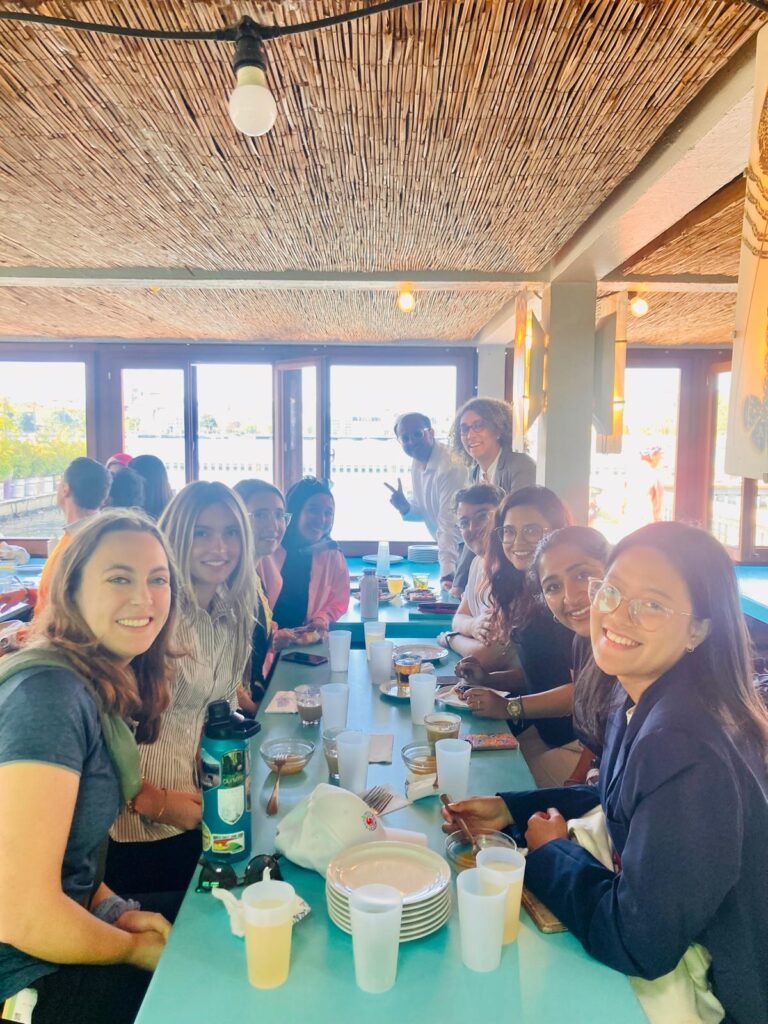
    On May 18, the Health Diplomacy Alliance successfully conducted a refreshing Lakeside Diplomacy Stroll in Geneva, where youth from multiple disciplines in global health and various regions around the world came together to walk along scenic Lake Leman, sharing stories and connecting over tea, coffee, and tartines.


    Watch the video below-