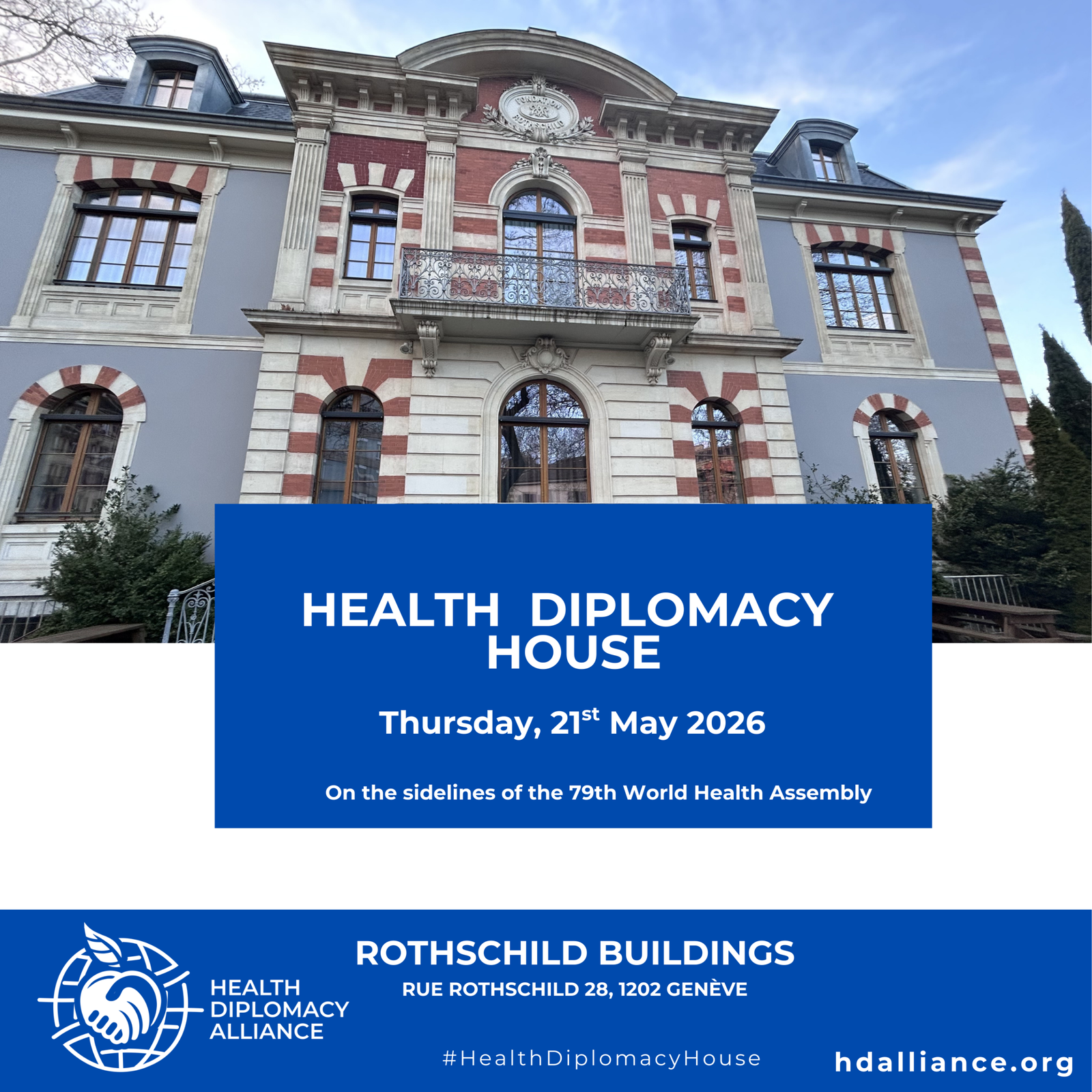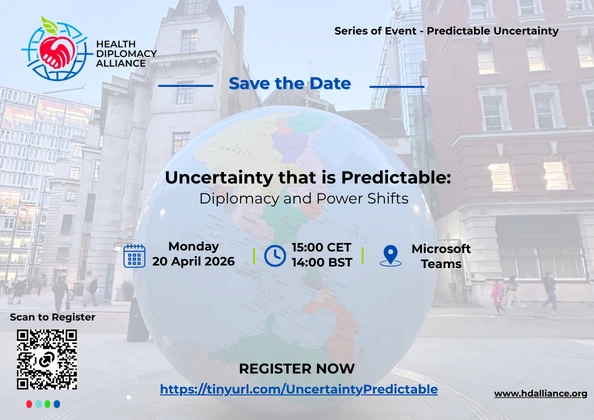
The Health Diplomacy House is an informal, practical space where organizations convene sessions, hold discussions, and work on concrete health policy issues. Located in the historic Rothschild buildings, formerly the Ancien Hôpital Ophtalmologique (1874–1978), it offers a simple and functional setting for focused exchange.
As part of the Predictable Uncertainty series, it brings together policymakers, diplomats, academia, youth, civil society, philanthropic actors, the private sector, and patient groups.
The programme includes multiple sessions and dialogues covering One Health, antimicrobial resistance, women’s leadership, health economics, pandemic preparedness, climate and health, health financing, and global health governance and reform.
The day will conclude with a reception, offering space for continued informal exchange among participants.
If your organization would like to host a session or discussion, please indicate your interest at secretariat@hdalliance.org, as space is close to full capacity and the agenda will be finalized on 5 May 2026.
Individual registration is required for each session. Participants must register separately for every session they wish to attend, as spaces are limited and allocated on a per-session basis.
We look forward to welcoming you to the Health Diplomacy House.
MORNING SESSIONS
OPENING
8 :00AM- 9:00AM CET
Global Health Architecture and Governance: Reflection in an Era of Predictable Uncertainty
The opening session of the Health Diplomacy House brings participants into a focused, informal conversation on how global health is changing across governance, financing, and institutional processes. It sets the tone for subsequent partner organization sessions within the Health Diplomacy Alliance, including our strategic priorities—AMR, climate change and health, health governance, and sustainable financing—and how these connect to wider reform processes. The session is designed as a space that goes beyond standard exchanges, supporting reflection on how current shifts connect across agendas and shape future cooperation and coordination in global health.
Special Guests:
Facilitators:
9:30AM- 11:00AM CET
What’s at Stake and What Comes Next for Global Health Reform
This interactive session explores the future of global health reform at a critical moment for international cooperation. As numerous reform initiatives emerge, it has become increasingly challenging for stakeholders to track developments and engage meaningfully.
The session will provide clear and accessible insights into the structural drivers behind global health reform, highlighting four key paradigm shifts shaping the future. It will also examine major milestones—from the Gavi Leap and Accra Reset to ongoing WHO-led processes—while addressing both opportunities and risks for meaningful change.
Participants will be invited to engage, reflect, and contribute to shaping the next era of global health.
Special Guests:
Facilitator:
10:00AM- 11:00AM CET
Climate Change and Respiratory Health (Fireside Chat)
Panelists:
This session will explore how climate change is affecting respiratory health worldwide. It will highlight the impact of rising temperatures, air pollution, and environmental changes on conditions like asthma and COPD, particularly among vulnerable populations. The session will bring together experts and policymakers to discuss prevention strategies, strengthen public health responses, and bridge the gap between research and policy.
Speakers and facilitators to be announced.
LUNCH SESSION
12:30PM- 13:20 PM CET
Plastics & Health: What we’re not talking about
The session will explore the often-overlooked health impacts of plastics across their full lifecycle, from production to disposal, highlighting growing scientific evidence on risks linked to plastic pollution, chemicals, microplastics and nanoplastics. It will also examine how health considerations can be more effectively integrated into ongoing global negotiations for a legally binding plastics treaty. Through short lightning talks by experts from diplomacy, science, and policy, the discussion will focus on why health must sit at the centre of global plastics action and how scientific knowledge can be better communicated and translated into policy.
Panelists:
More speakers and facilitators to be announced.
AFTERNOON SESSIONS
13:30 PM – 14:20 PM CET
Women at the Heart of Health Diplomacy. Heal, Lead, Seal.
Women are at the core of health diplomacy, yet they are excluded from, or marginalized within, high-stakes health decisions, at every level from community to global. This session will convene women at different stages of leadership and from different sectors and regions, to create space for inter-generational dialogue amongst women leaders in global health. Throughout the session, participants will interrogate questions like: Where does real power sit in health negotiations, and how do women learn to navigate it? and, What would a genuinely gender-responsive health diplomacy process look like, and who has to change for it to happen? The discussion will center the real experiences of how women are excluded from, or marginalized within, high-stakes health decisions, at every level from community to global, and the specific challenges facing young women entering health diplomacy. Through honest and open conversation with one another, participants will build connections, solidarity, and mentorship across generations and sectors.
Panelists:
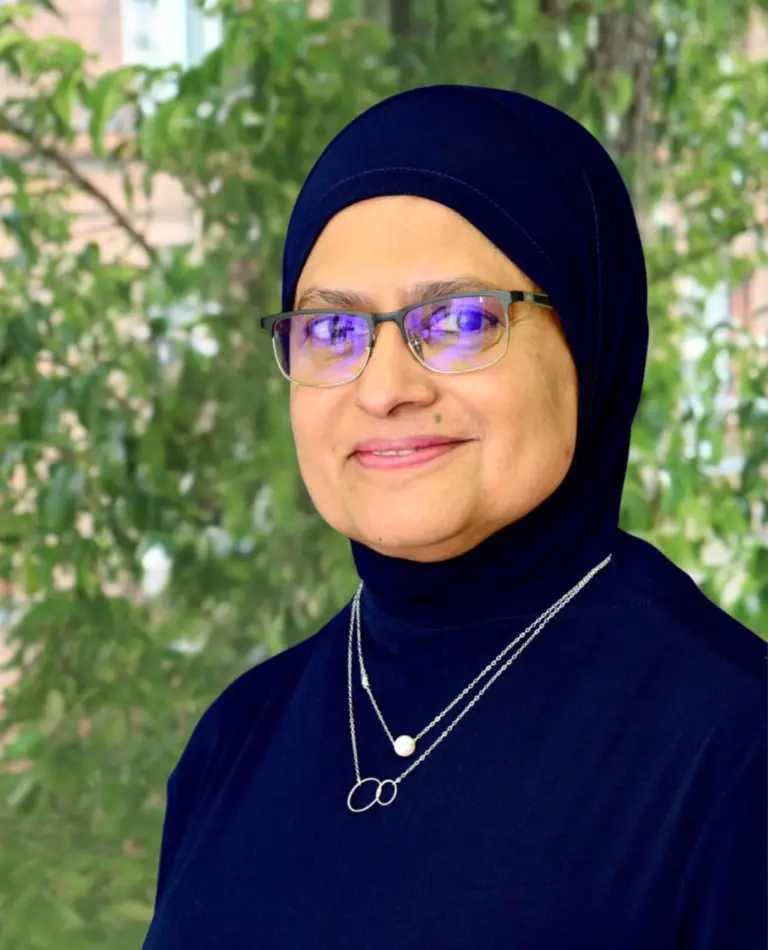
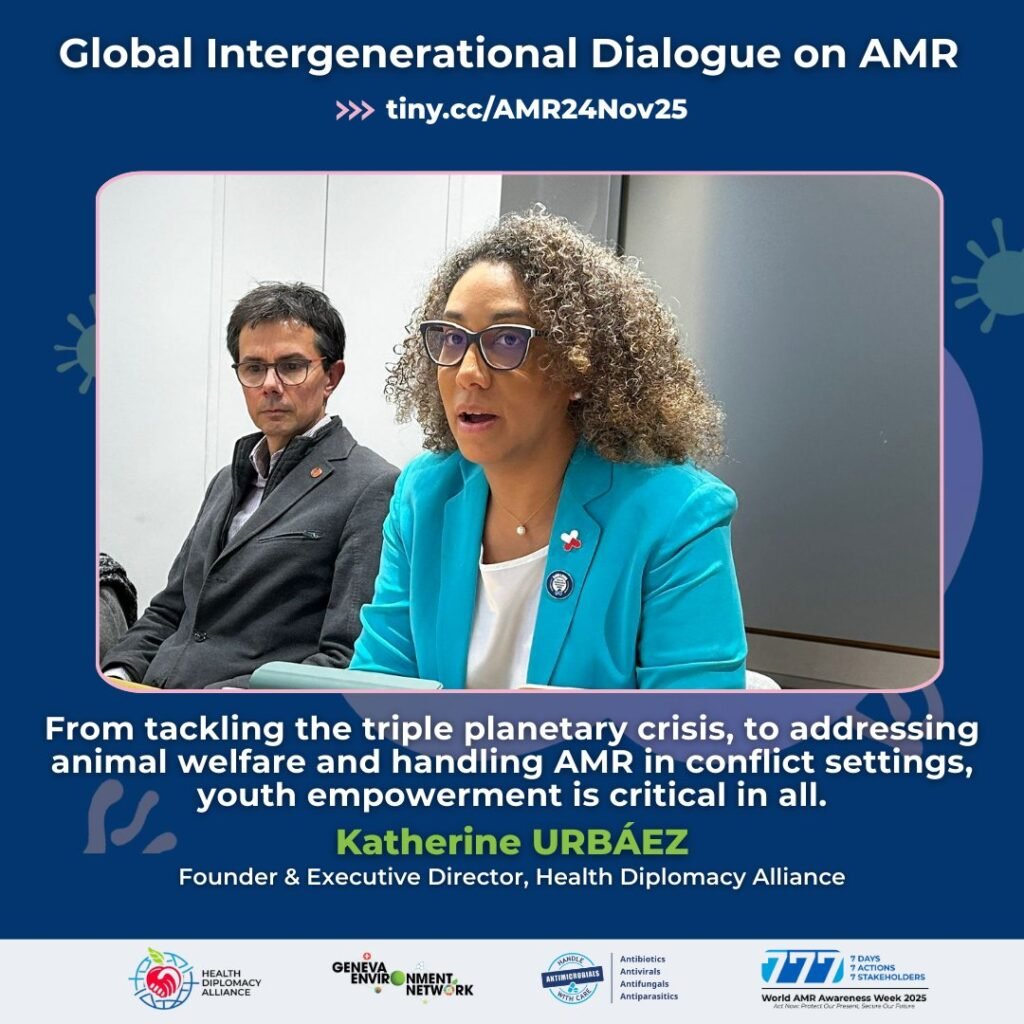
Katherine Urbaez is the Founder and Executive Director of the Health Diplomacy Alliance, with nearly two decades of experience in international diplomacy and global health. She has held senior roles in government and multilateral institutions, including postings with the United Nations in Geneva and the World Trade Organization. Her work focuses on integrating health into foreign policy and advancing global cooperation on health and human rights.
Speakers and facilitators to be announced.
13:30 PM – 14:30 PM CET
The International Court of Justice Advisory Opinion on Climate Change: Implications for Global Health Governance
The International Court of Justice has recently issued an advisory opinion on the obligations of states in respect of climate change. This opinion has prompted considerable discussion within international law and global health circles regarding its potential relevance to the work of the World Health Organization (WHO) and its member states. In the context of the World Health Assembly’s ongoing engagement with climate change and health, including through the 2025 Global Action Plan on Climate Change and Health, there is growing interest in understanding how the advisory opinion may inform future global health law and governance.
Panelists:
Katherine Urbaez is the Founder and Executive Director of the Health Diplomacy Alliance, with nearly two decades of experience in international diplomacy and global health. She has held senior roles in government and multilateral institutions, including postings with the United Nations in Geneva and the World Trade Organization. Her work focuses on integrating health into foreign policy and advancing global cooperation on health and human rights.
Speakers and facilitators to be announced.
14:00 PM – 15:30 PM CET
The Role of Journalism in Global Health Diplomacy
This session will explore the role of journalism in Global Health Diplomacy. Specifically, we will discuss the journalistic practices of Geneva Health Files in reporting global health negotiations in Geneva at the World Trade Organization, and the World Health Organization, during the pandemic and post-pandemic years. We will tell the story of how we came to report on closed-door negotiations to provide a service to negotiators, diplomats and other stakeholders during the negotiations on the WTO TRIPS Waiver, the amendments to the International Health Regulations, and the Pandemic Agreement. We will also discuss the impact we have had, and the traction we received in response to our journalism. The session will explore the tool of independent journalism to further transparency and accountability in global health policy–making. It will also underscore the importance of having access to rigorous journalism, for all delegations for timely, impartial and accurate coverage of opaque decision-making.
Panelists:
Speakers and facilitators to be announced.
14:30 PM – 15:20 PM CET
Valuing Health in Climate Action: Making the Climate–Health Nexus Work for Decision Makers
Health is increasingly cited as a co‑benefit of climate action, yet in practice health impacts are often undervalued, inconsistently measured, or difficult for decision‑makers, particularly finance and planning ministries, to use. This weakens the case for climate action that could deliver major health gains and system resilience.
Drawing on ECO‑CHICA, a Wellcome‑funded programme led by LSHTM in partnership with OHE, this session focuses on how economic evidence and value assessment can make health impacts visible, credible, and decision‑relevant in climate policy.
- Where health is currently under‑represented in climate economic analysis
- How inconsistent valuation approaches weaken cross‑government decisions
- What decision‑makers actually need to compare climate actions on health and value
- How aligning health and climate evidence can influence priorities and financing
Panelists:
Speakers and facilitators to be announced.
15:00 PM – 16:30 PM CET
Roundtable on the International Court of Justice Advisory Opinion
This interactive session explores the future of global health reform at a critical moment for international cooperation. As numerous reform initiatives emerge, it has become increasingly challenging for stakeholders to track developments and engage meaningfully.
The session will provide clear and accessible insights into the structural drivers behind global health reform, highlighting four key paradigm shifts shaping the future. It will also examine major milestones—from the Gavi Leap and Accra Reset to ongoing WHO-led processes—while addressing both opportunities and risks for meaningful change.
Participants will be invited to engage, reflect, and contribute to shaping the next era of global health.
Panelists:
By Invitation Only
15:40 PM – 17:00 PM CET
Advancing a Common Care Framework for Ethical Health Worker Mobility
This session will explore how to make international health worker mobility fairer, more sustainable and more credible for all parties involved. It will introduce the Common Care Framework, a practical policy model for governing health worker mobility not simply as a matter of recruitment, but as a broader relationship that must also address integration, professional recognition, worker protection, retention, and mutual benefit between countries of origin and destination. Structured around the principles of respect, recognition and utility, the Framework aims to define what responsible and workable mobility should look like in practice for governments, employers, health workers and communities. The discussion will connect this approach to current global debates on the WHO Global Code of Practice, the WHO Support and Safeguards List, and the ILO fair recruitment framework, with a view to identifying more concrete and accountable ways of governing health worker mobility

Panelists:
Speakers and facilitators to be announced.
By Invitation Only
CLOSING SESSION
CLOSING
17:00PM -18:30 PM CET
CHECK THE BOX – AMR
The closing session of the Health Diplomacy House will focus on tracking political commitments on antimicrobial resistance, assessing the distance between declaration and implementation, and identifying the diplomatic and policy levers needed to accelerate action.
Facilitators:
Caline Mattar is Professor of Medicine and Public Health at Washington University in St. Louis and Chief of General Infectious Diseases. Her work focuses on infection prevention and antimicrobial resistance in resource-limited settings, with collaborations across Africa and Latin America. She advises global health initiatives, including roles with the World Health Organization and international policy bodies.

More Events to be announced. Stay Connected.

Châteaubriand & Gautier
Butini
Gare Cornavin & Geneva-Sécheron
2 min walk — scenic option